Palazzo Vecchio Self-researched
Florence, Italy
Architectural style: Romanesque, Gothic
Artworks
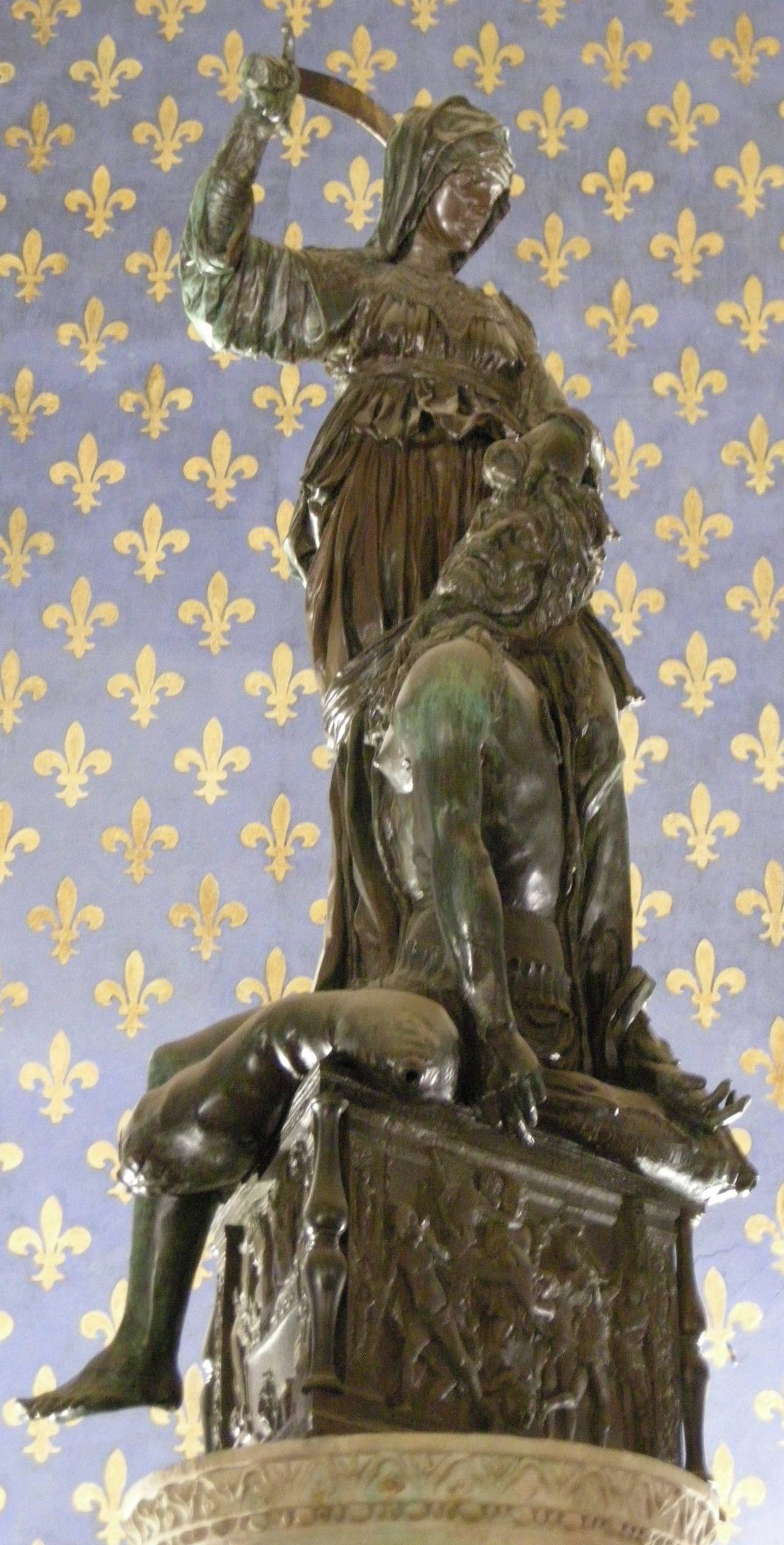
Judith and Holofernes Self-researched
Bronze sculpture by Donatello depicting the biblical heroine Judith beheading the Assyrian general Holofernes. Created toward the end of Donatello's career, it is located in the Sala dei Gigli (Hall of Lilies). A copy stands in one of the sculpture's original positions in the Piazza della Signoria.
Battle of Cascina Self-researched
A fresco commissioned for the Palazzo Vecchio to face Leonardo's Battle of Anghiari. Michelangelo only completed the preparatory cartoon before being called to Rome by Pope Julius II. The famous cartoon, showing Florentine soldiers surprised while bathing, was studied and copied by many Renaissance artists before being lost.

The Battle of Anghiari Self-researched
A lost painting commissioned for the Salone dei Cinquecento. The central scene depicted four men on raging war horses fighting for possession of a standard at the Battle of Anghiari in 1440. Leonardo's experimental techniques caused the paint to deteriorate. Some believe it may survive beneath Vasari's later frescoes, hinted at by the inscription "Cerca Trova" (Seek and You Shall Find).

Hercules and Cacus Self-researched
A monumental marble sculpture standing to the right of the entrance of the Palazzo Vecchio in the Piazza della Signoria. It depicts the mythological hero Hercules subduing the fire-breathing giant Cacus. Commissioned as a pendant to Michelangelo's David.

The Genius of Victory Self-researched
A marble sculpture measuring 2.61m in height, originally produced as part of the design for the tomb of Pope Julius II. The work depicts a young winged male figure standing triumphantly over a crouching older figure. It now stands in the Salone dei Cinquecento.


Crossing of the Red Sea Self-researched
A fresco in the Chapel of Eleonora di Toledo depicting the Israelites crossing the Red Sea from the Book of Exodus, combined with Moses commissioning Joshua from the Book of Numbers. Notable for its dense, complex composition with numerous figures in Mannerist style.
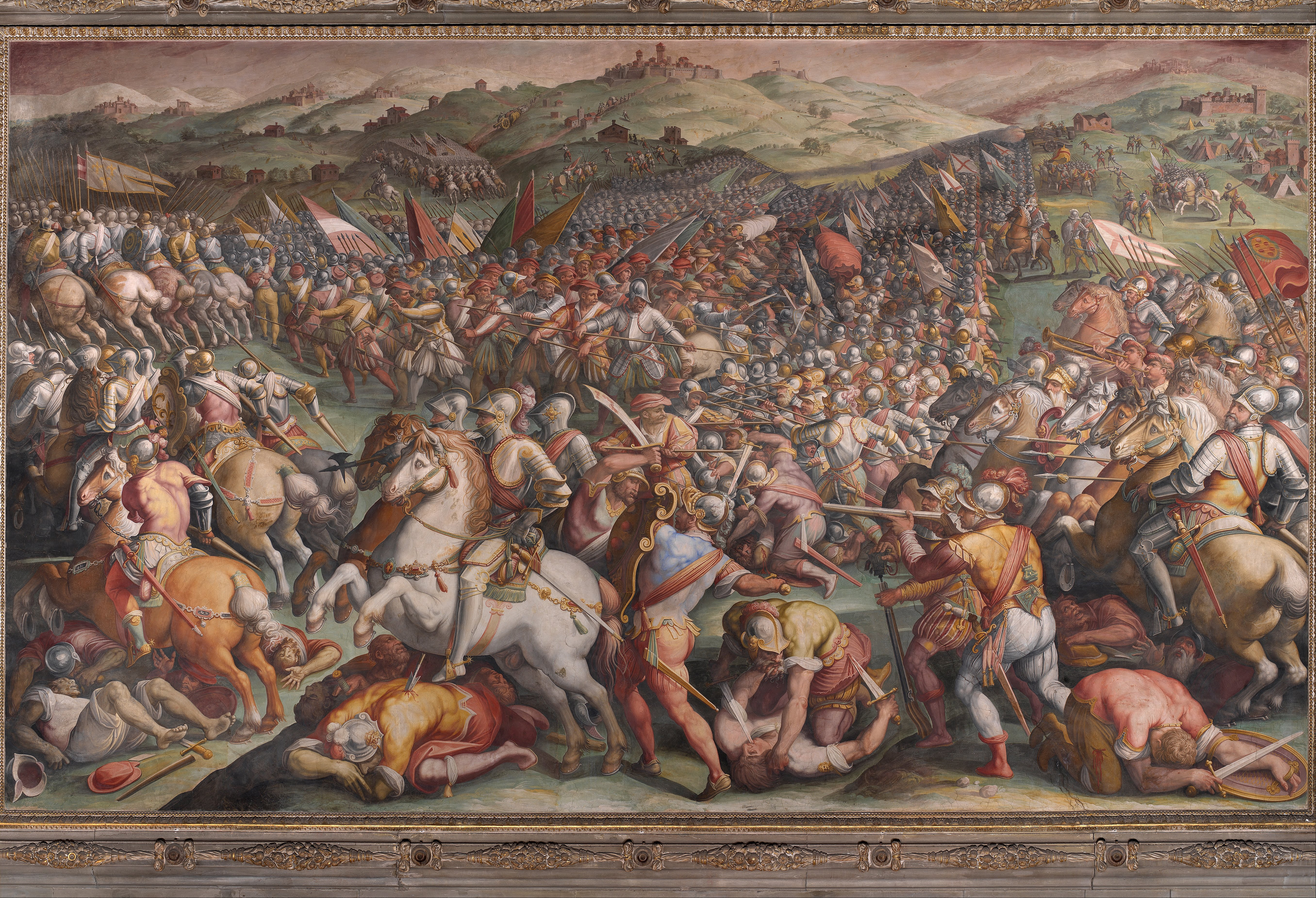
The Battle of Marciano in Val di Chiana Self-researched
One of the large frescoes on the walls of the Salone dei Cinquecento, depicting the 1554 battle in which Florence defeated the Republic of Siena. This fresco contains the mysterious inscription "Cerca Trova" (Seek and You Shall Find), which some interpret as a hint that Leonardo's Battle of Anghiari may survive beneath.
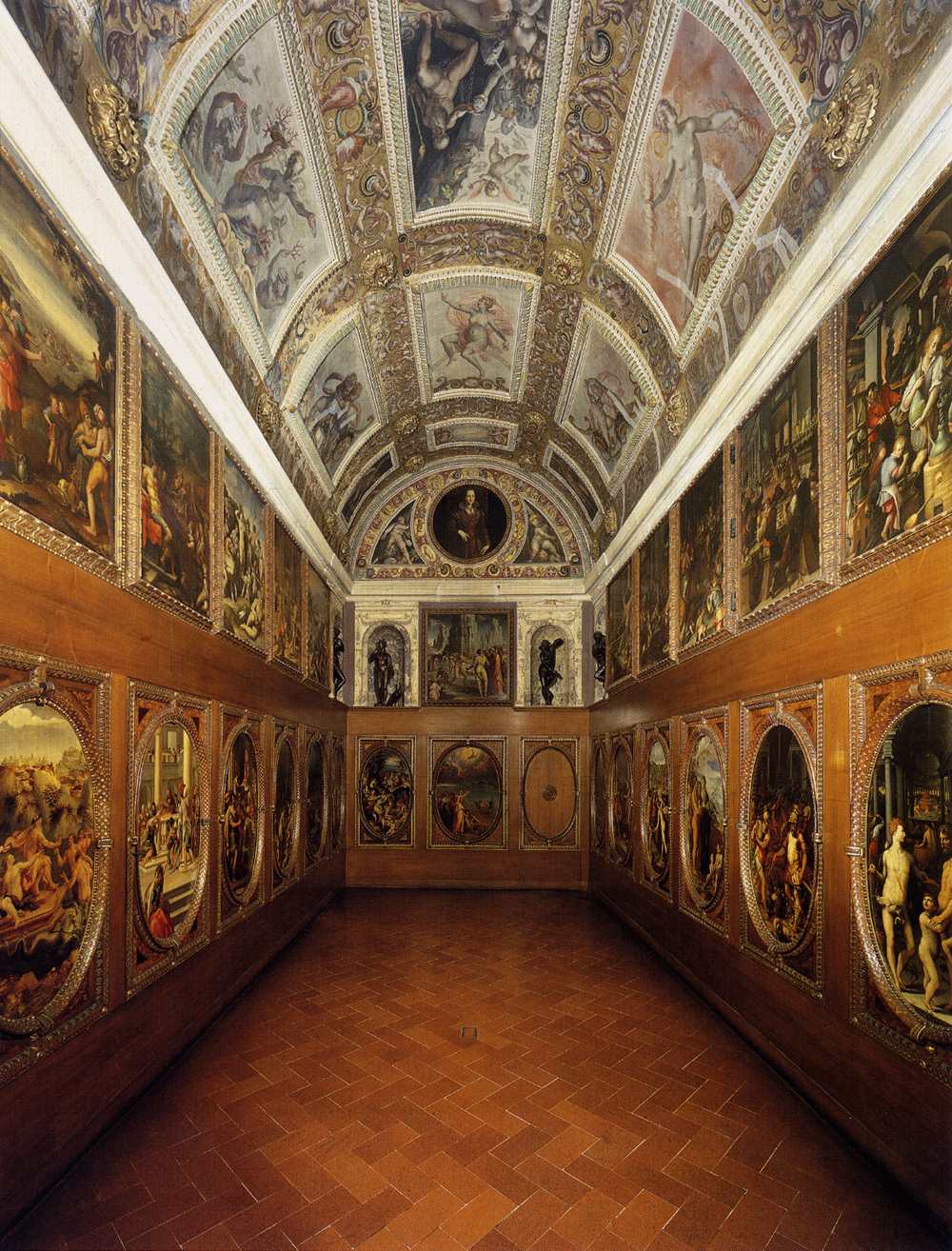
Studiolo of Francesco I Self-researched
A small painting-encrusted barrel-vaulted room commissioned by Francesco I de' Medici. The intimate space features over 30 paintings by various Mannerist artists and eight bronze statuettes, designed as a cabinet of curiosities. The iconographic program was devised by the scholar Vincenzo Borghini.