Leonardo da Vinci
Born: April 15, 1452, Vinci, Republic of Florence Died: May 2, 1519, Amboise, Kingdom of France
Italian polymath of the High Renaissance who was active as a painter, draughtsman, engineer, scientist, theorist, sculptor, and architect. Born in a small village near Florence, he stayed in Milan for almost twenty years.
Artworks
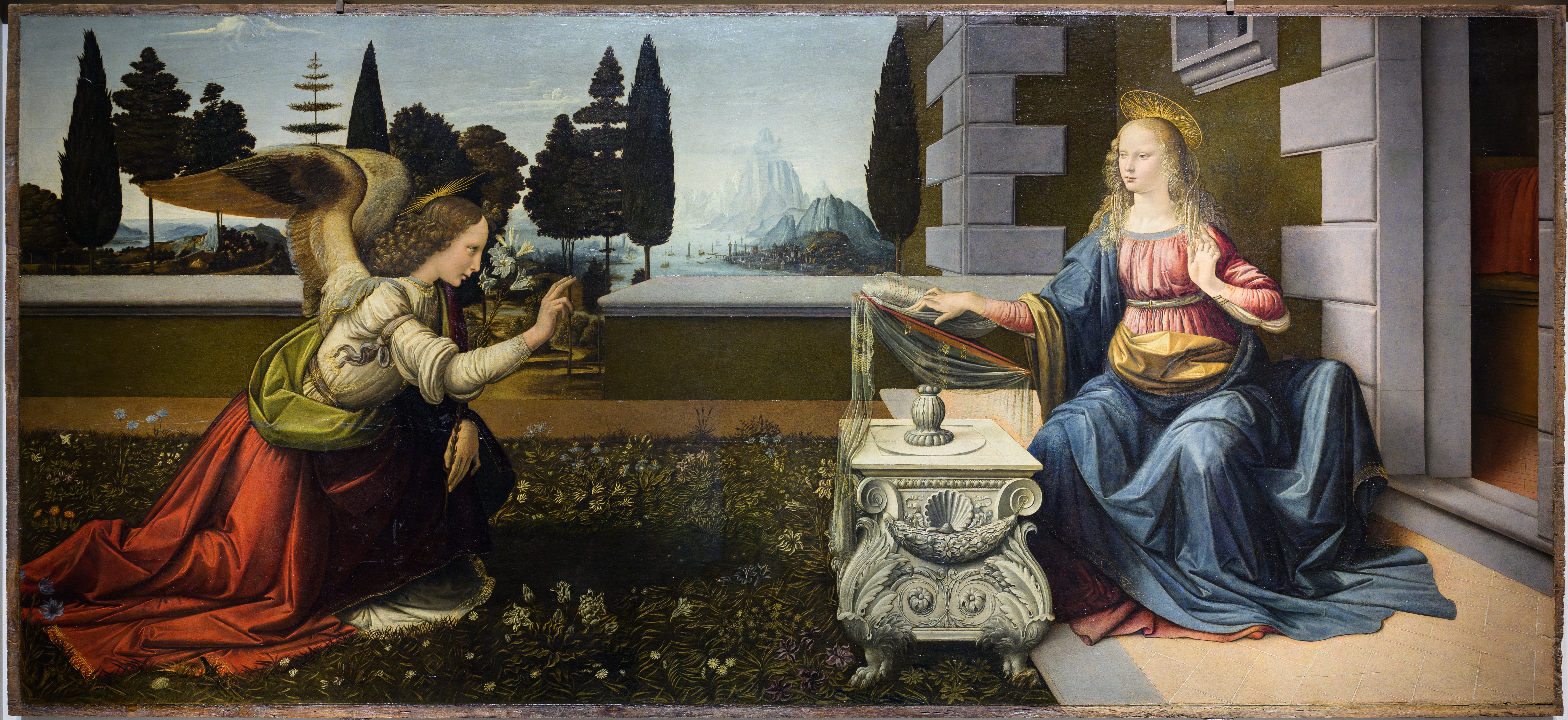
Annunciation
An early work by Leonardo showing the angel Gabriel appearing to the Virgin Mary. The painting demonstrates Leonardo's early mastery of perspective and atmospheric effects.
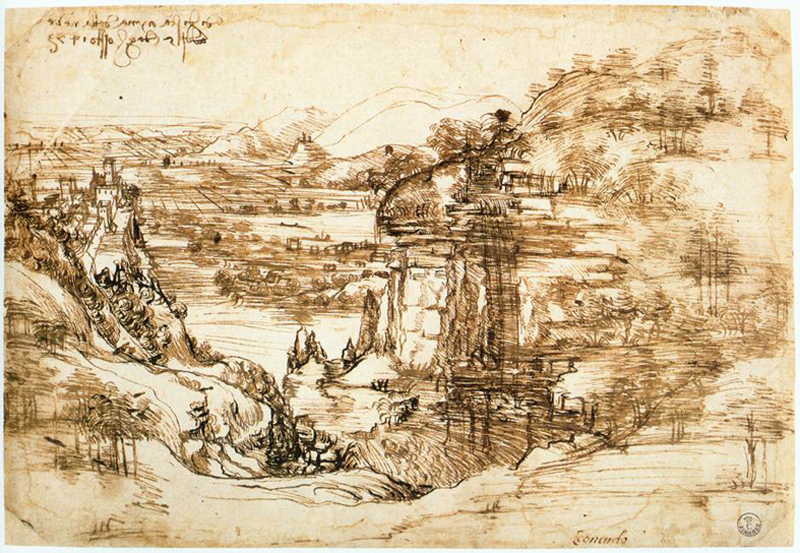
Landscape of the Arno Valley
One of the earliest dated works by Leonardo, this landscape drawing shows the Arno Valley near Florence. It demonstrates Leonardo's early interest in capturing natural phenomena and atmospheric perspective.
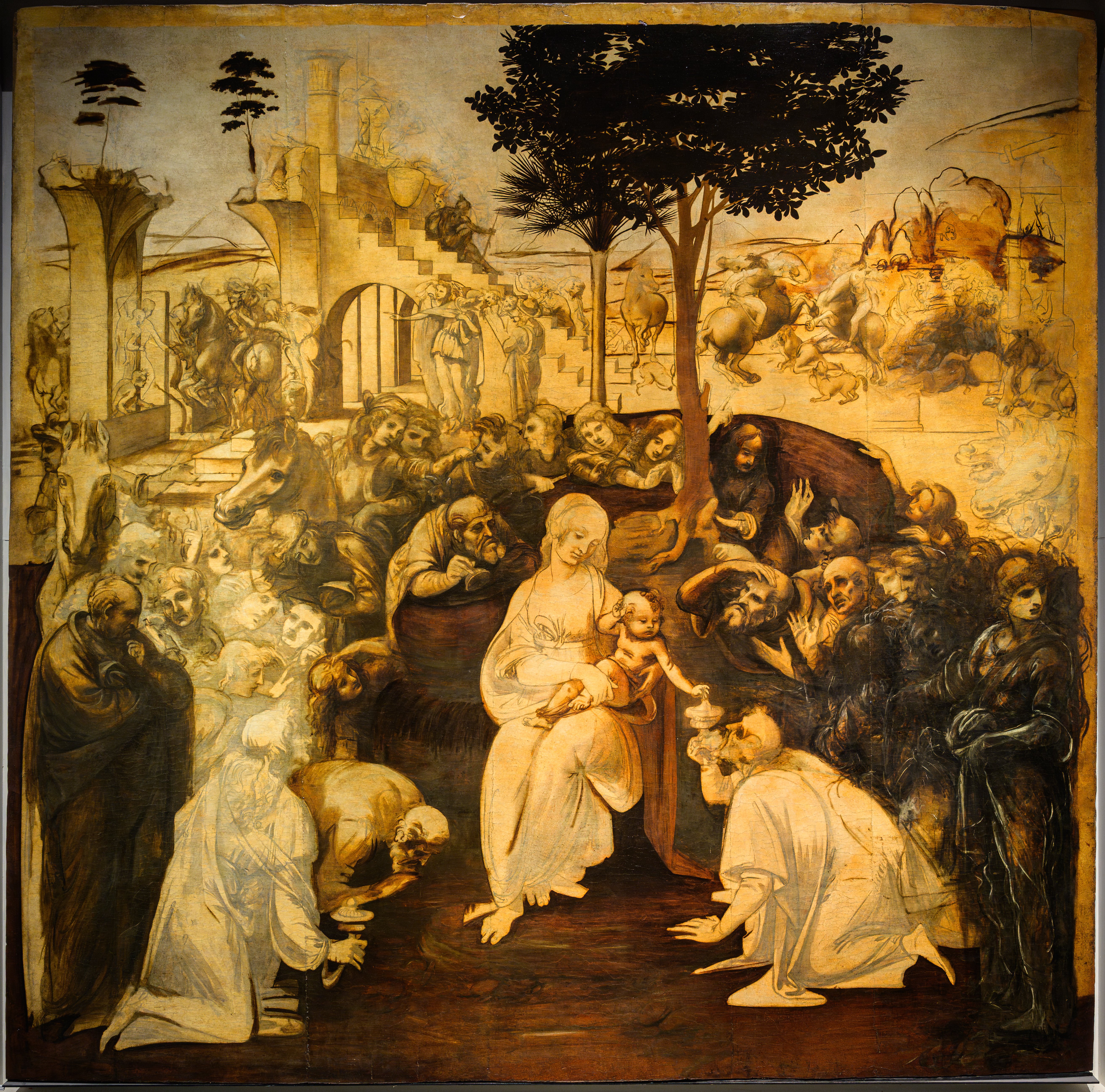
Adoration of the Magi
An unfinished painting showing Leonardo's innovative compositional approach: - Energetic horses, like rushing water - Madonna and the Child as the apex of a stable pyramid - Started with a dark wash that created the areas of shadow, then defined edges with brush
Vitruvian Man Self-researched
A drawing depicting a nude man in two superimposed positions inscribed within a circle and square, illustrating ideal human proportions as described by the Roman architect Vitruvius. Justly ranked among the all-time iconic images of Western civilization. Due to its fragility, displayed only every 4-6 years.

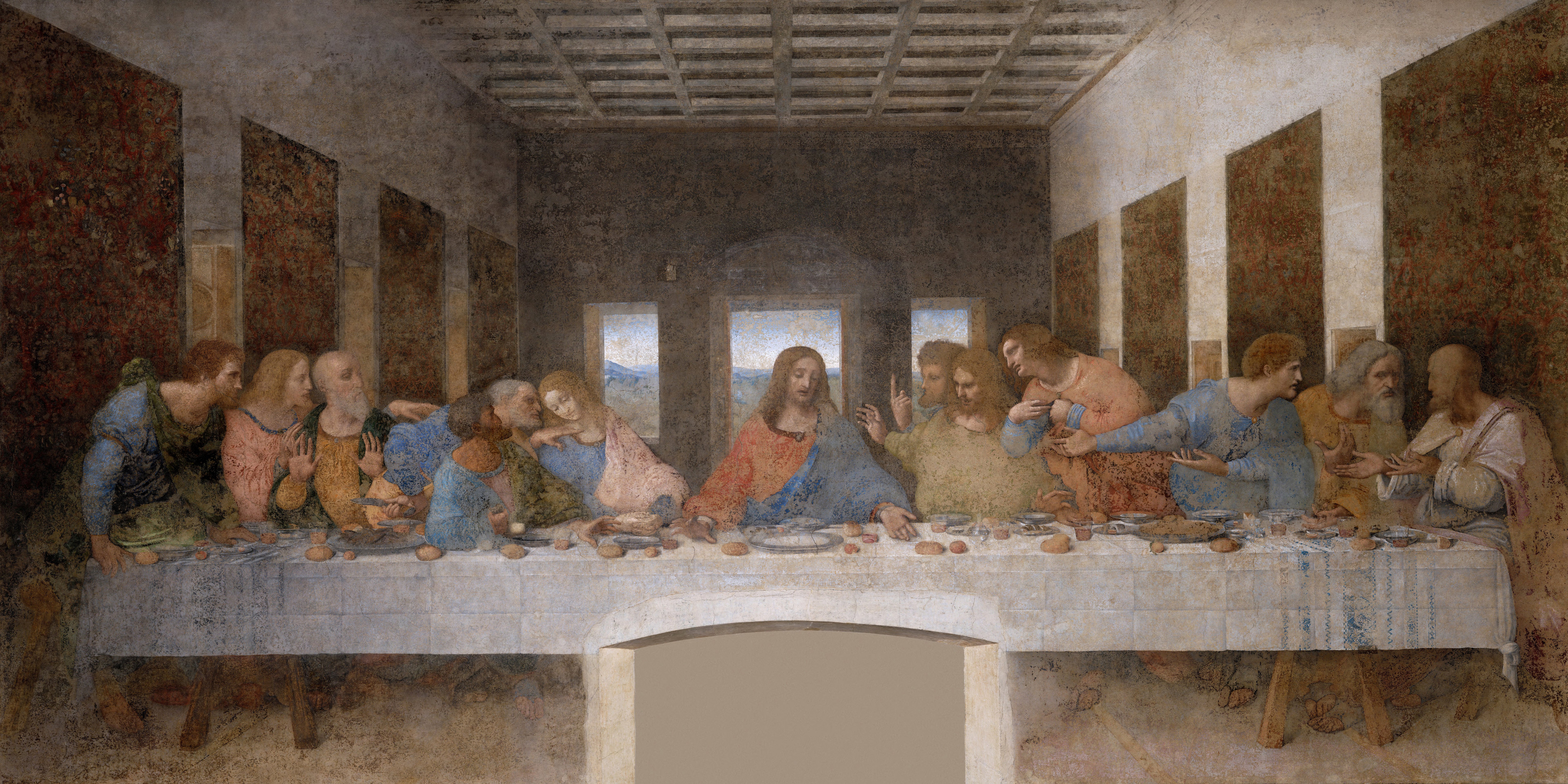
The Last Supper
Leonardo's masterpiece depicting the moment Jesus announces that one of his disciples will betray him.
The Battle of Anghiari Self-researched
A lost painting commissioned for the Salone dei Cinquecento. The central scene depicted four men on raging war horses fighting for possession of a standard at the Battle of Anghiari in 1440. Leonardo's experimental techniques caused the paint to deteriorate. Some believe it may survive beneath Vasari's later frescoes, hinted at by the inscription "Cerca Trova" (Seek and You Shall Find).

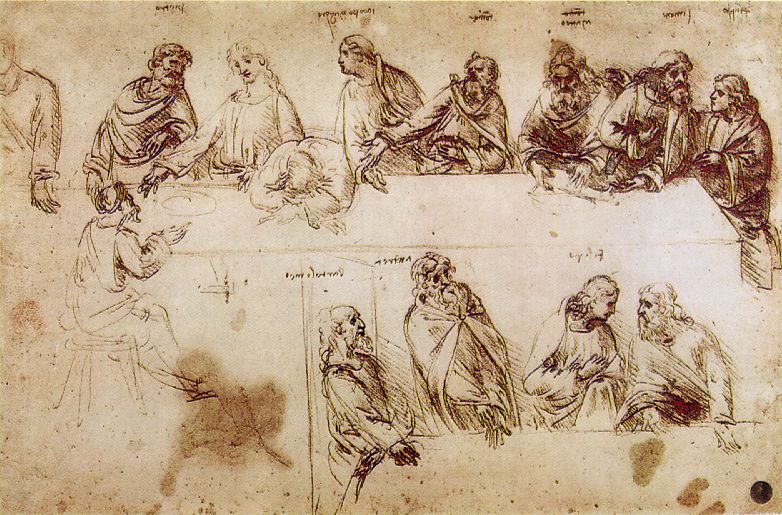
Study of Composition of Last Supper
Preparatory study for [The Last Supper](LastSupperLeonardo.md) showing that Judas was originally placed at our side of the table, which is not the case in the final artwork.