Madonna and Child
Summary
The Madonna and Child depicts the Virgin Mary with the infant Jesus. This iconic image represents the Incarnation—God becoming human through Christ's birth to Mary. While not depicting a specific biblical narrative, this devotional image draws from the Gospel accounts of Christ's birth and infancy. The scene emphasizes Mary's role as Theotokos (Mother of God) and the tender relationship between mother and divine child. It became one of the most prevalent subjects in Christian art, particularly in Italian Renaissance painting.
Biblical Reference
Book(s): Gospel of Luke, Gospel of Matthew
Chapters/Verses: Luke 2:1-20, Matthew 1:18-25
Artworks Depicting This Story
Enthroned Madonna and Child with Angels and Prophets
Also known as the Santa Trinita Maestà. Cimabue was the last great Italo-Byzantine painter.
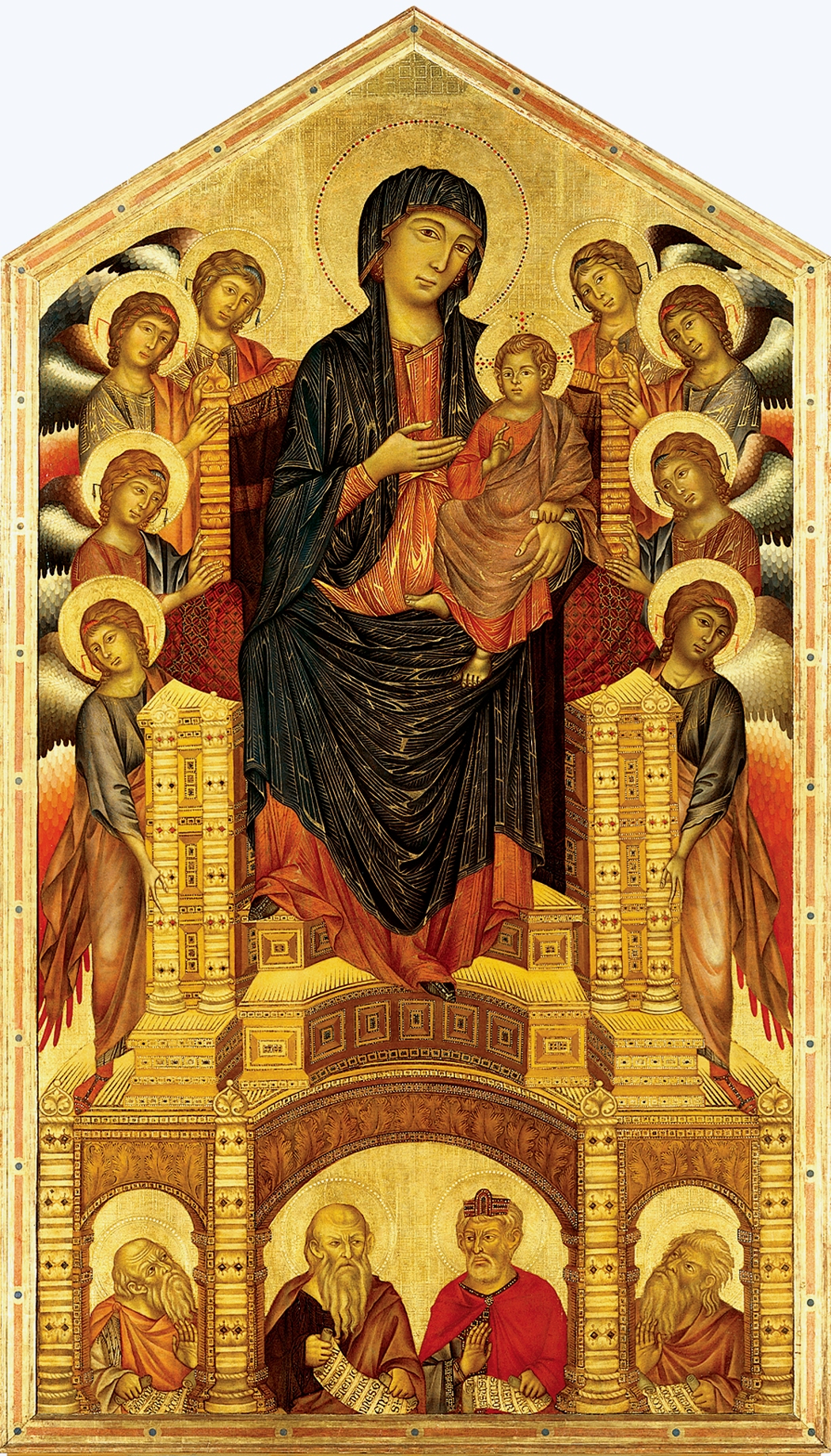
Madonna and Child (Rucellai Madonna)
A masterpiece of Sienese painting from the early Trecento.
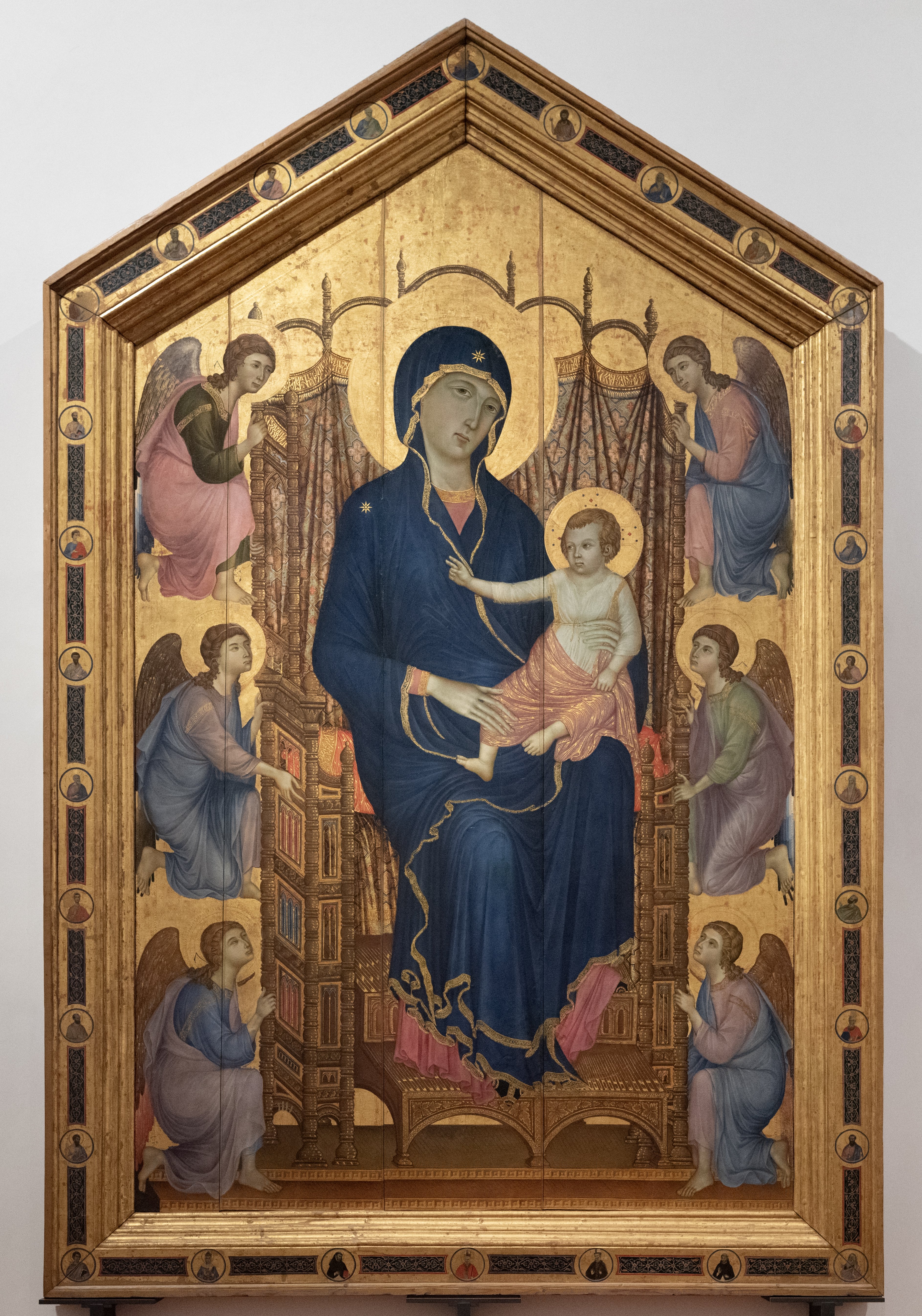
Madonna with Glass Eyes (Madonna degli Occhi di Vetro) Self-researched
An original sculpture from the main portal of Florence Cathedral, depicting the Virgin Mary with Saints Reparata and Zanobi. Notable for the glass eyes that give the figure an unusually lifelike appearance. The use of glass inlay for the eyes was an innovative technique that enhanced the sculpture's expressiveness.
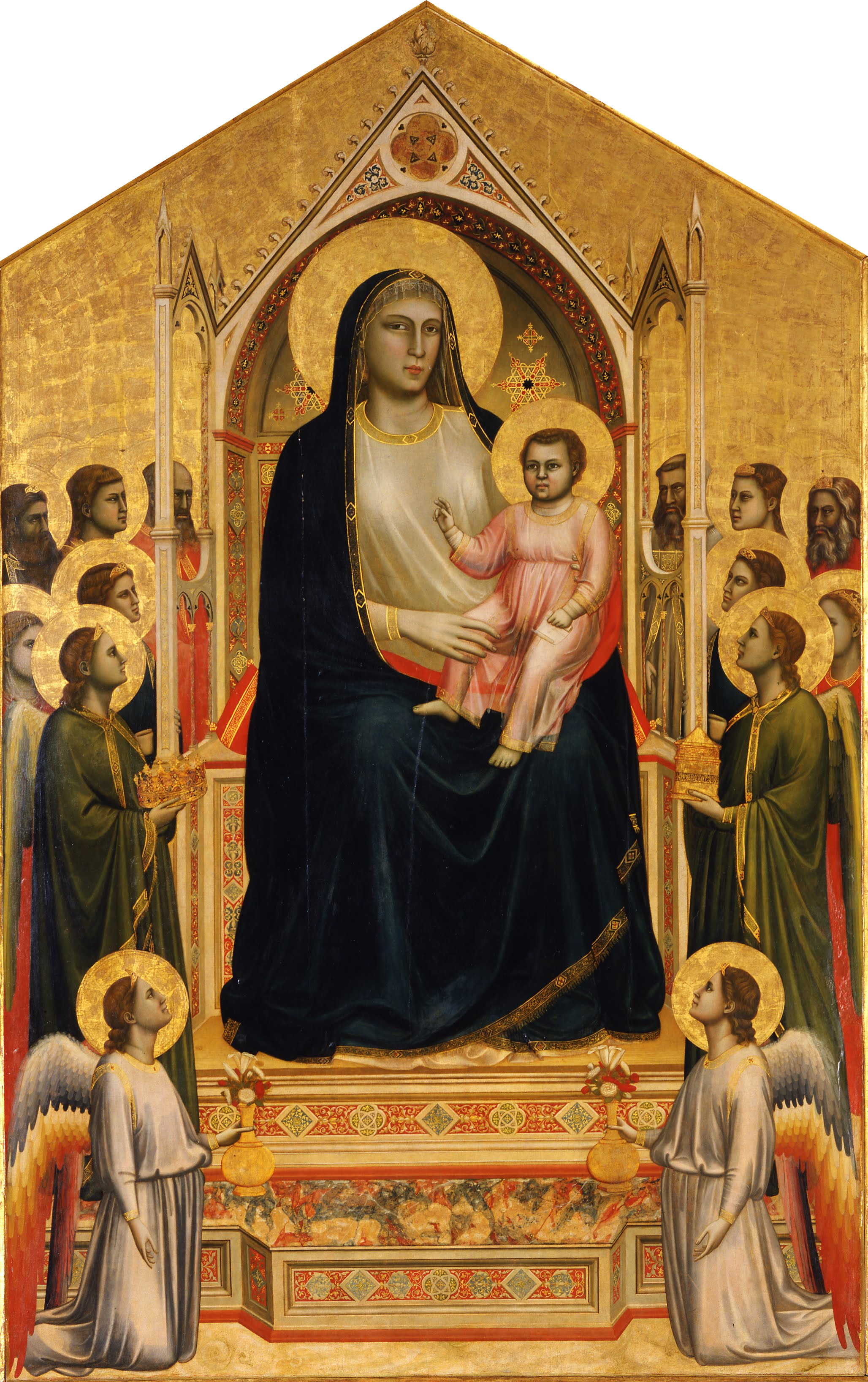
Madonna Enthroned (Ognissanti Madonna)
One of Giotto's masterpieces, showing his revolutionary approach to naturalism and three-dimensionality.
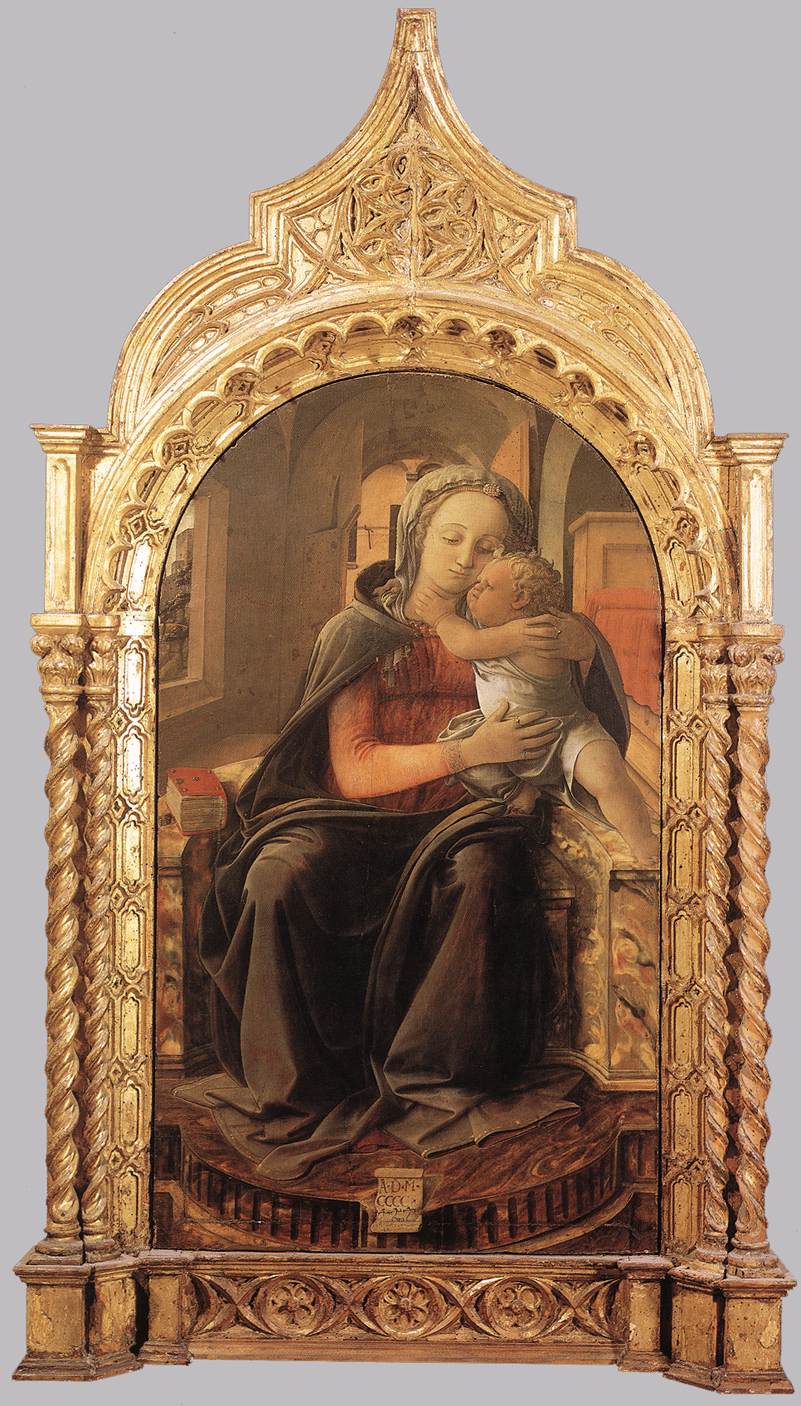
Enthroned Madonna and Child (Tarquinia Madonna)
Also known as the Tarquinia Madonna.
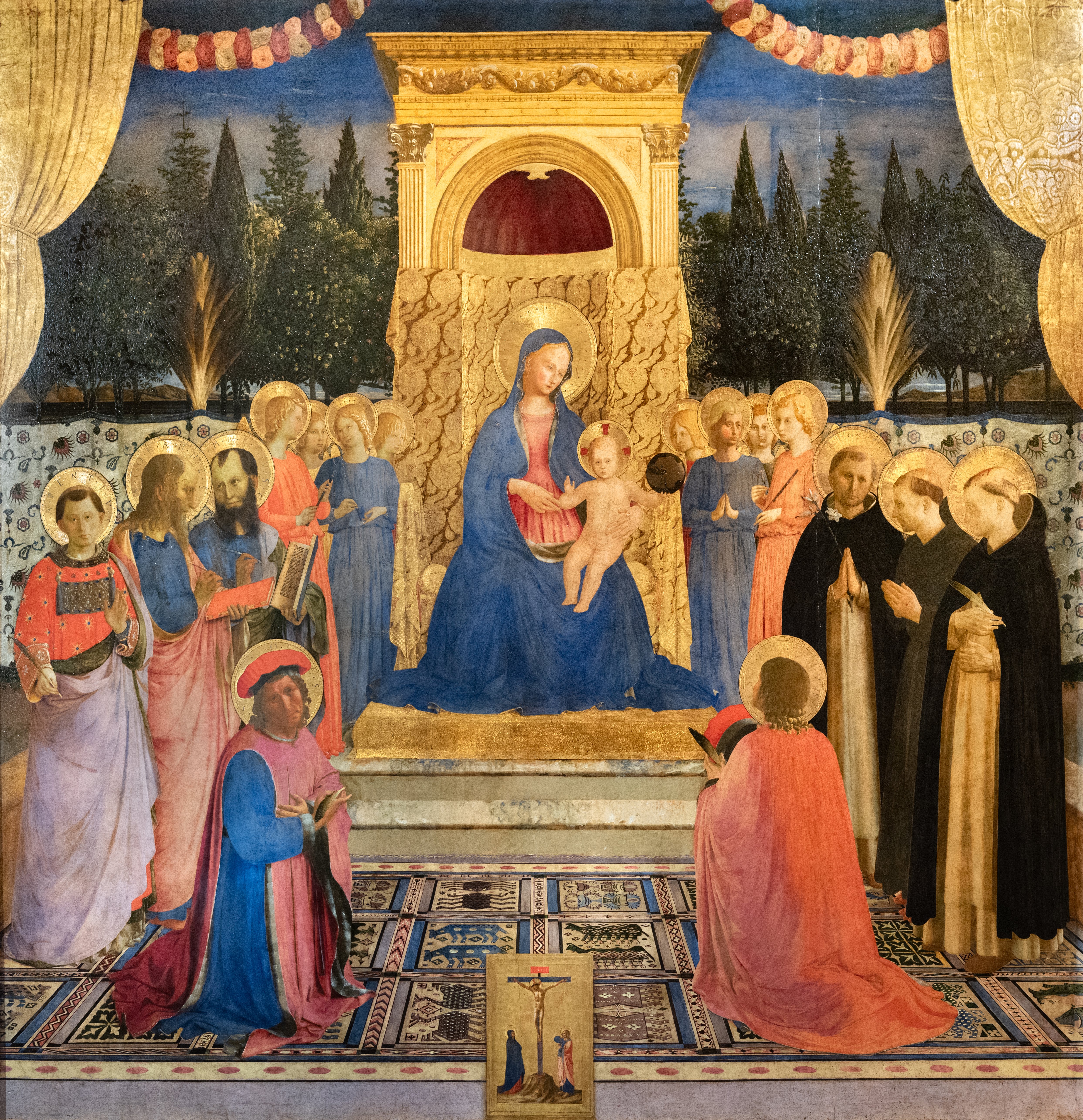
San Marco Altarpiece
Major altarpiece for the church of San Marco in Florence.
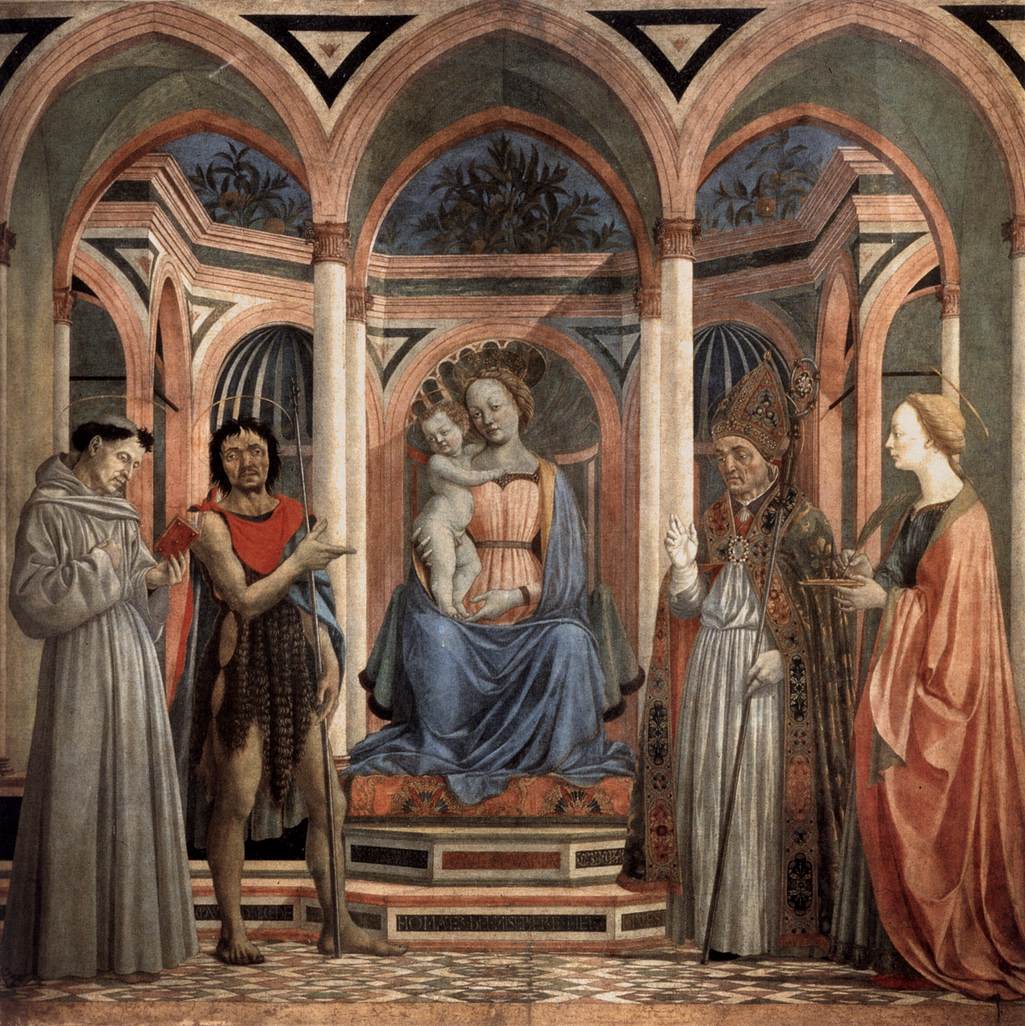
The Madonna and Child with Saints
Also known as the St. Lucy Altarpiece. A masterpiece of early Renaissance painting.
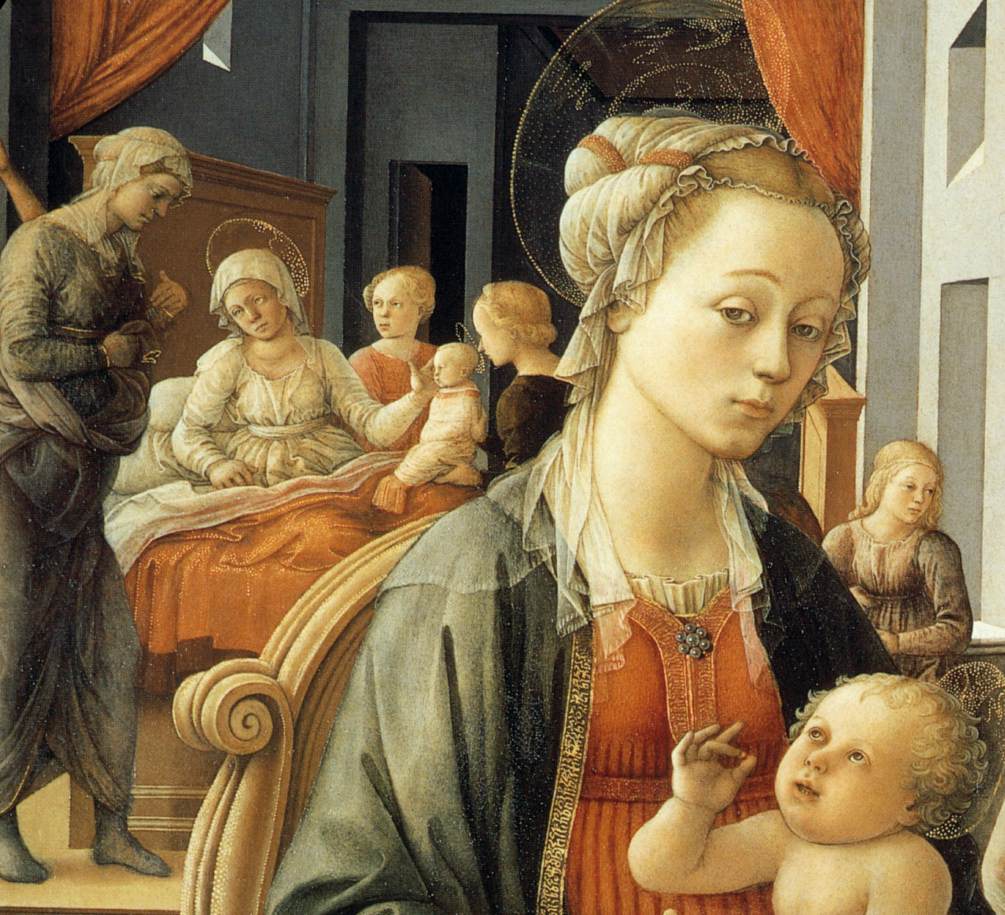
Madonna with Child with Scenes of the Life of Saint Anne (Pitti Tondo)
A tondo (circular painting) depicting the Madonna and Child with scenes from the life of Saint Anne.
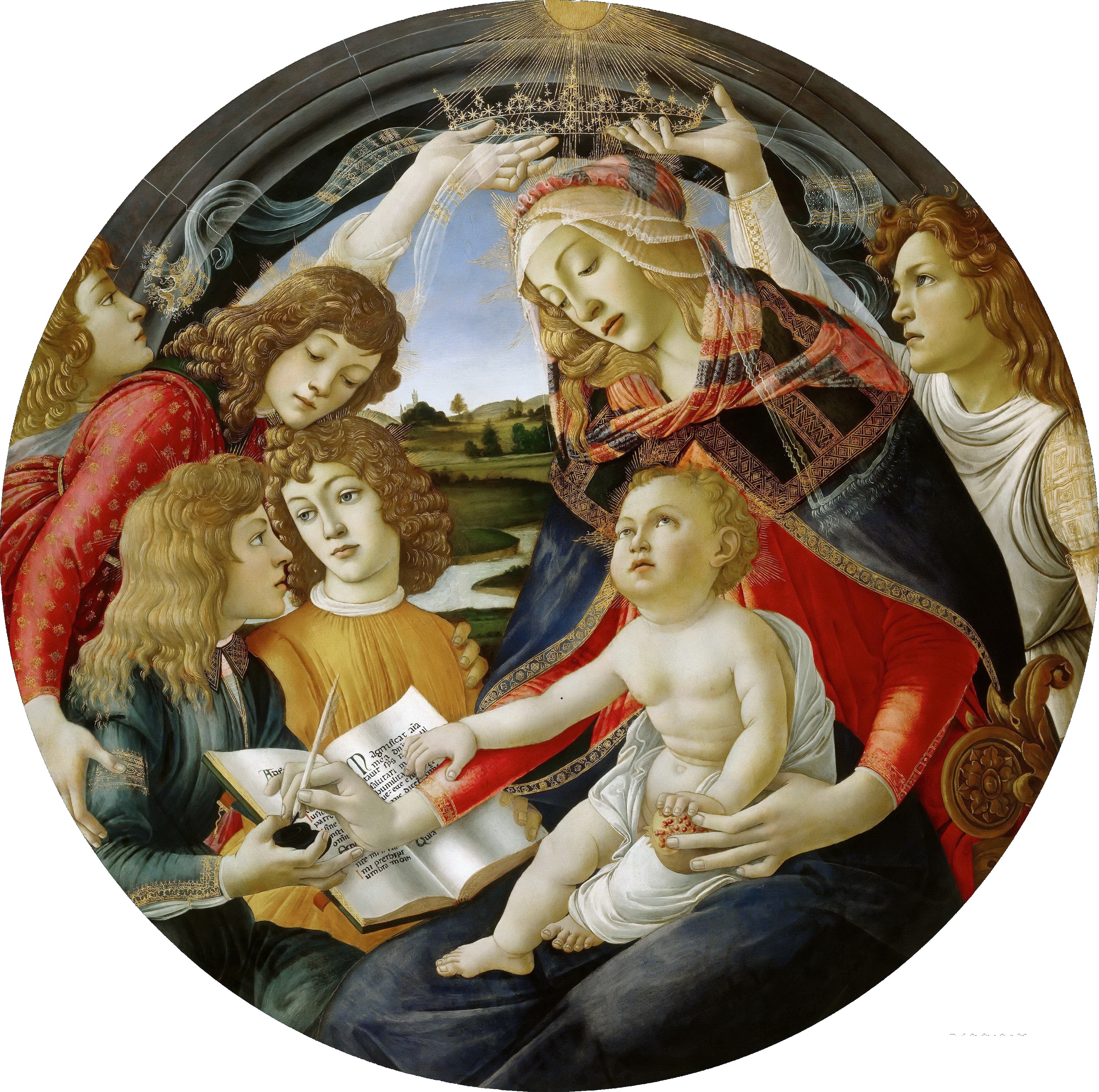
Madonna and Child (Frizzoni Madonna) Self-researched
An innovative depiction featuring the Madonna in an unusual purple gown and pink mantle, departing from the traditional blue. Known as the Frizzoni Madonna.
Madonna of the Magnificat
Probably a wedding present or a gift for a birth of a child. The circular format (tondo) was popular for domestic devotional images. Changing size from 33 to 46 inches was typical at the time.
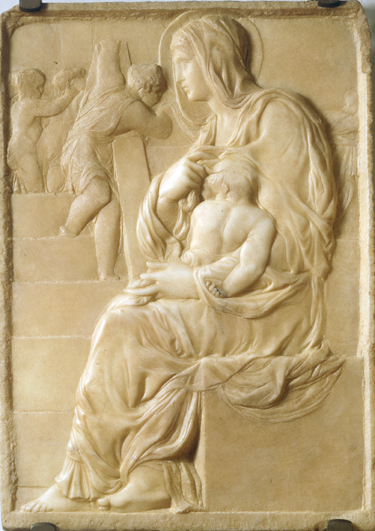
Madonna of the Stairs
An early relief sculpture by Michelangelo, created when he was about 16 years old. Notable for the extraordinary muscular back and right arm of the Christ Child, foreshadowing Michelangelo's later mastery of the human form. The technique shows the influence of Donatello's schiacciato (very shallow relief), which Michelangelo studied during his time in the Medici garden. Despite its small size (55.5 x 40 cm), the composition feels monumental, with the Virgin's powerful, muscular arms and contemplative pose anticipating Michelangelo's mature style. Children play on stairs in the background—hence the name.
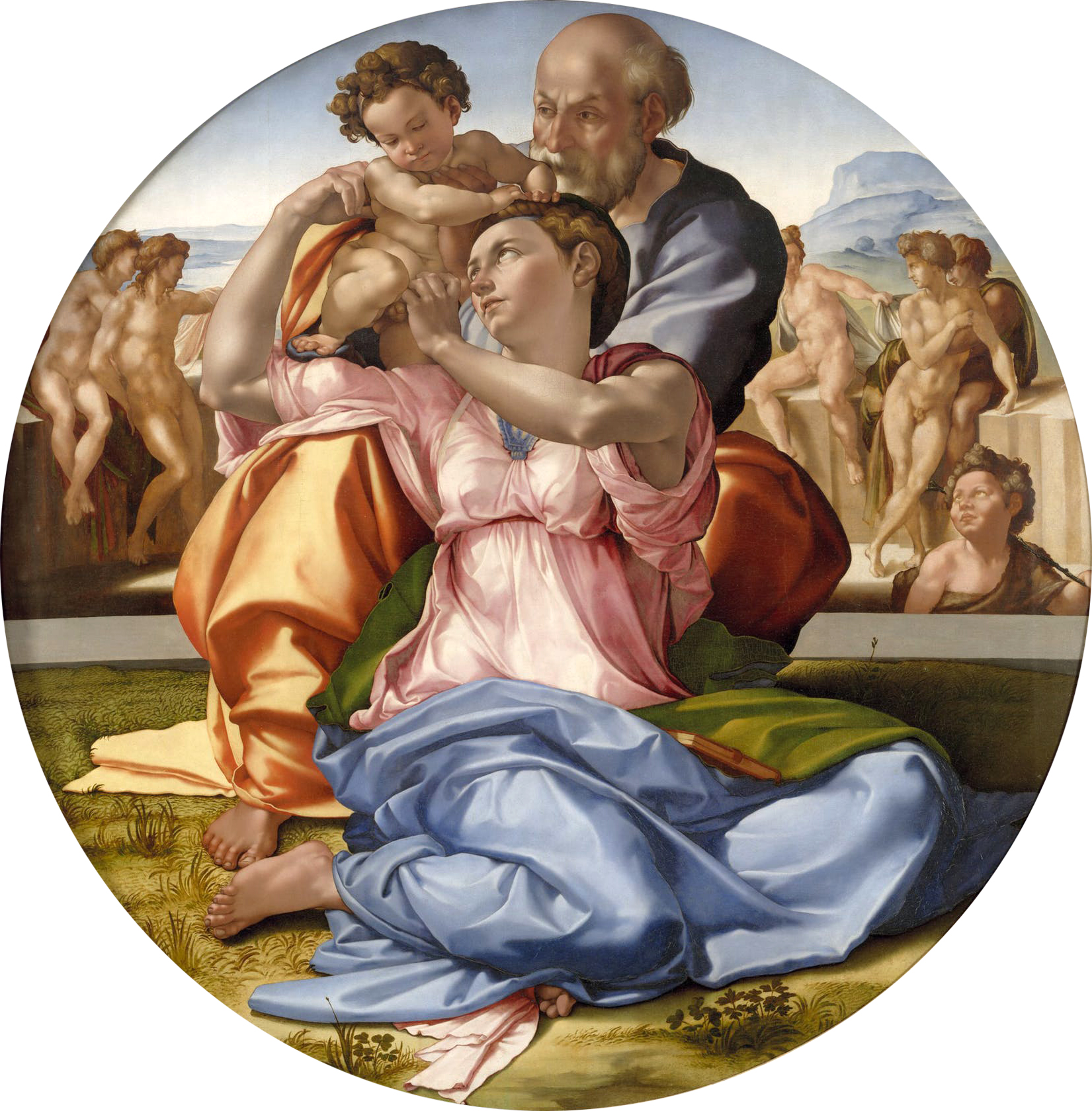
The Doni Tondo
The only preserved panel painting of Michelangelo. Also known as "The Dono Madonna" or "Holy Family with St. John the Baptist," this tondo (circular painting) was commissioned by the wealthy Florentine merchant Agnolo Doni. The unusual poses and vibrant colors influenced later Mannerist painters.
Pesaro Madonna Self-researched
Located in the left nave, this revolutionary painting places the Madonna and Child dramatically off-center to the upper right rather than in the physical center. Commissioned by Bishop Jacopo Pesaro, this asymmetrical arrangement was highly innovative and influenced religious painting for generations.

Madonna and Child with Angels Self-researched
Spiritual, meditative figures set in a landscape. Lotto's distinctive psychological approach to religious subjects is evident in this work.
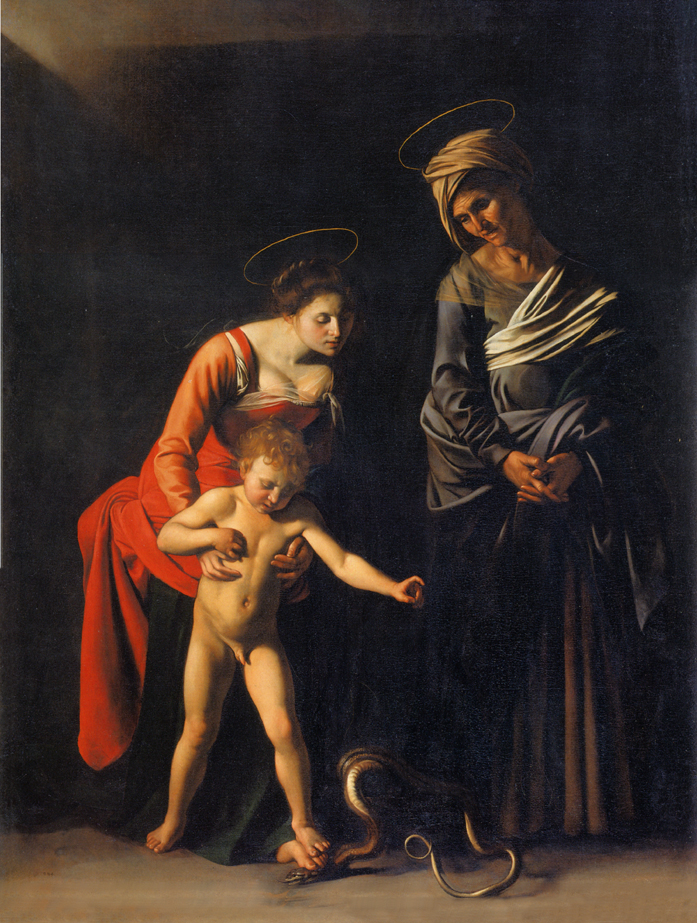
Madonna and Child with Saint Anne (Dei Palafrenieri) Self-researched
Painted for the altar of the Papal Grooms in St. Peter's Basilica but quickly removed due to its unorthodox portrayal, including the nudity of the Christ child. Purchased by Cardinal Scipione Borghese after its rejection.
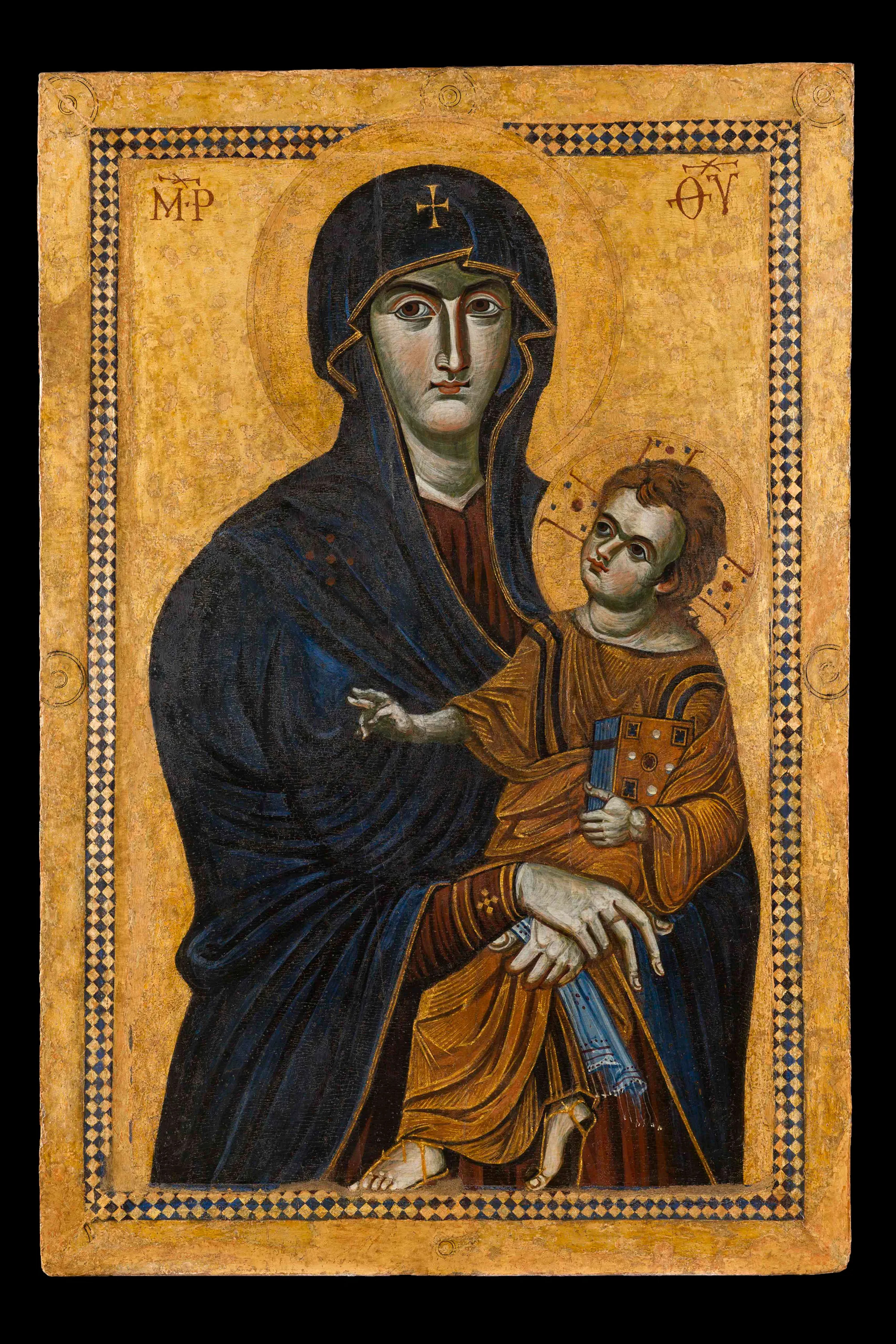
Salus Populi Romani Self-researched
A venerated Byzantine icon of the Madonna and Child kept in the Borghese (Pauline) Chapel. The image shows the Virgin holding the Christ Child, who holds a Gospel book. Tradition attributes it to Saint Luke the Evangelist. It is one of the most revered Marian icons in Rome and has been a particular devotion of Pope Francis. The icon was restored in 2018.
Madonna and Child with St. Nicholas and St. Lawrence Self-researched
Features Cima's characteristic atmospheric handling with a bright palette. His tranquil, luminous style shows the influence of both Bellini and Antonello da Messina.
Madonna, Child and St. John the Baptist Self-researched
A recently confirmed early work by Carpaccio, demonstrating his developing style before the major cycles for which he became famous.
Madonna and Child Self-researched
A work in the International Gothic style with a refined palette. Giambono designed the mosaics of the Birth of the Virgin and Presentation in the Temple.
Madonna and Child Self-researched
Features pearls and coral symbolizing the virgin birth and Christ's sacrifice. Demonstrates Flemish influence in the Venetian collection.
Madonna and Child Self-researched
One of two Madonna and Child paintings by Bartolomeo Vivarini in the collection, representing the transition from Late Gothic to Early Renaissance in Venice.
Ciborium Columns Self-researched
Four ornately carved alabaster columns supporting the ciborium (altar canopy) over the high altar. The columns contain 108 bas-relief scenes depicting episodes from the lives of Christ and the Virgin Mary, carved in a style that blends Byzantine and Western influences. Among the most intricate relief carvings in the basilica.