Sandro Botticelli
Born: c. 1445, Florence Died: 1510, Florence
Alessandro di Mariano di Vanni Filipepi, better known as Sandro Botticelli, was an Italian painter of the Early Renaissance. Active in the shop of Verrocchio, along with young Leonardo da Vinci. His posthumous reputation suffered until the late 19th century, when he was rediscovered by the Pre-Raphaelites.
Artworks
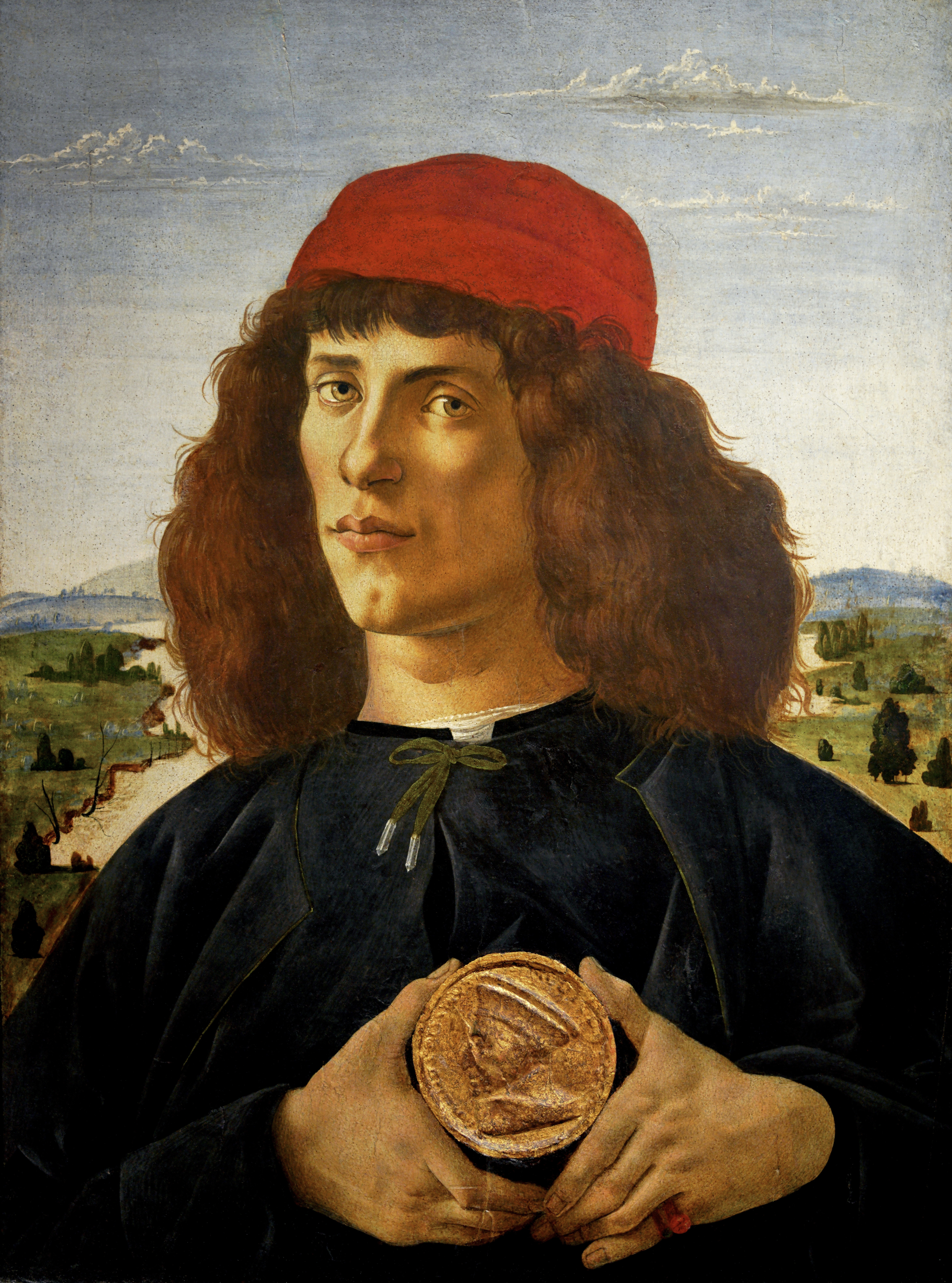
Portrait of a Man with a Medal of Cosimo de Medici
The man may be Lorenzo di Pierfrancesco, holding a medal depicting Cosimo de' Medici.
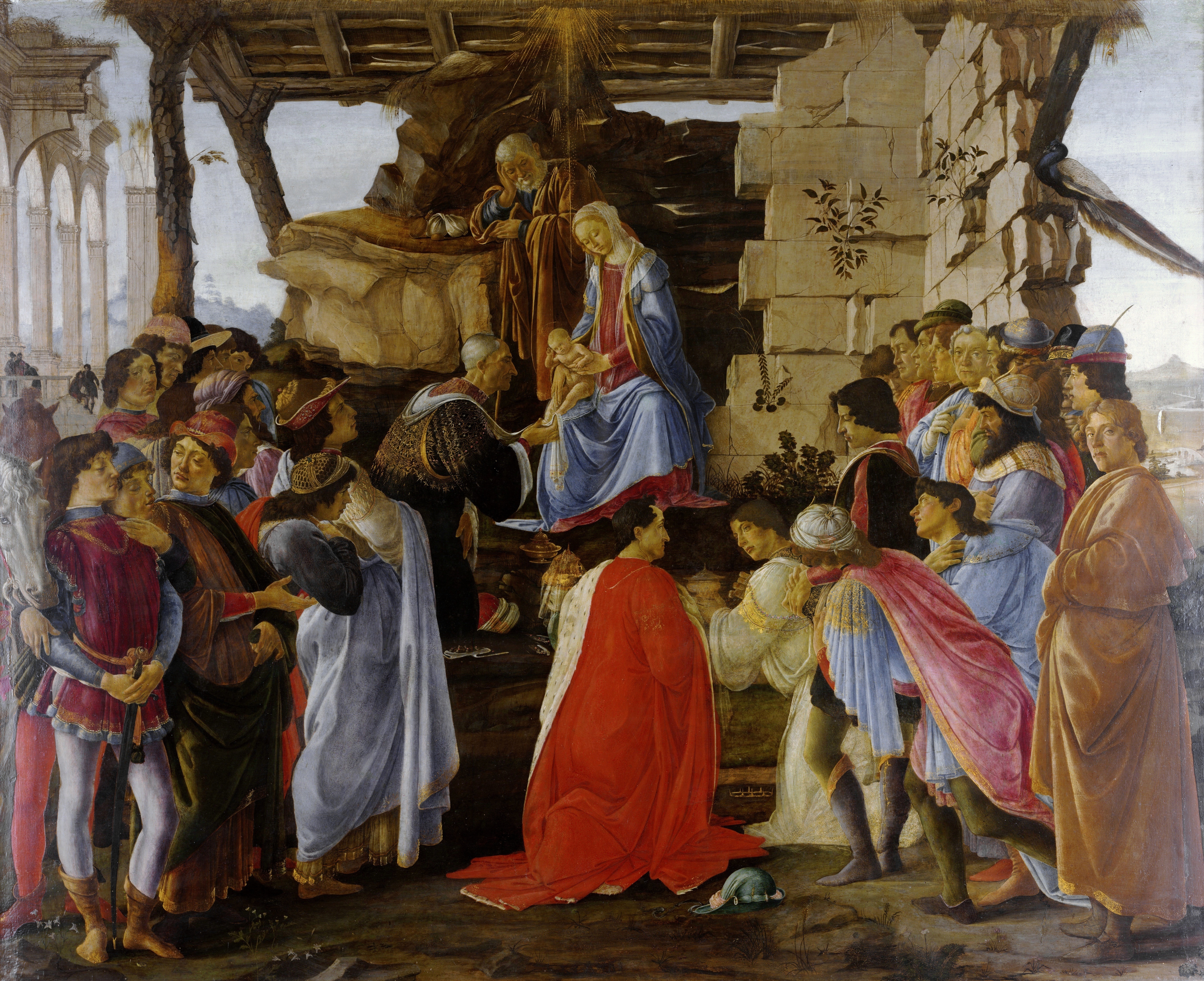
Adoration of the Magi
Notable for including portraits of the Medici family: - Cosimo was painted as the oldest magus, kneeling before the Christ - The other two magi are Giovanni and Cosimo's son, Piero the Gouty - The left most youth may be Lorenzo - The right, dark haired youth may be Giuliano, Lorenzo's brother - The figure with gold-colored cloak on the right is believed to be Botticelli's self-portrait
Primavera
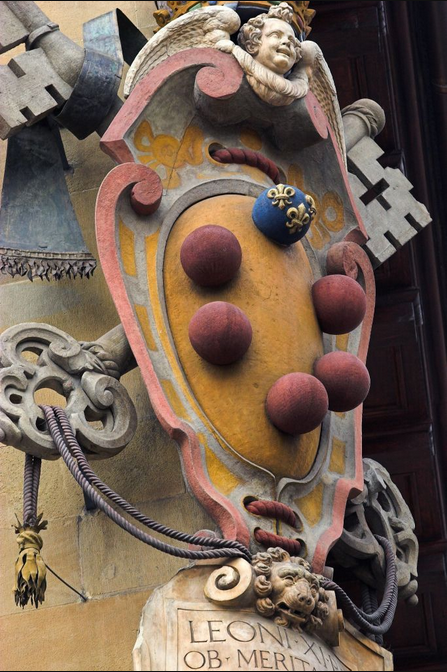
Primavera means "Spring." The painting depicts a mythological scene in a garden: - At the right, the wind god Zephyrus pursues the virgin nymph Chloris. Chloris then transforms into Flora, goddess of Spring, shown to her left - At the left, Mercury dispels the storm - At the center stands Venus, goddess of Love, Beauty and Marriage Links to the Medici: the oranges are similar to the red palle (balls) in the Medici coat of arms. Flames on Mercury and Venus' neck and breasts are the fires of St. Lawrence (Lorenzo).
Birth of Venus
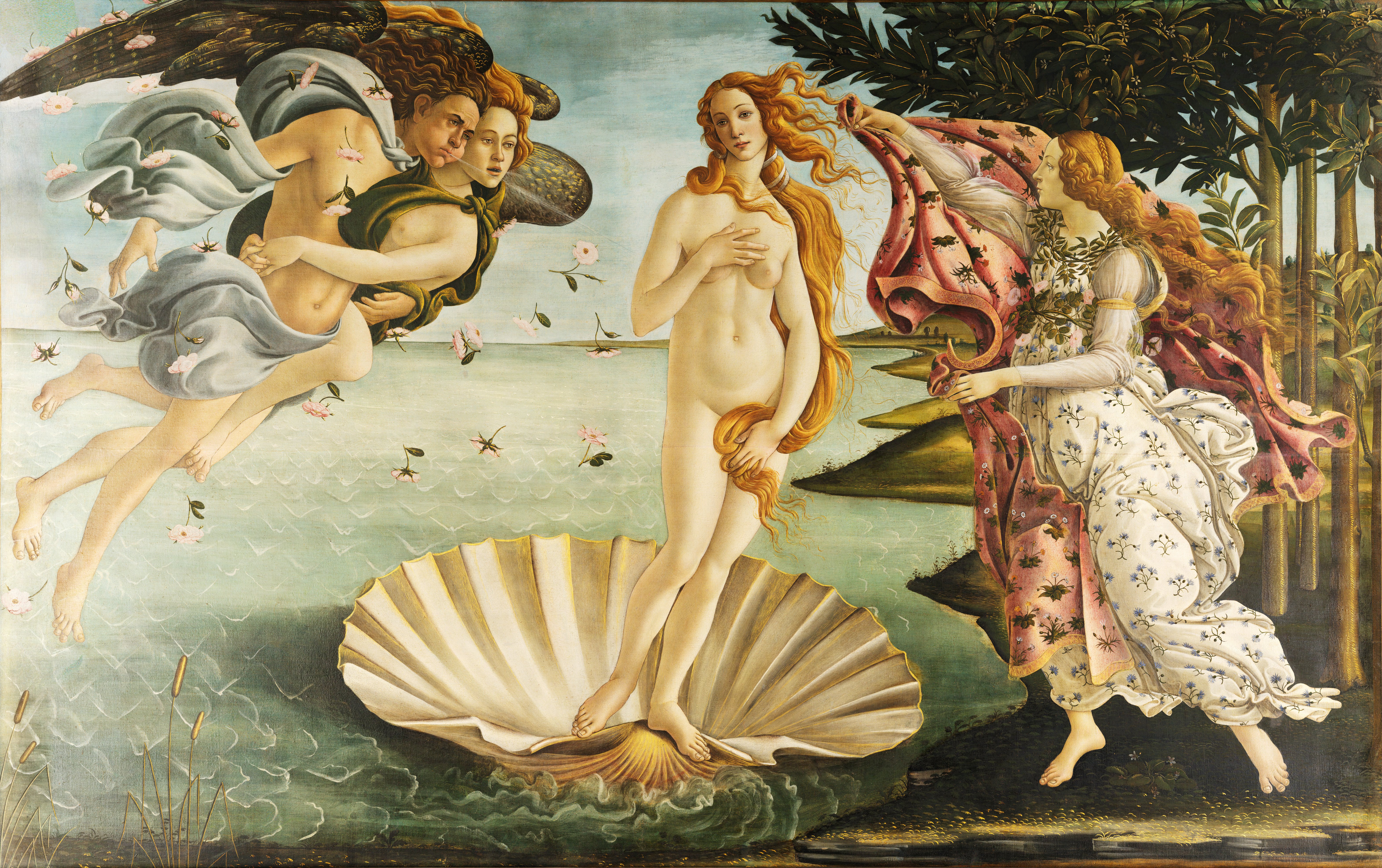
Depicts the goddess Venus emerging from the sea as a fully grown woman. In the left are Zephyrus (the wind god) and a nymph.
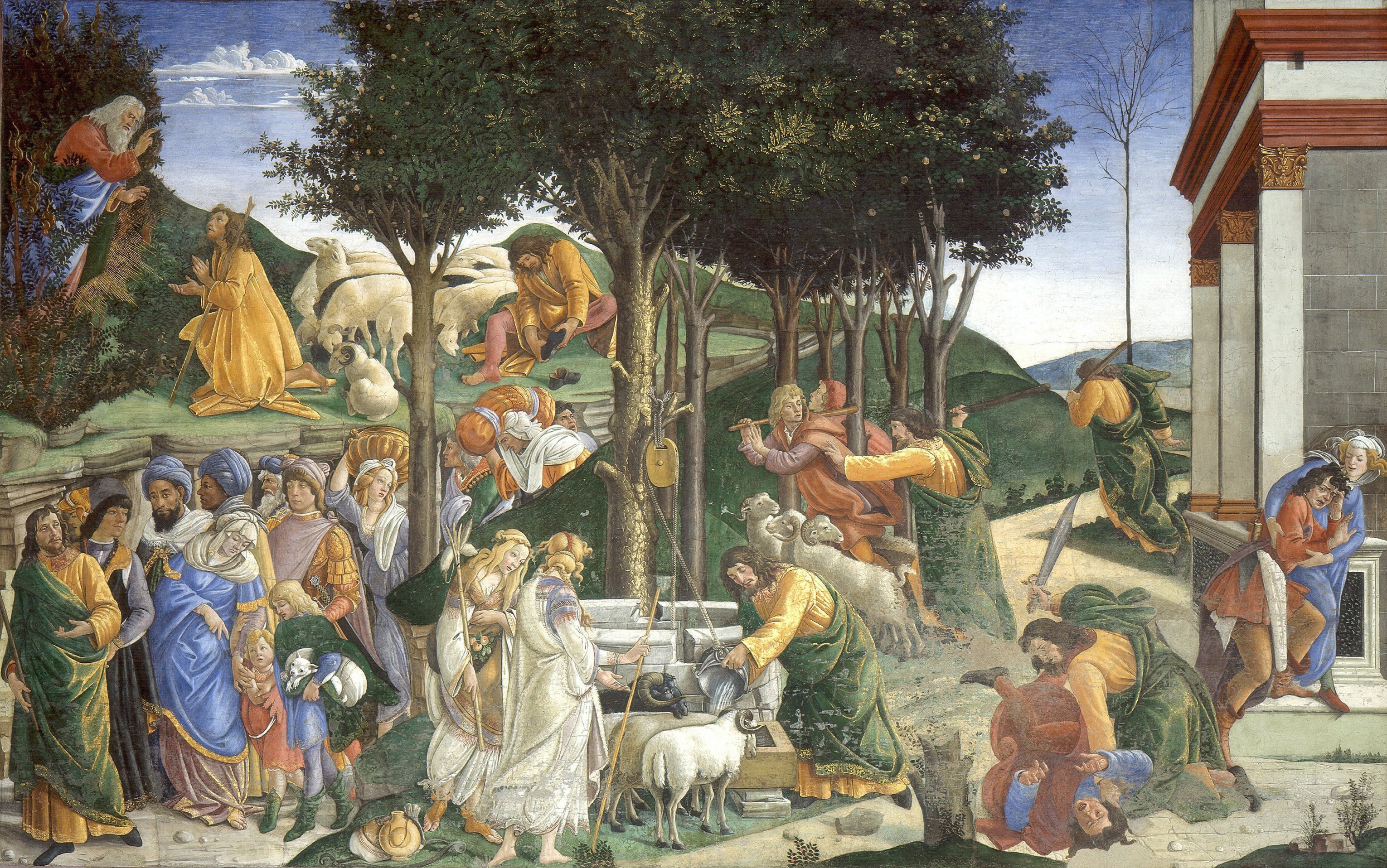
Youth of Moses
Part of the cycle of frescoes on the walls of the Sistine Chapel.
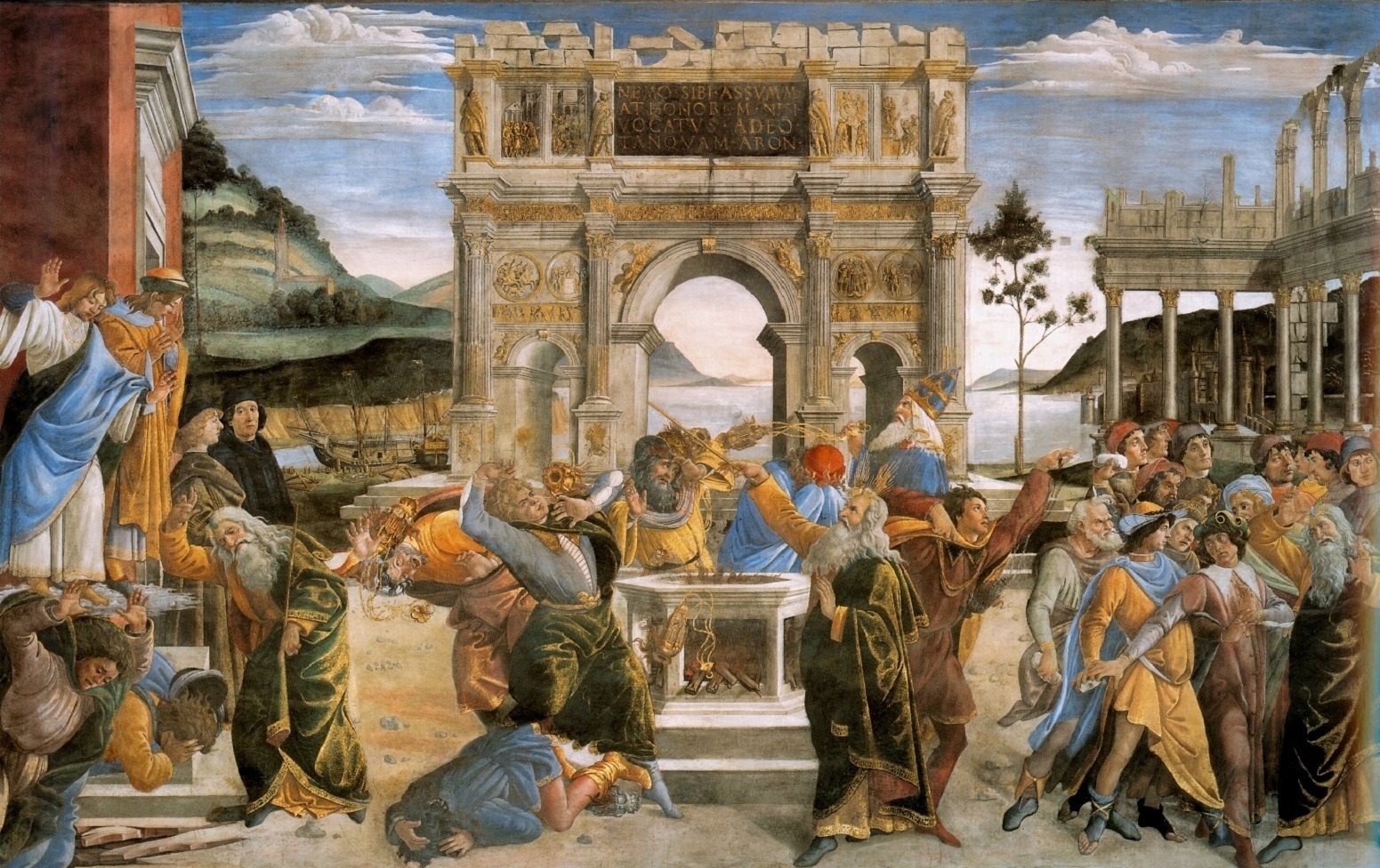
Punishment of the Korah, Dathan and Abiram
Story narrated from left to right: - In the left, the earth opens up to swallow the rebels - In the center, figures offering false fire to the Lord were consumed by the fire - In the right, Moses seeks refuge from Israelites who stoned him - Moses' forehead ray is from biblical text (Exodus 34:29-35)
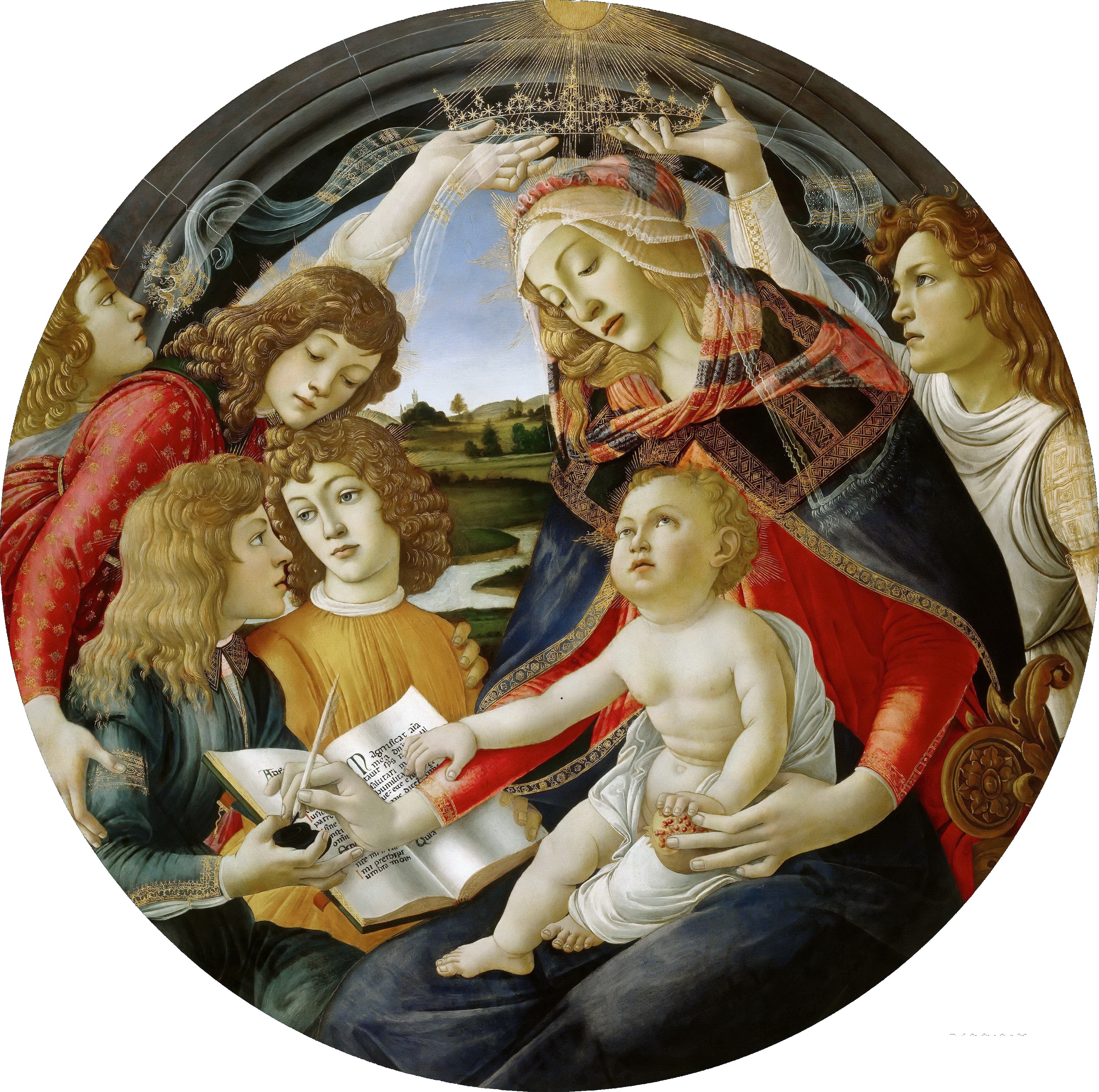
Madonna of the Magnificat
Probably a wedding present or a gift for a birth of a child. The circular format (tondo) was popular for domestic devotional images. Changing size from 33 to 46 inches was typical at the time.
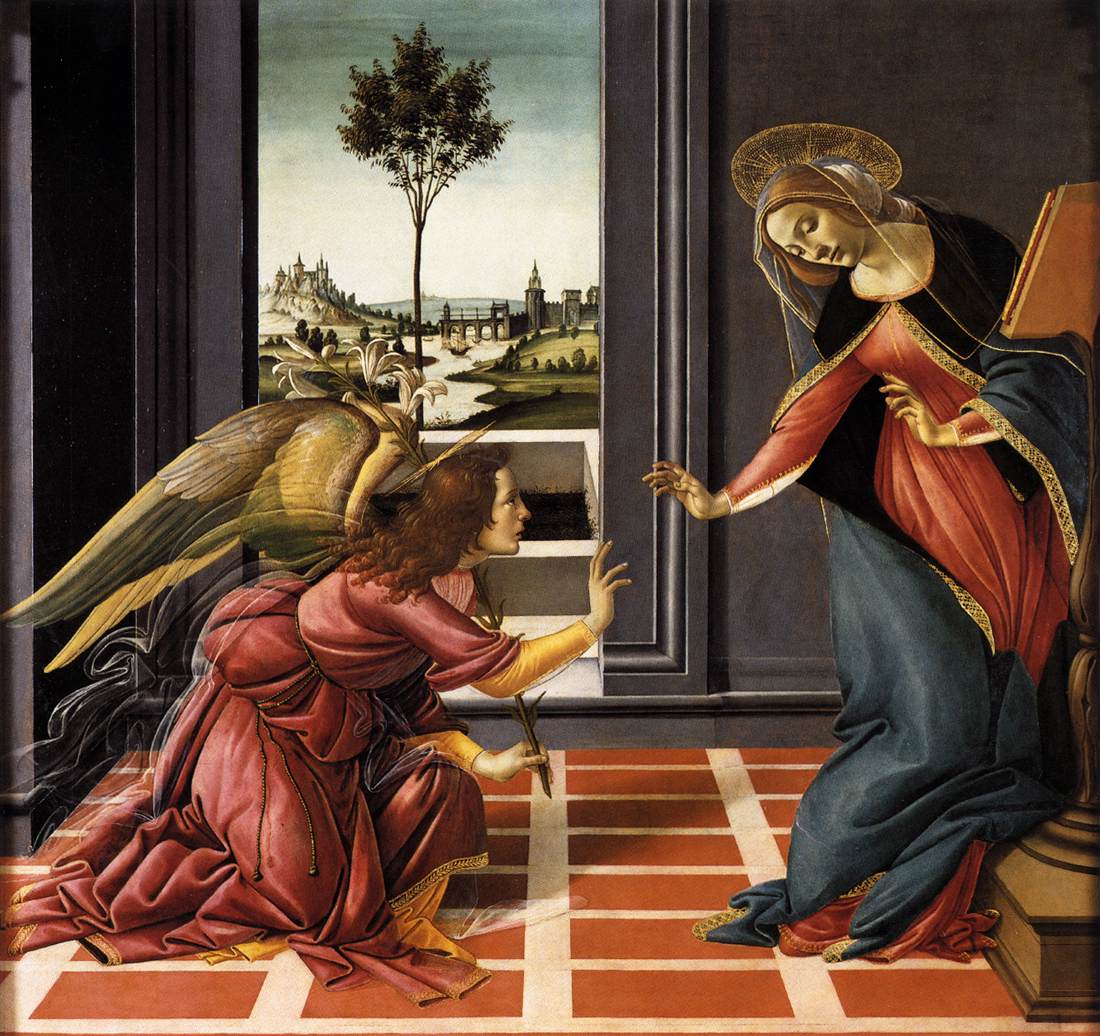
Cestello Annunciation
The strong emotions and color suggest Botticelli may have been a listener to Girolamo Savonarola, a monk from Ferrara who became the prior of San Marco. Savonarola was a preacher who advocated the destruction of secular art and culture, and was later tortured and executed.
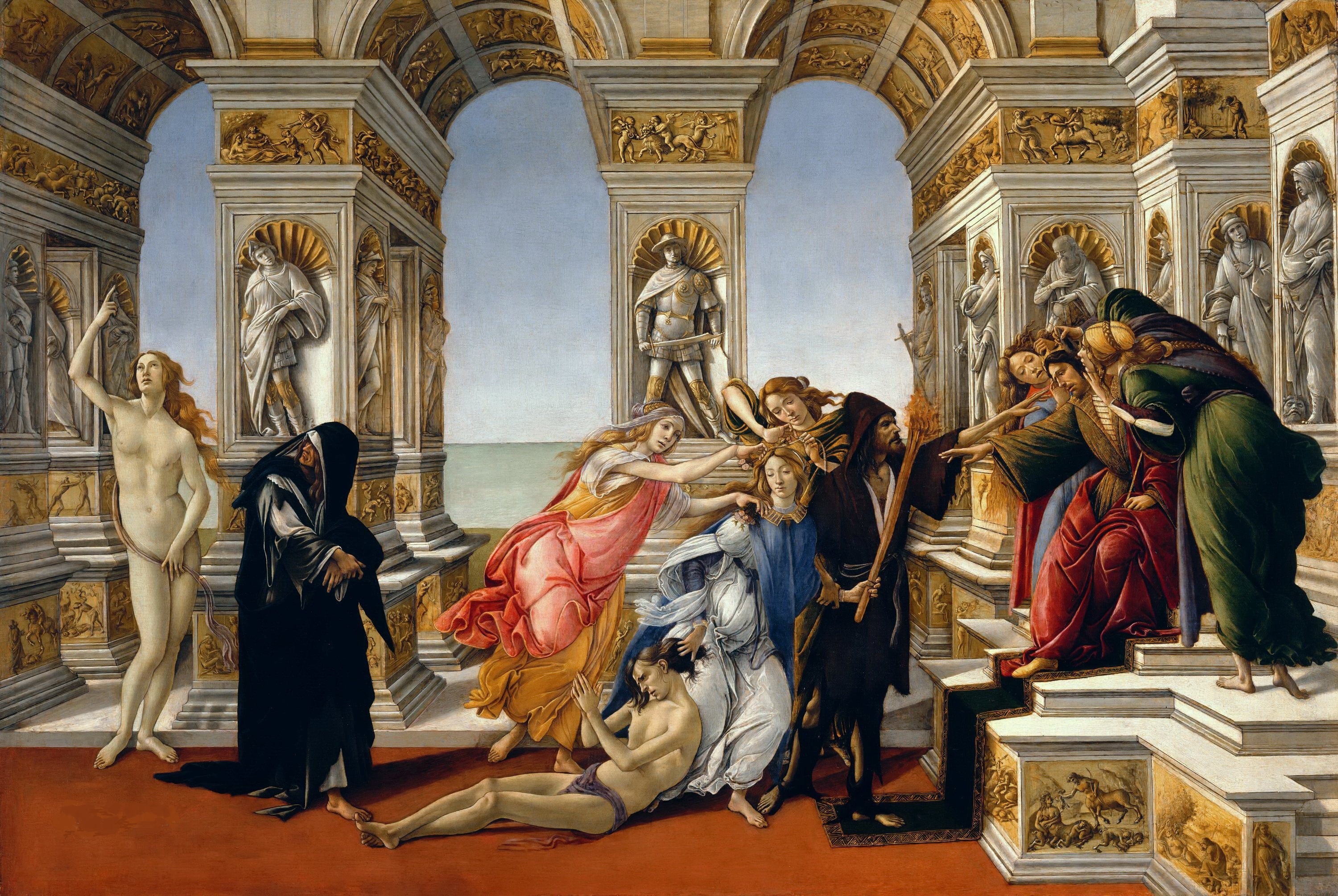
Calumny of Apelles
A reconstruction of a lost painting by the ancient Greek painter Apelles, described by Lucian. May have been painted in defense of Girolamo Savonarola, depicting the dangers of false accusations.