Saint Mark's Basilica Self-researched
Venice, Italy
Architectural style: Byzantine
Artworks
Genesis Cupola Mosaics Self-researched
Located in the south cupola of the west narthex, these mosaics depict the Creation story from Genesis. The designs were influenced by the Cotton Genesis, a 4th-5th century illuminated manuscript brought from Constantinople. The cycle continues with scenes of Noah, Abraham, Joseph, and Moses in adjacent cupolas.
Iconostasis Self-researched
A Gothic rood screen separating the nave from the presbytery, crowned by a tall crucifix flanked by 14 white marble statues depicting the Virgin, St Mark, and the twelve Apostles. Supported by eight columns of red marble. It is the only work in the basilica with the unquestioned signatures of the Dalle Masegne brothers, inscribed on the central section with the date 1394. A masterpiece of Venetian Gothic sculpture.
Sacristy Vault Mosaics Self-researched
The vault decoration of the sacristy depicting Old Testament prophets. Designed by Titian during the height of his career, the cartoons demonstrate the increasing involvement of Renaissance masters in the basilica's mosaic program, replacing the earlier Byzantine workshop tradition with compositions by individual named artists.
Treasury of St Mark's Basilica Self-researched
The single best collection of Byzantine metalwork and enamels that survives, many items looted during the Fourth Crusade of 1204. Contains sacred objects including the Votive Crown of Leo VI, chalices, patens, and reliquaries holding fragments purportedly of the True Cross and other sacred relics.

Portrait of the Four Tetrarchs Self-researched
A sculpture group of four Roman emperors dating from the Tetrarchy period. Fixed to the southwest corner of the basilica's facade since the Middle Ages, it was probably looted from the Philadelphion in Constantinople during the Fourth Crusade in 1204. The embracing figures represent the unity of the tetrarchs who ruled the Roman Empire together.

Pentecost Cupola Mosaic Self-researched
The westernmost dome of the nave depicting the descent of the Holy Spirit upon the Apostles at Pentecost. Flames descend from a central dove representing the Holy Spirit, with the Apostles arranged in a radial composition below.
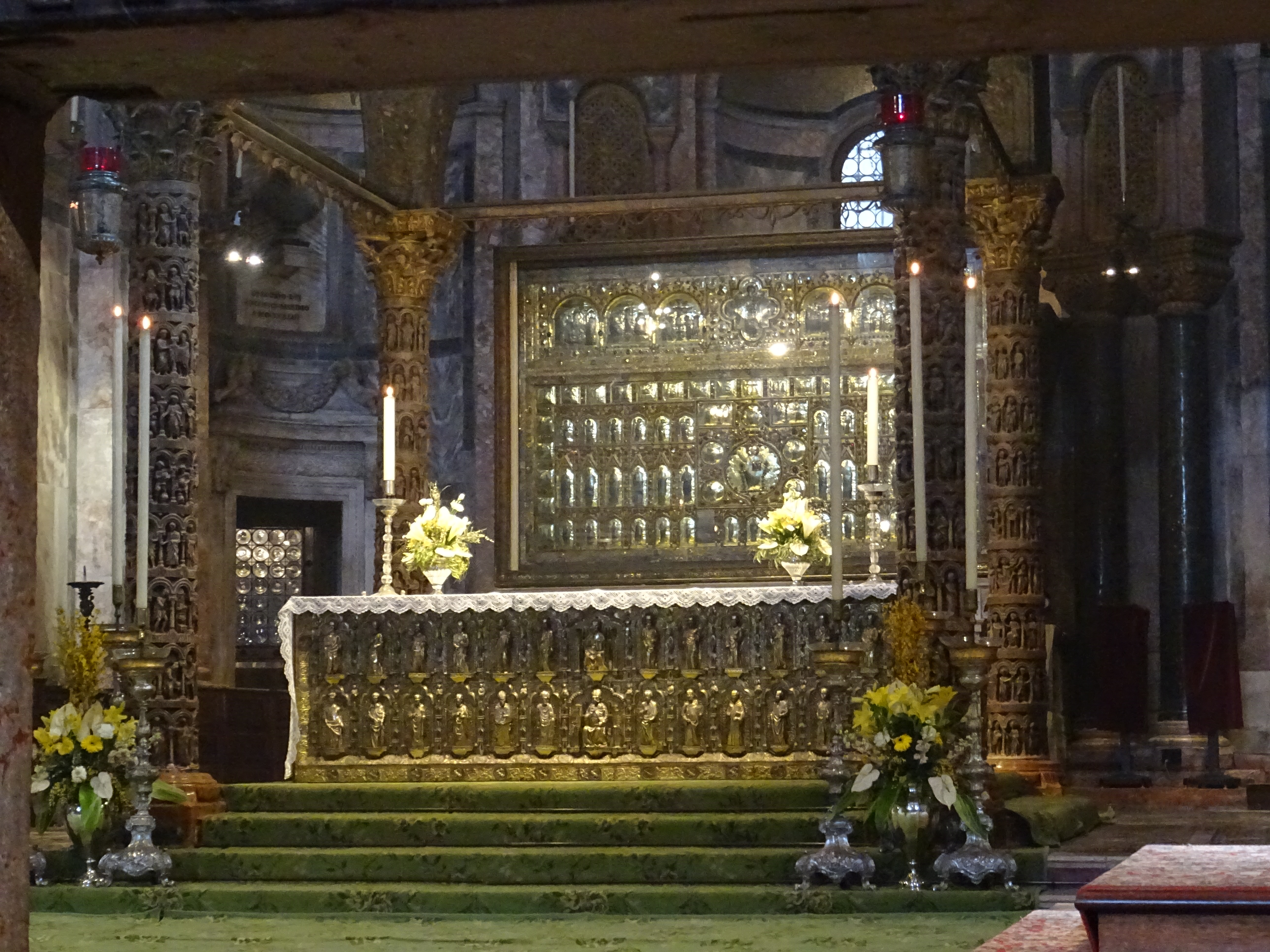
Pala d'Oro Self-researched
The high altar retable of the Basilica, universally recognized as one of the most refined works of Byzantine enamel. Adorned with 1,927 precious gems including 526 pearls, 330 garnets, 320 emeralds, 255 sapphires, and 75 rubies. The jewel-encrusted altarpiece depicts scenes from the life of Christ and took 366 years to complete.
Mascoli Chapel Mosaics Self-researched
A cycle of mosaics on the vault of the Cappella dei Mascoli depicting scenes from the Life of the Virgin. The sequence includes the Birth of the Virgin, the Presentation at the Temple, the Annunciation, the Visitation, and the Dormition (Death of the Virgin). Giambono designed the earlier scenes; later scenes show the influence of Early Renaissance spatial perspective, attributed to Andrea Mantegna or Jacopo Bellini.
Madonna Nicopeia Icon Self-researched
A revered Byzantine icon of the Virgin and Child, originally from Constantinople, brought to Venice after the Fourth Crusade of 1204. The name "Nicopeia" means "bringer of victory" and was once carried into battle by Byzantine emperors. Now displayed in the Cappella della Madonna Nicopeia on the north side of the transept.
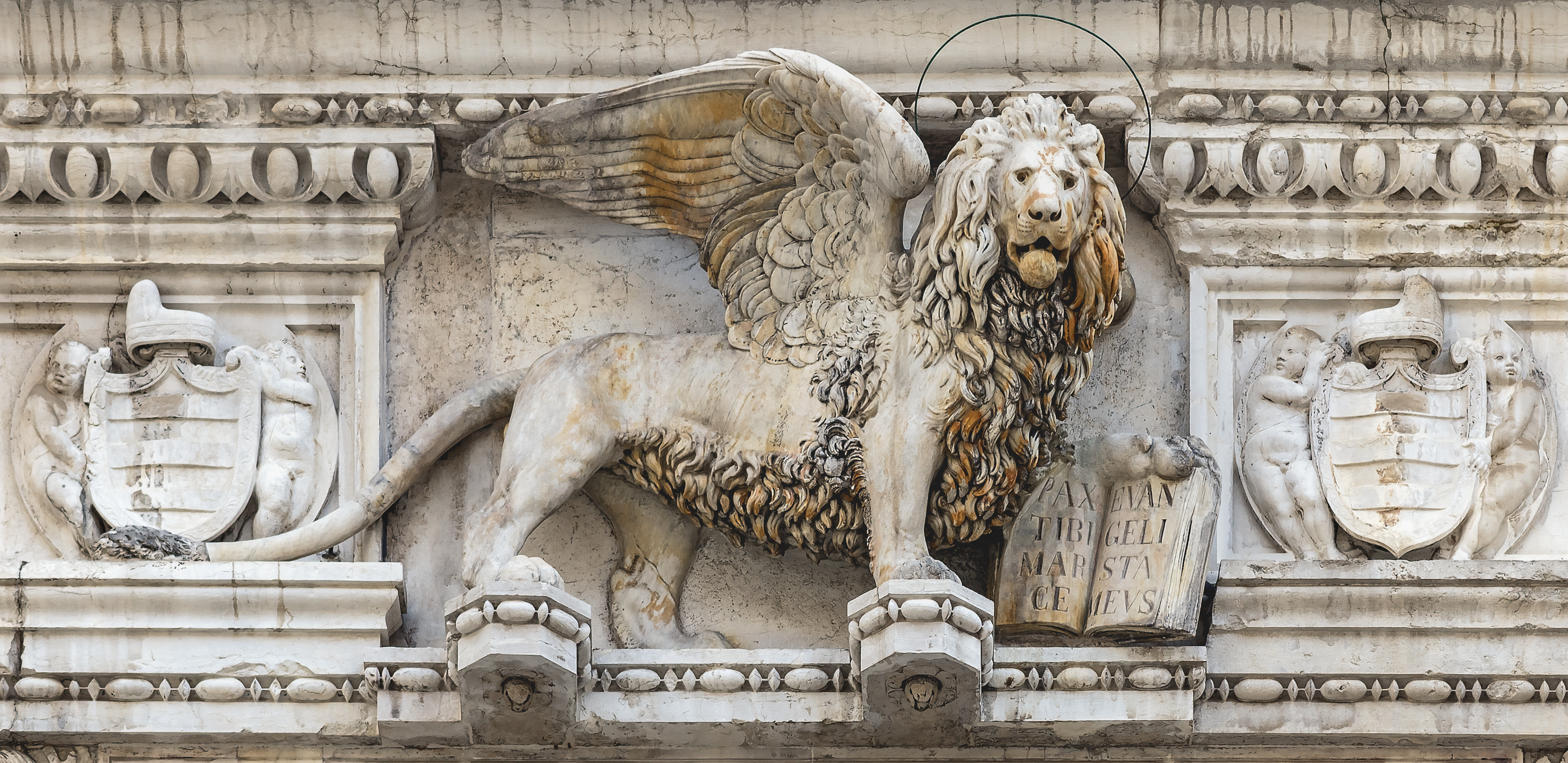
Lion of Saint Mark Self-researched
The winged lion symbol of Saint Mark the Evangelist and the city of Venice. Appears prominently throughout the basilica, including a golden lion surmounting the pinnacle holding a Bible. Derived from the Tetramorph vision in Ezekiel and Revelation where Mark is represented as a lion.
Horses of Saint Mark Self-researched
A group of four bronze horses that originally formed part of a quadriga monument. Brought to Venice from Constantinople after the Fourth Crusade in 1204. The originals are now in the basilica museum, with replicas on the facade. Also known as the Triumphal Quadriga.

Ciborium Columns Self-researched
Four ornately carved alabaster columns supporting the ciborium (altar canopy) over the high altar. The columns contain 108 bas-relief scenes depicting episodes from the lives of Christ and the Virgin Mary, carved in a style that blends Byzantine and Western influences. Among the most intricate relief carvings in the basilica.
Byzantine Mosaics of San Marco Self-researched
The basilica features 8,000 square meters of mosaics illuminating the interior. The oldest surviving mosaic, depicting Saint Alipio, dates to 1260 and shows the translation of Saint Mark's relics from Alexandria, with merchants hiding the body beneath pork to avoid Muslim inspection.
Baptistery Mosaics Self-researched
The baptistery contains mosaics depicting scenes from the life of Saint John the Baptist on the walls and, in the ante-baptistery, the infancy of Christ. The dome above the bronze font shows the dispersion of the Apostles, each baptizing a different nationality in reference to Christ's command to preach the Gospel to all peoples. The baptistery also contains the tomb of Doge Andrea Dandolo.
Baptistery Font Self-researched
A bronze baptismal font designed by Jacopo Sansovino, positioned beneath the central dome of the baptistery. The font is surmounted by the mosaic dome depicting the mission of the Apostles. Sansovino served as Proto (chief architect) of St Mark's from 1529.
Ascension Cupola Mosaic Self-researched
The central dome of the basilica depicting Christ's Ascension into heaven. The composition shows Christ in glory surrounded by angels, with the Virgin Mary and the Apostles below. One of the finest examples of Byzantine-influenced mosaic art in the Western world.
Altars of St Paul, St James, and St Clement Self-researched
Three Renaissance altars featuring statues of the saints surrounded by elegant Renaissance tabernacles. Created by Antonio Rizzo of Verona, these works represent the transition from Gothic to Renaissance sculptural style within the basilica.