Doge's Palace Self-researched
Venice, Italy
Architectural style: Venetian Gothic
Artworks
Juno Showering Gifts on Venice Self-researched
Located in the Council of Ten Room, this ceiling painting shows the goddess Juno bestowing gifts upon the personification of Venice, symbolizing the city's prosperity and divine favor.
Mars and Neptune Self-researched
Two colossal statues guarding the Giants' Staircase (Scala dei Giganti). Mars represents Venice's power by land, Neptune her power by sea. The statues flank the staircase where doges were crowned.
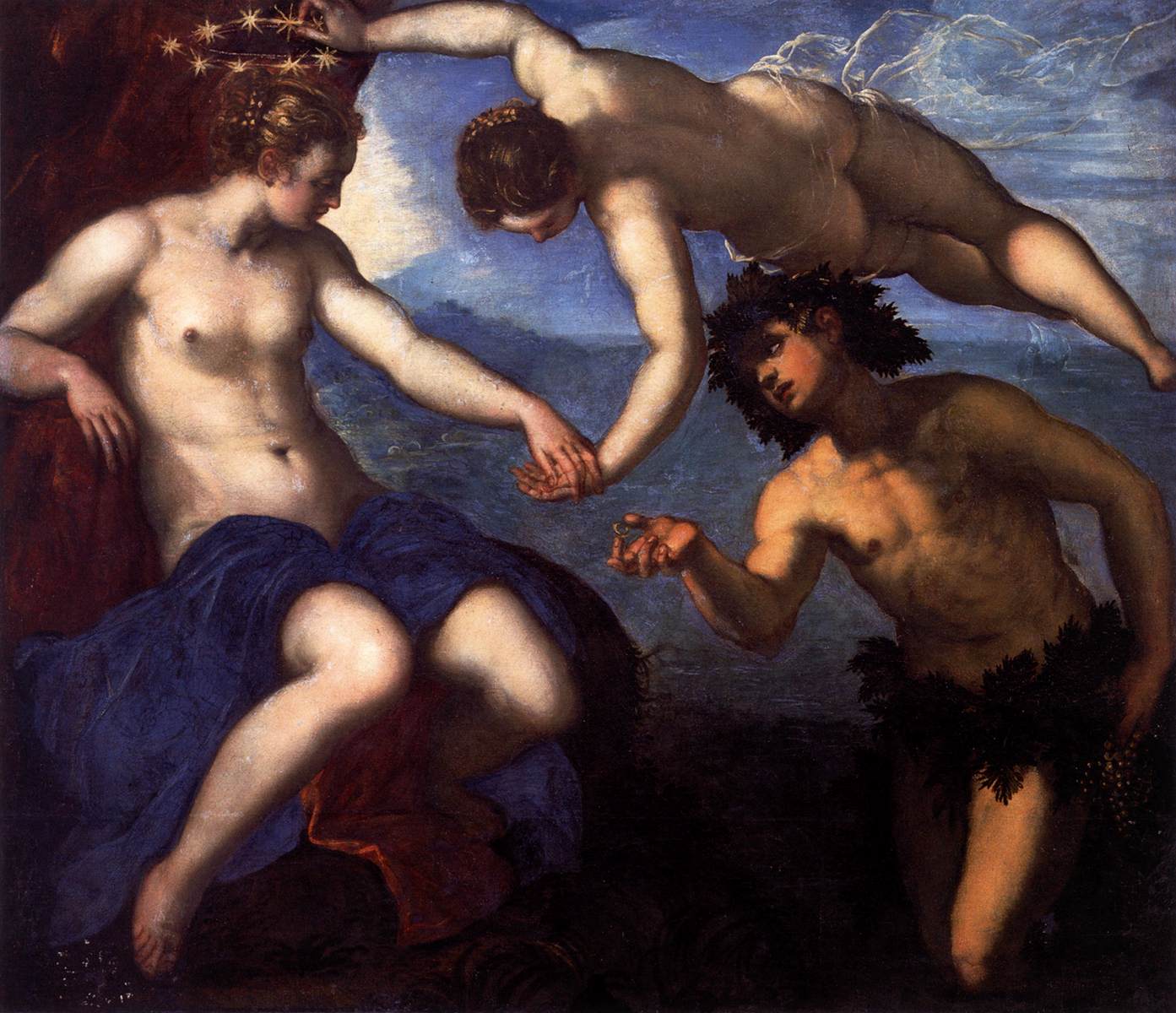
Bacchus, Venus and Ariadne Self-researched
One of four mythological paintings in the Sala dell'Anticollegio, originally commissioned to celebrate the government of Doge Girolamo Priuli. The painting depicts Bacchus crowning Ariadne with a ring of stars while Venus watches, symbolizing Venice's heavenly gifts and beauty.
The Forge of Vulcan Self-researched
Part of the four mythological paintings in the Sala dell'Anticollegio. Depicts the god Vulcan at his forge, symbolizing industry and craftsmanship. One of the allegories of the virtues of Venice's good government.
Minerva Protecting Peace and Abundance from Mars Self-researched
Also called "Pallas Pushes Mars Away." Part of the Sala dell'Anticollegio cycle, this allegory shows Minerva (goddess of wisdom) defending Peace and Prosperity from Mars (god of war), symbolizing Venice's wise governance that maintains peace and plenty.
Mercury and the Three Graces Self-researched
One of four mythological allegories in the Sala dell'Anticollegio representing the virtues of the Venetian Republic. Mercury, messenger of the gods, is surrounded by the Three Graces who personify beauty, charm, and joy. Originally in the Atrio Quadrato, moved to the Anticollegio in 1713.
The Rape of Europa Self-researched
Located in the Sala dell'Anticollegio, this mythological painting depicts the abduction of Europa by Zeus in the form of a white bull. It hangs alongside Tintoretto's allegories.
Jacob's Return to Canaan Self-researched
Located in the Sala dell'Anticollegio alongside works by Tintoretto and Veronese. Depicts the biblical patriarch Jacob returning to Canaan with his family and flocks. Bassano's characteristic treatment of pastoral and rural scenes is evident in this work.
Triumph of Venice Self-researched
A ceiling painting in the Chamber of the Great Council showing Venice crowned by Victory. Part of the decorative program celebrating Venice's glory, executed after the devastating fire of 1577.
Apotheosis of Venice Self-researched
A ceiling painting in the Chamber of the Great Council celebrating Venice personified, surrounded by allegorical figures representing Peace, Justice, and Fame. A masterpiece of illusionistic ceiling painting.
Il Paradiso Self-researched
A massive painting (22 x 9 metres) dominating the main hall of the Doge's Palace, one of the largest paintings on canvas in the world. The composition features around 500 figures in a heavenly scene. The light emanating from Christ descends along the central axis directly to the doge's throne, symbolizing that the Doge receives his authority from on high.