Tintoretto Self-researched
Born: 1518, Venice Died: 1594, Venice Source: self-research
Jacopo Robusti, known as Tintoretto, was an Italian Renaissance painter of the Venetian school. His contemporaries both admired and criticized the speed with which he painted and the unprecedented boldness of his brushwork. For his phenomenal energy in painting he was termed "il Furioso." His work is characterized by muscular figures, dramatic gestures and bold use of perspective.
Artworks
Marriage at Cana Self-researched
Displayed in the great sacristy, this painting depicts Christ's first miracle at the wedding feast. Notable for including a self-portrait of the artist among the wedding guests.
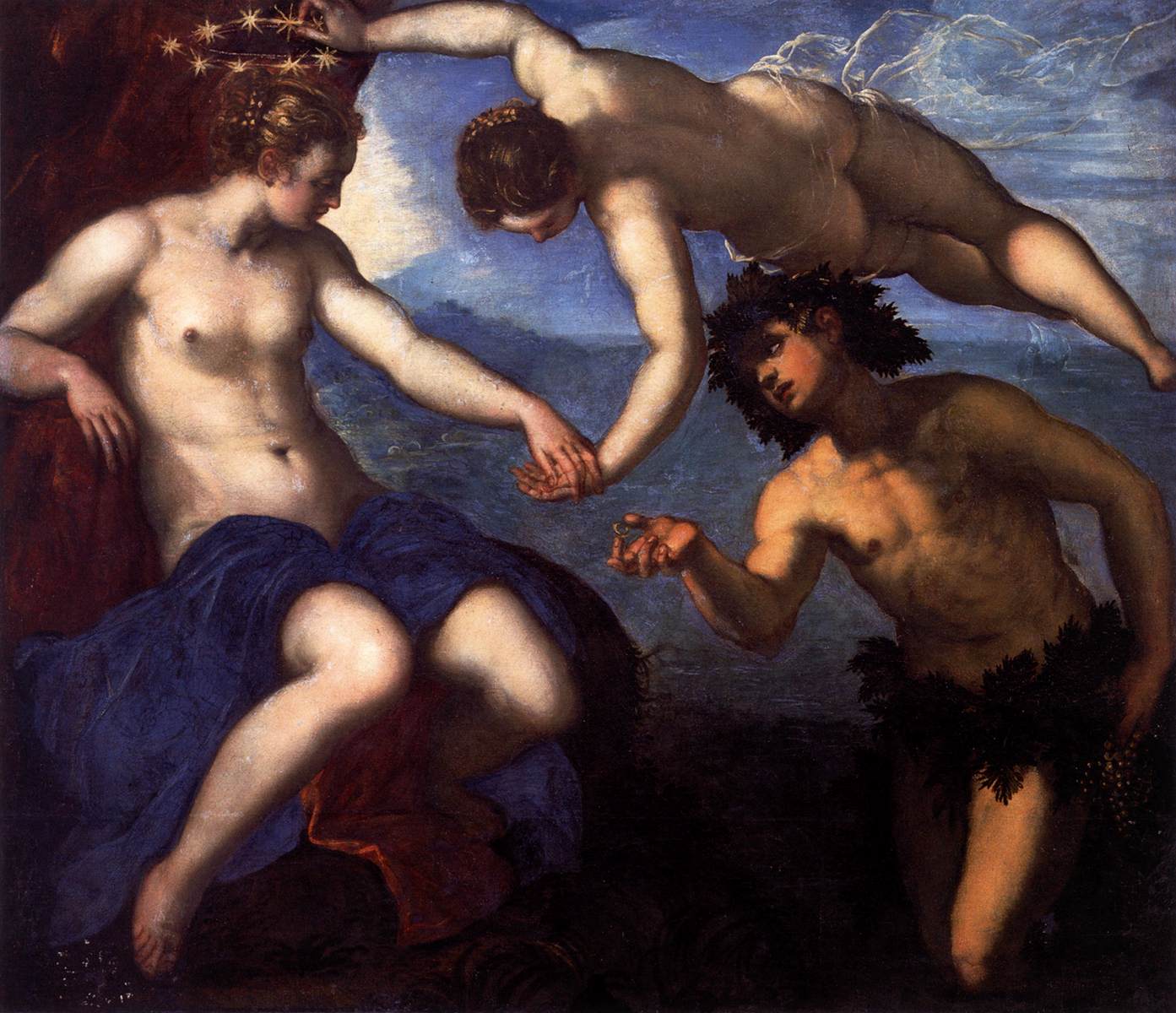
Bacchus, Venus and Ariadne Self-researched
One of four mythological paintings in the Sala dell'Anticollegio, originally commissioned to celebrate the government of Doge Girolamo Priuli. The painting depicts Bacchus crowning Ariadne with a ring of stars while Venus watches, symbolizing Venice's heavenly gifts and beauty.
The Forge of Vulcan Self-researched
Part of the four mythological paintings in the Sala dell'Anticollegio. Depicts the god Vulcan at his forge, symbolizing industry and craftsmanship. One of the allegories of the virtues of Venice's good government.
Minerva Protecting Peace and Abundance from Mars Self-researched
Also called "Pallas Pushes Mars Away." Part of the Sala dell'Anticollegio cycle, this allegory shows Minerva (goddess of wisdom) defending Peace and Prosperity from Mars (god of war), symbolizing Venice's wise governance that maintains peace and plenty.
Mercury and the Three Graces Self-researched
One of four mythological allegories in the Sala dell'Anticollegio representing the virtues of the Venetian Republic. Mercury, messenger of the gods, is surrounded by the Three Graces who personify beauty, charm, and joy. Originally in the Atrio Quadrato, moved to the Anticollegio in 1713.
Il Paradiso Self-researched
A massive painting (22 x 9 metres) dominating the main hall of the Doge's Palace, one of the largest paintings on canvas in the world. The composition features around 500 figures in a heavenly scene. The light emanating from Christ descends along the central axis directly to the doge's throne, symbolizing that the Doge receives his authority from on high.