Basilica of San Lorenzo
Florence, Italy
Architectural style: Renaissance
Artworks
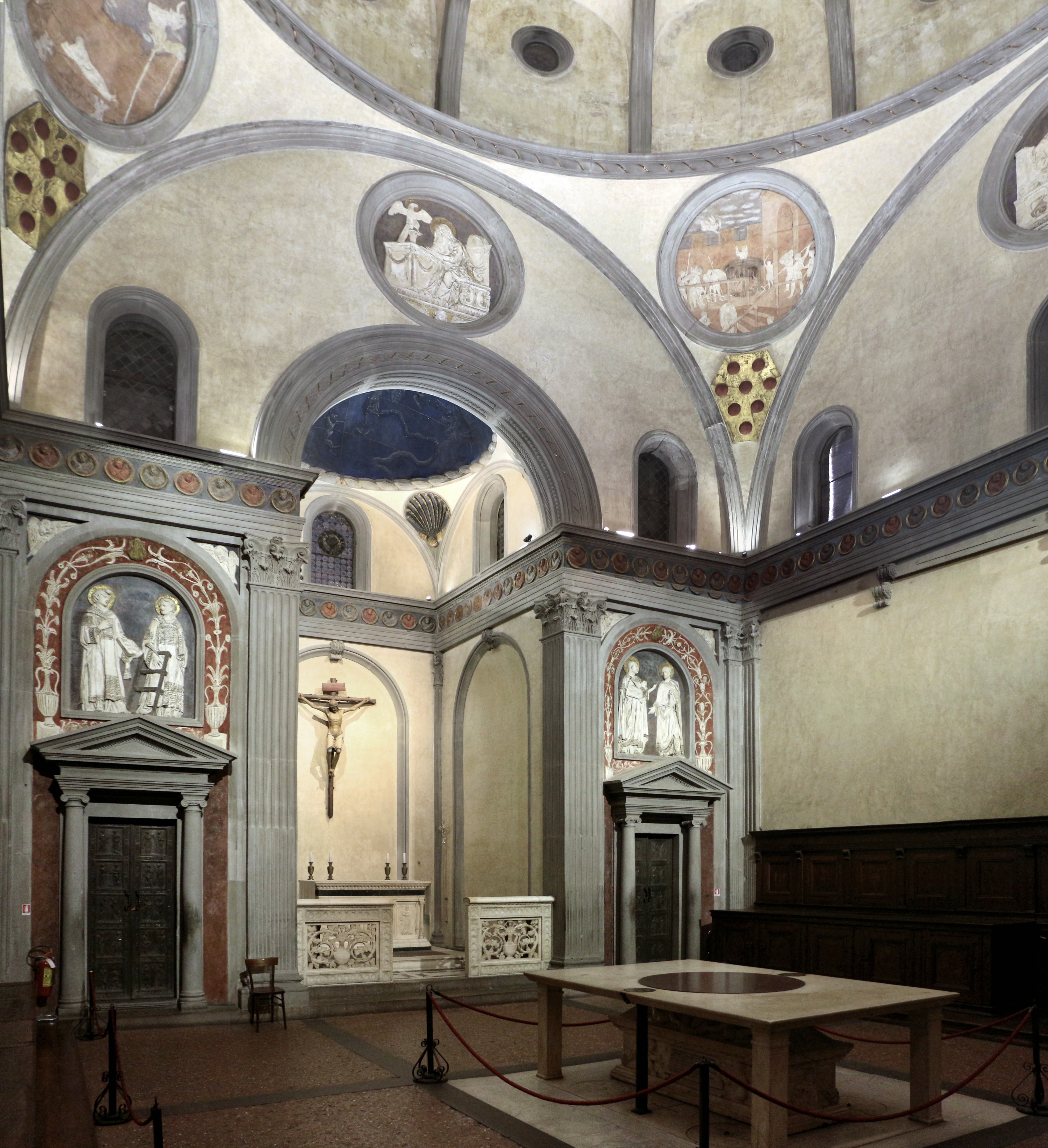
Old Sacristy (Sagrestia Vecchia)
One of the earliest Renaissance interiors. Commissioned by Giovanni di Bicci de' Medici as a new sacristy for the old church of San Lorenzo.
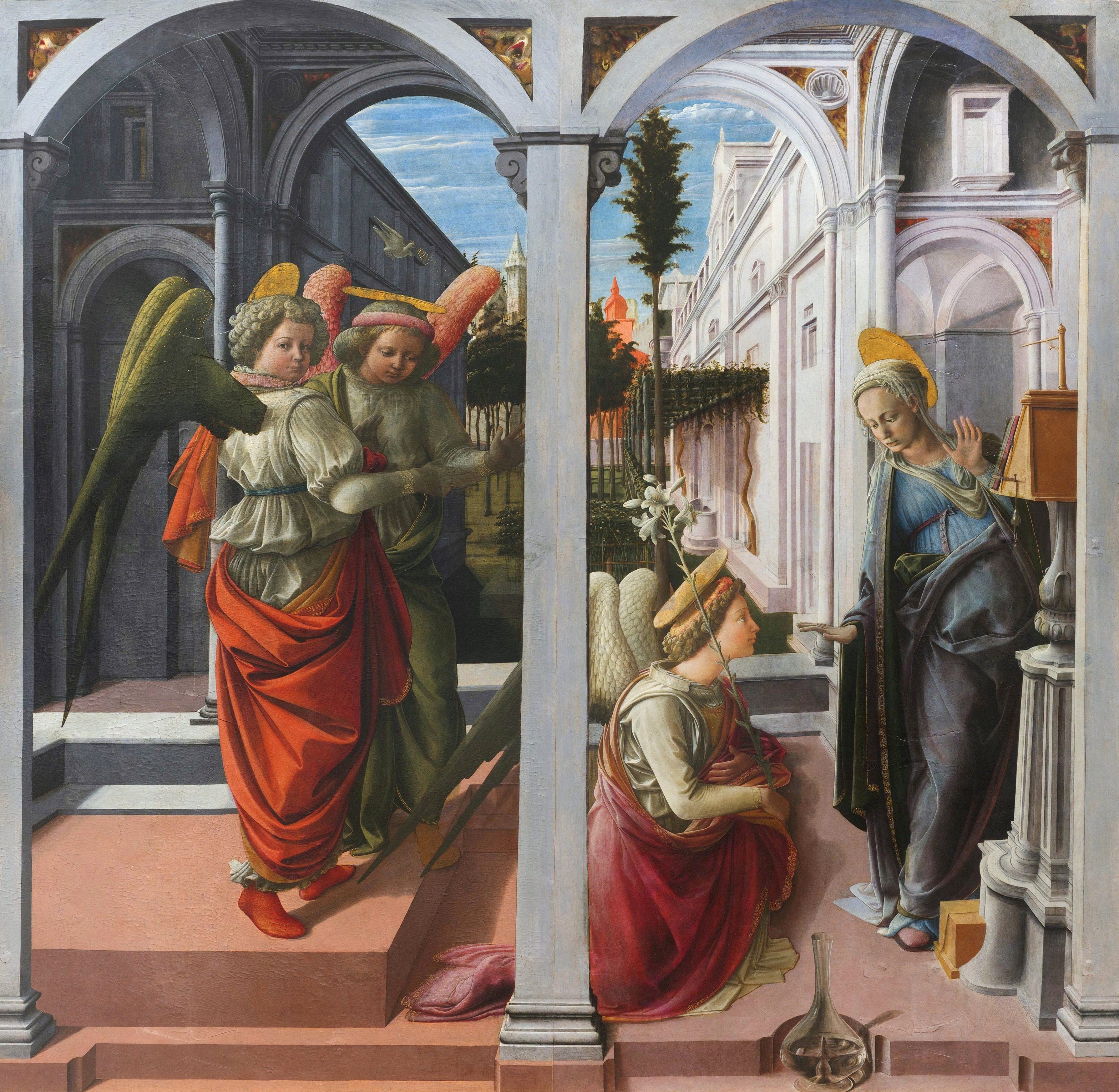
Martelli Annunciation
Annunciation scene created for the Martelli family.
Bronze Pulpits Self-researched
Donatello's final works, these two bronze pulpits in the nave of San Lorenzo depict the Passion and Resurrection of Christ with remarkable emotional intensity. The reliefs show scenes including the Crucifixion, Lamentation, Entombment, and Resurrection. The pulpits were completed by Donatello's workshop after his death in 1466, and some scholars believe the finish shows hands other than the master's. The expressive, almost tortured style of these late works differs markedly from Donatello's earlier, more classical manner. Donatello is buried in San Lorenzo, near Cosimo de' Medici, his longtime patron.
Medici Chapels Self-researched
Two chapels built between the 16th and 17th centuries as an extension to the Basilica of San Lorenzo. They are the Sagrestia Nuova (New Sacristy), designed by Michelangelo, and the larger Cappella dei Principi (Chapel of the Princes), a collaboration between the Medici family and architects. The purpose of the chapels was to celebrate the Medici family, patrons of the church and Grand Dukes of Tuscany. The Sagrestia Nuova was Michelangelo's first realization of architecture. He served as both architect and sculptor, creating a unified artistic vision. The New Sacristy contains the celebrated Medici tombs with their allegorical figures of Day, Night, Dawn, and Dusk.

Tomb of Lorenzo de' Medici, Duke of Urbino Self-researched
A monumental tomb featuring a contemplative seated figure of Lorenzo de' Medici, Duke of Urbino, known as "Il Pensieroso" (The Thinker) for his meditative pose with his chin resting on his hand. The allegorical figures of Dawn and Dusk recline on the sarcophagus below. Dawn is represented as a female figure awakening, her expression suggesting melancholy at the new day. Dusk is a weary male figure, also with an expression of profound sadness. Together with the companion tomb of Giuliano, the ensemble represents Michelangelo's meditation on time, death, and eternity.
Laurentian Library Self-researched
A historic library in Florence, containing more than 11,000 manuscripts and 4,500 early printed books. Built in a cloister of the Medicean Basilica di San Lorenzo under the patronage of the Medici pope Clement VII, the library was built to emphasize that the Medici were no longer just merchants but members of intelligent and ecclesiastical society. The library building is renowned for its architecture designed by Michelangelo and is an example of Mannerism. The vestibule features a revolutionary staircase with three flights that pour down like lava, creating a dramatic entrance to the reading room. The architectural elements—columns, pilasters, and brackets—are treated in unconventional ways that anticipate Baroque architecture.
Tomb of Giuliano de' Medici, Duke of Nemours Self-researched
A monumental tomb featuring an idealized seated portrait of Giuliano de' Medici, Duke of Nemours, with the allegorical figures of Night and Day reclining on the sarcophagus below. The 1.68m-tall marble sculpture forms part of the decorative scheme of the Medici Chapel in San Lorenzo. Night is represented as a sleeping female figure with symbols of sleep (owl, poppies, mask), while Day is a muscular male figure turning away, his face left unfinished. According to Michelangelo's disciple Ascanio Condivi, the sculptures "signify Day and Night and, in conjunction, Time which devours all things."
