Annunciation
Summary
The Annunciation depicts the announcement by the Angel Gabriel to the Virgin Mary that she would conceive and bear the Son of God. Gabriel appears to Mary in Nazareth and tells her "Hail, full of grace, the Lord is with thee." He announces that she will conceive by the Holy Spirit and bear a son named Jesus who will be called the Son of the Most High and will reign over the house of Jacob forever.
Biblical Reference
Book(s): Gospel of Luke
Chapters/Verses: Luke 1:26-38
Artworks Depicting This Story
Ciborium of Deodatus Self-researched
A Gothic-style altar canopy (baldacchino) signed "Deodatus me fecit" ("Deodatus made me"). In the Florentine Gothic style with Cosmatesque inlay decoration, it is supported by four red granite columns from Aswan, Egypt, topped with Ionic capitals. The front face features a mosaic scene of the Annunciation facing the nave.
Martelli Annunciation
Annunciation scene created for the Martelli family.
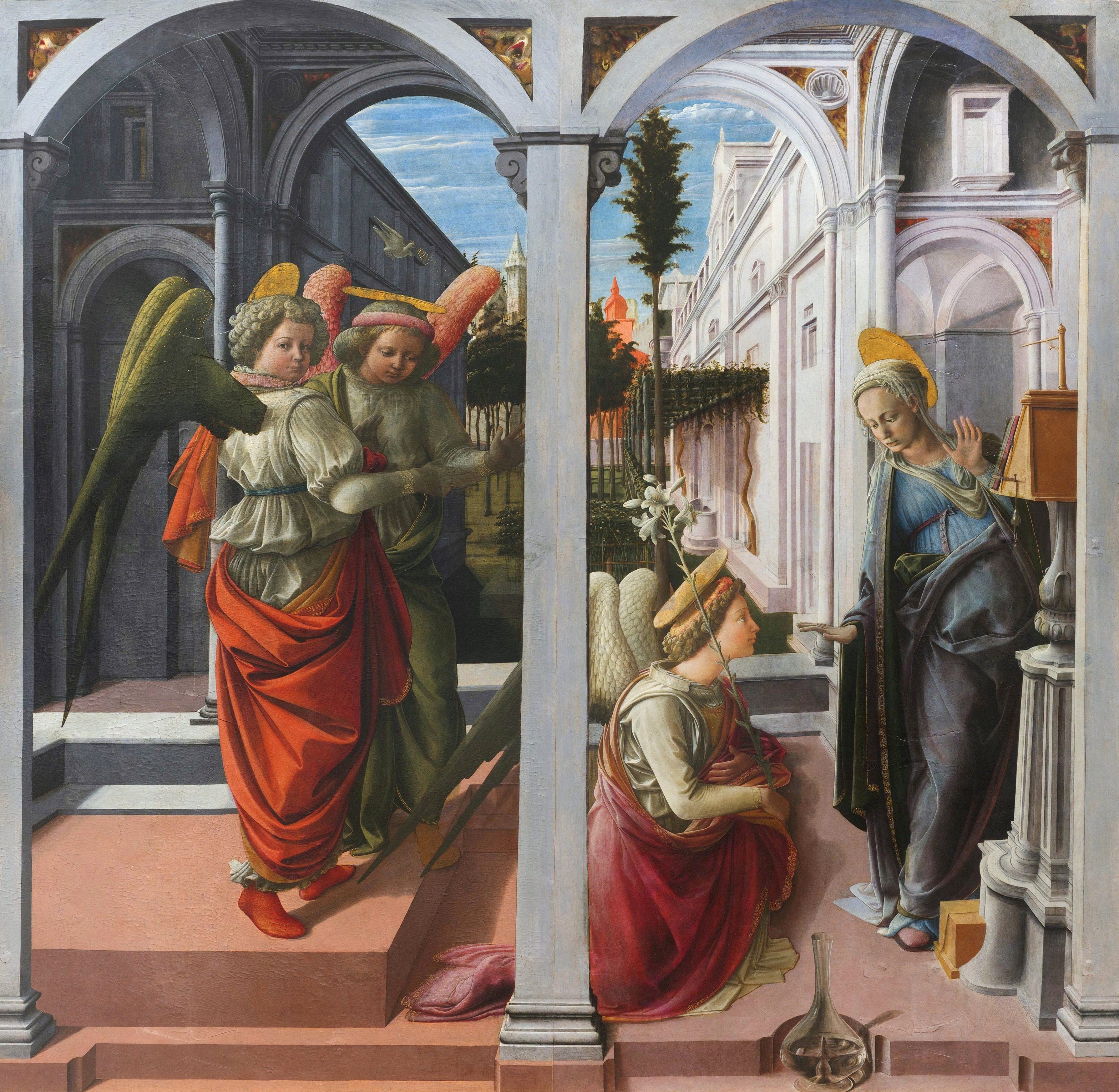
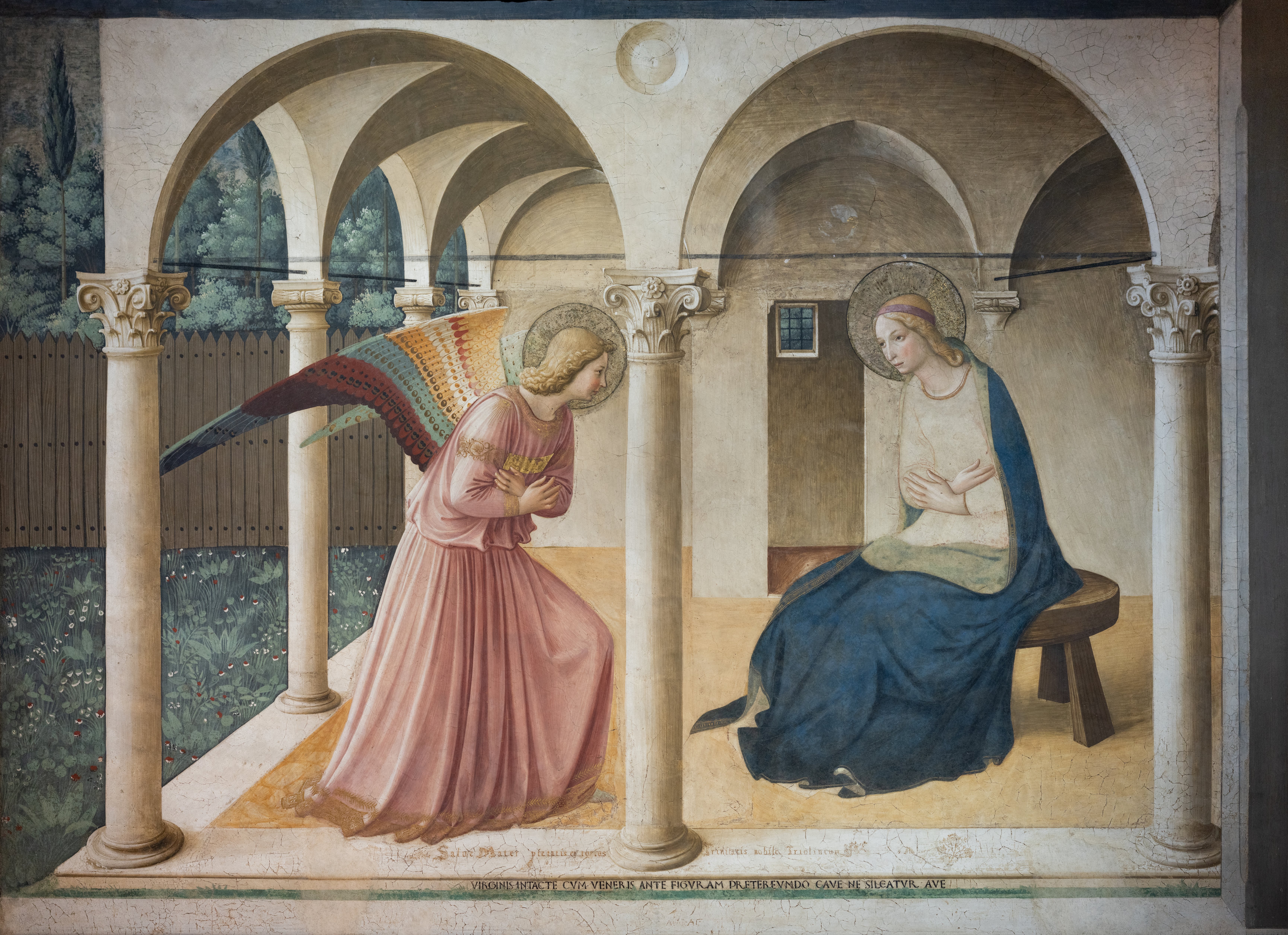
Annunciation
One of Fra Angelico's most famous frescoes, located in the dormitory corridor of San Marco. This is the most well known of all the frescos at the convent.
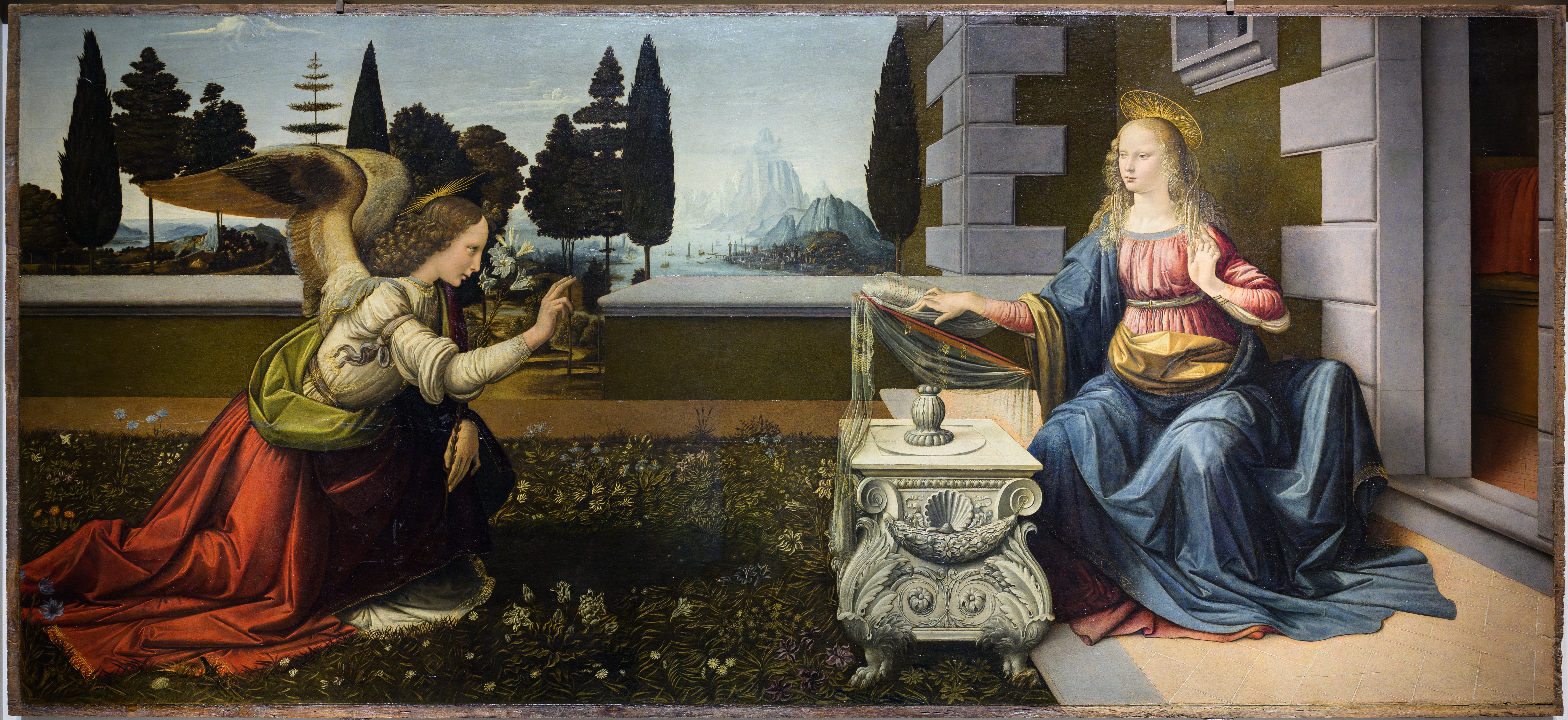
Annunciation Self-researched
Located in the seventh chapel of the Pantheon, this is the best-known painting in the building. The fresco depicts the traditional Annunciation scene with God in Heaven sending the dove of the Holy Spirit down to Earth, while the Archangel Gabriel kneels before Mary. It is an important example of Melozzo's Roman period.
Annunciation
An early work by Leonardo showing the angel Gabriel appearing to the Virgin Mary. The painting demonstrates Leonardo's early mastery of perspective and atmospheric effects.
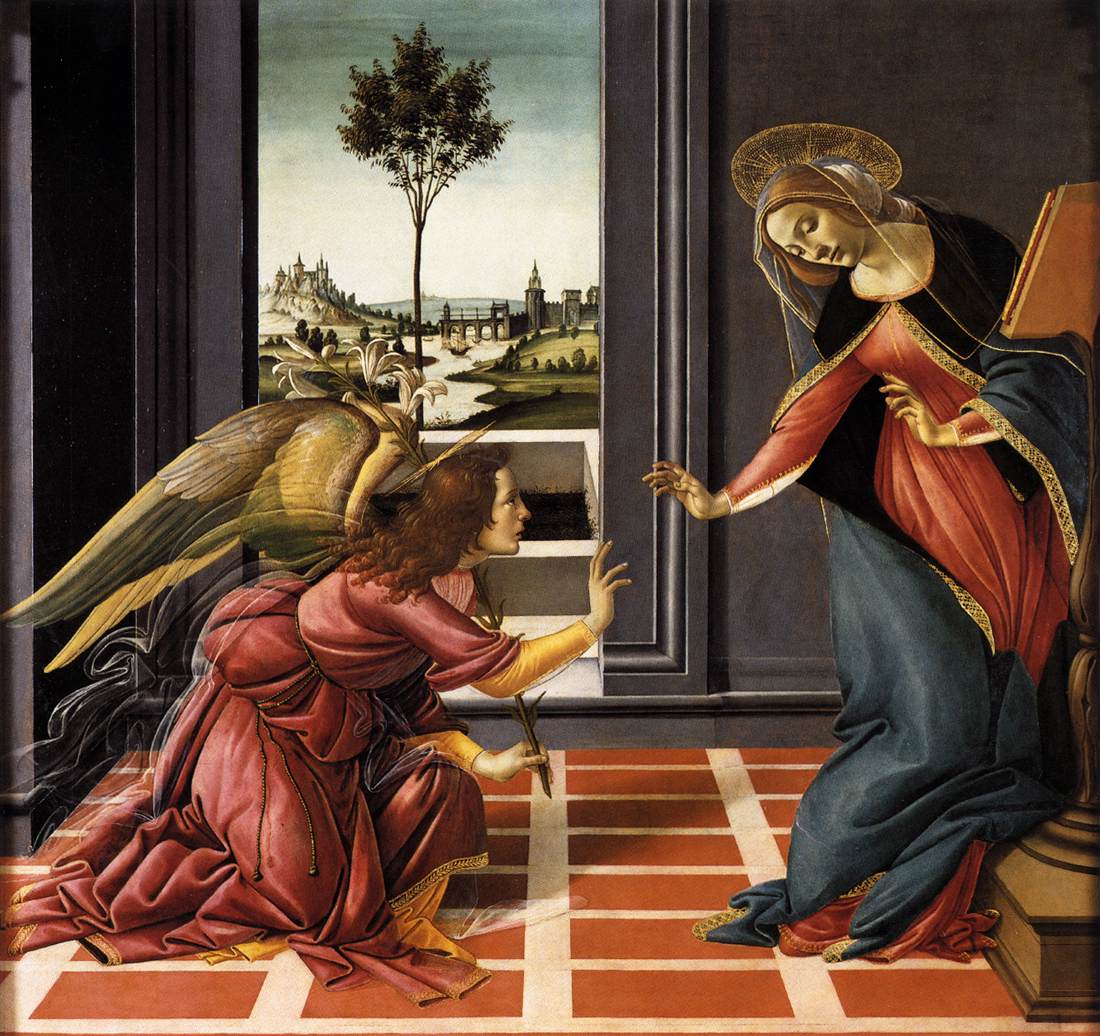
Cestello Annunciation
The strong emotions and color suggest Botticelli may have been a listener to Girolamo Savonarola, a monk from Ferrara who became the prior of San Marco. Savonarola was a preacher who advocated the destruction of secular art and culture, and was later tortured and executed.
Triumphal Arch Mosaics Self-researched
Mosaics on the triumphal arch depicting scenes from the infancy of Christ, including the Annunciation, the Adoration of the Magi, the Massacre of the Innocents, and the Presentation in the Temple. Mary is depicted dressed as a Roman empress, reflecting the Council of Ephesus (431) declaration of Mary as Theotokos (God-bearer). Among the oldest monumental representations of the Virgin Mary in Christian art.
Mascoli Chapel Mosaics Self-researched
A cycle of mosaics on the vault of the Cappella dei Mascoli depicting scenes from the Life of the Virgin. The sequence includes the Birth of the Virgin, the Presentation at the Temple, the Annunciation, the Visitation, and the Dormition (Death of the Virgin). Giambono designed the earlier scenes; later scenes show the influence of Early Renaissance spatial perspective, attributed to Andrea Mantegna or Jacopo Bellini.
Annunciation Altar Self-researched
The altarpiece in the Ludovisi Chapel dedicated to the Annunciation. The chapel houses the remains of Saint John Berchmans, a Belgian Jesuit scholastic who died while studying at the Roman College.