Sistine Chapel
Vatican City
Architectural style: Renaissance
Artworks
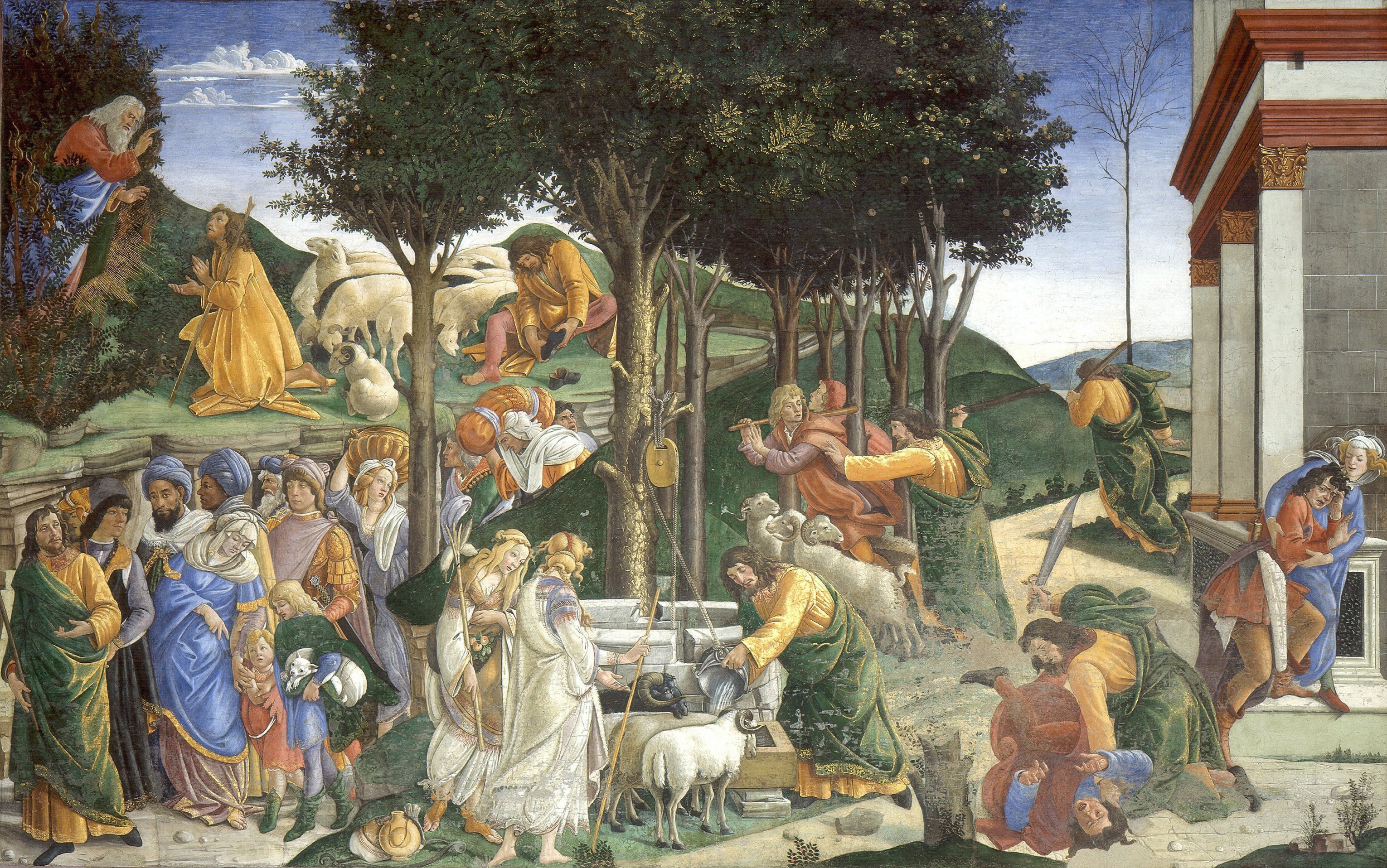
Youth of Moses
Part of the cycle of frescoes on the walls of the Sistine Chapel.
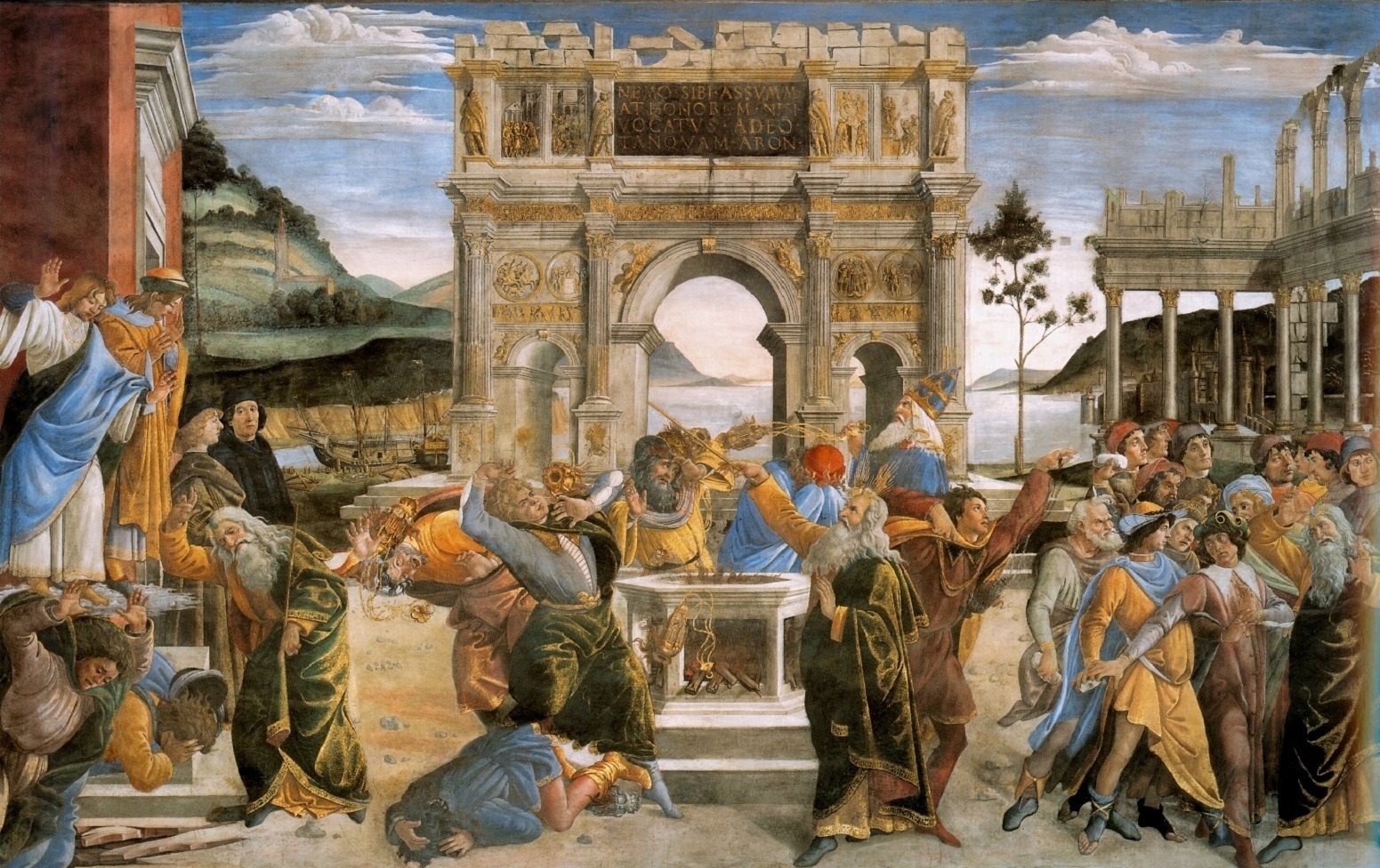
Punishment of the Korah, Dathan and Abiram
Story narrated from left to right: - In the left, the earth opens up to swallow the rebels - In the center, figures offering false fire to the Lord were consumed by the fire - In the right, Moses seeks refuge from Israelites who stoned him - Moses' forehead ray is from biblical text (Exodus 34:29-35)
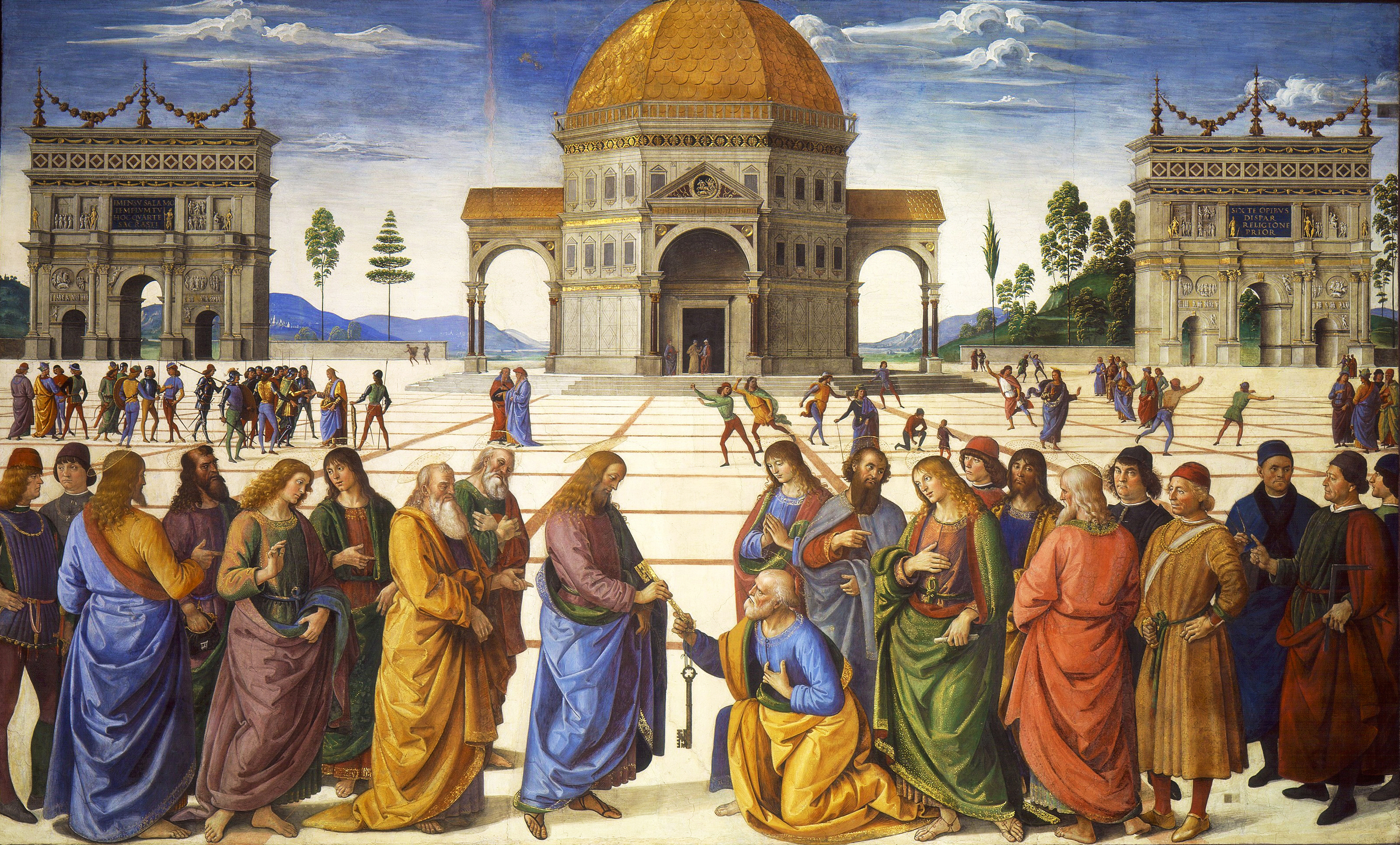
Delivery of the Keys
Notable for Perugino's characteristic breadth and distance of spatial backgrounds.
Isaiah
The first prophet to be painted on the Sistine Chapel ceiling. Isaiah turns away from the Flood, which is above and to his left, as if in answer to God's promise: "For to Me this is like the days of Noah, when I swore that the waters of Noah would never again cover the earth. So I have sworn that I will not be angry with you or rebuke you." (Isaiah 54:9) One of seven Old Testament prophets depicted on the ceiling, alternating with five sibyls (pagan prophetesses).

The Flood
Completed in 29 days. The scene shows the devastating flood waters rising as people desperately seek safety. The father carries the body of his drowned son—a powerful image of loss and divine judgment. One of the central narrative panels on the Sistine Chapel ceiling.

Creation of Adam
Completed in 17 days. Painted after the successes of Julius II's army, with an increase in figure size compared to earlier scenes. God, absent from the first four scenes and standing on earth in the Creation of Eve, now moves through heaven in the last four scenes. The near-touching fingers of God and Adam has become one of the most replicated religious images in history. The composition shows the reclining Adam receiving the spark of life from God, who floats in a billowing cloak surrounded by angels.

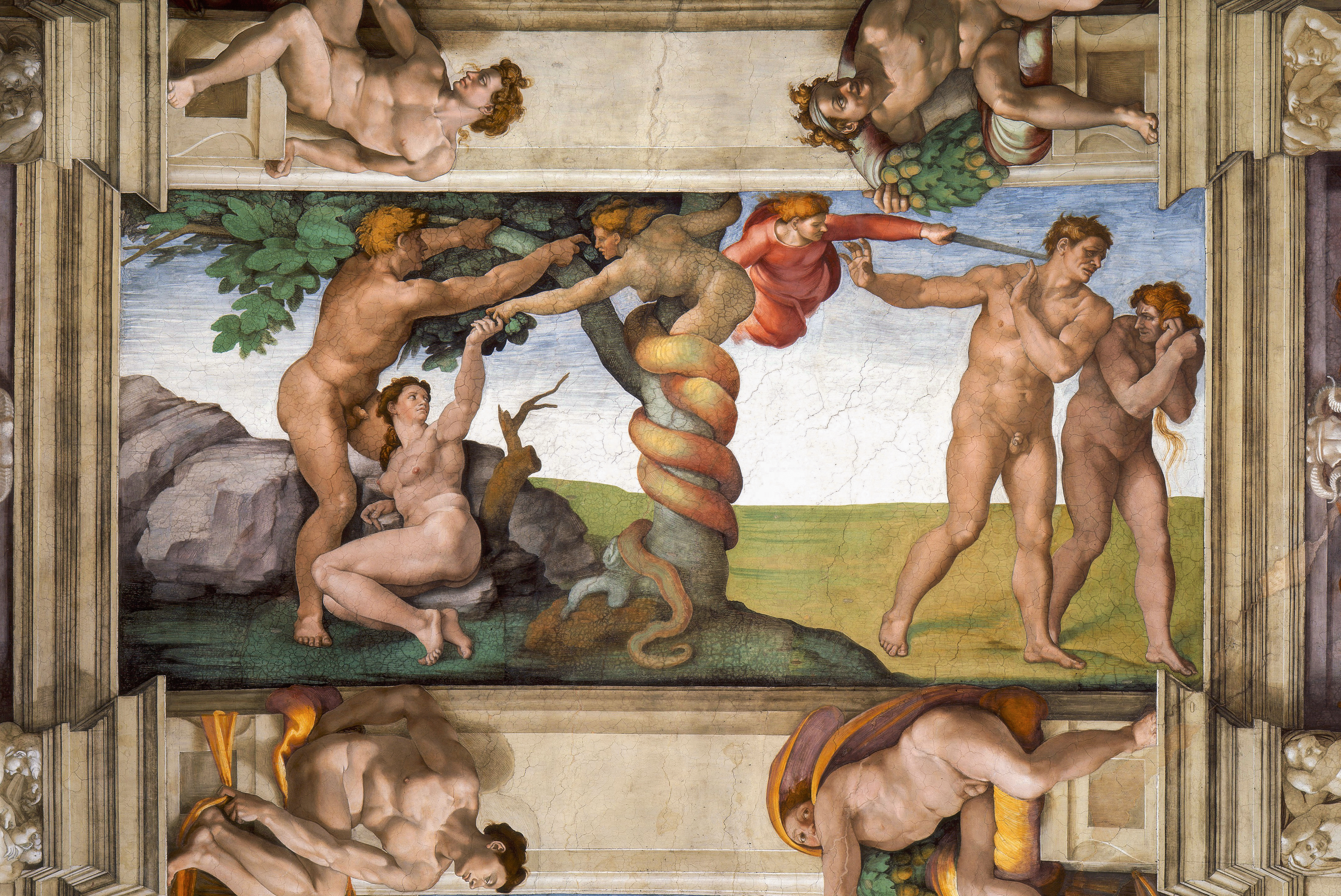
Fall of Adam and Eve and Expulsion
Completed in 13 days. Previously the Temptation and Expulsion had been depicted separately, but Michelangelo united them in the same fresco. On the left, Adam and Eve reach for the forbidden fruit offered by the serpent (depicted with a woman's torso); on the right, an angel drives them from Paradise. The contrast between their idealized bodies before the Fall and their aged, shamed forms after is striking.
David and Goliath
One of the corner spandrels of the Sistine Chapel ceiling, depicting Old Testament scenes of salvation. Central interlocked figures create a clear narrative event—David is shown at the moment of striking down the giant Goliath. The dramatic composition emphasizes the physical struggle between the two figures.

Libyan Sibyl
One of five sibyls (pagan prophetesses) depicted on the Sistine Chapel ceiling, alternating with seven Old Testament prophets. The Libyan Sibyl is shown in a complex twisting pose, reaching for a large book. The light from the Separation of Light from Darkness falls onto the pages of the open book she holds. The figure demonstrates Michelangelo's mastery of the human form, with powerful musculature visible beneath flowing drapery.

Creation of Sun, Moon and Plants
Completed in 7 days. Shows God creating the sun and moon with outstretched arms, commanding the celestial bodies into existence. In the same panel, God is shown a second time from behind, creating the plants. This dual depiction of God in one scene is a compositional innovation.

The Brazen Serpent
One of the last of Michelangelo's works on the ceiling, located in a corner spandrel. Shows more complex groupings of interlocking figures than earlier works. The Israelites writhe in agony from the serpent bites, while those who look upon the bronze serpent that Moses has raised are healed. This scene was traditionally understood as a prefiguration of Christ's crucifixion, as referenced in John 3:14: "As Moses lifted up the serpent in the wilderness, even so must the Son of Man be lifted up."

Separation of Light from Darkness
Completed in 1 day—the fastest execution of any panel on the ceiling. The only scene that is presented as if viewed from below, with dramatic foreshortening of God's figure. This is the first act of creation, showing God's hands separating the primordial light from darkness.
