Bargello
Florence, Italy
Artworks
Competition Panel (Ghiberti)
Ghiberti's winning competition panel for the second set of bronze doors for the Florence Baptistery. Only the Isaac figure was cast separately, making the whole piece lighter but stronger.
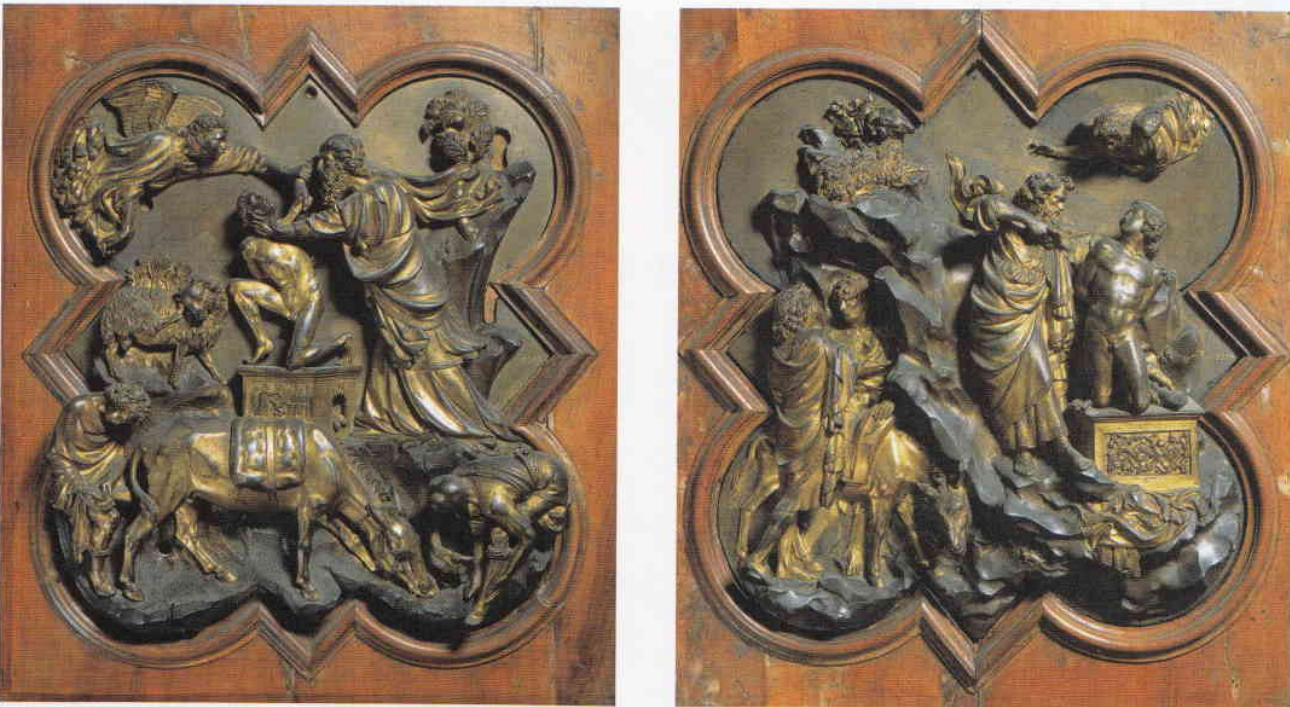
Competition Panel (Brunelleschi)
Brunelleschi's competition panel for the second set of bronze doors for the Florence Baptistery. The servant in the left's pose is derived from the Spinario, a popular Roman sculpture. Each figure was cast individually.
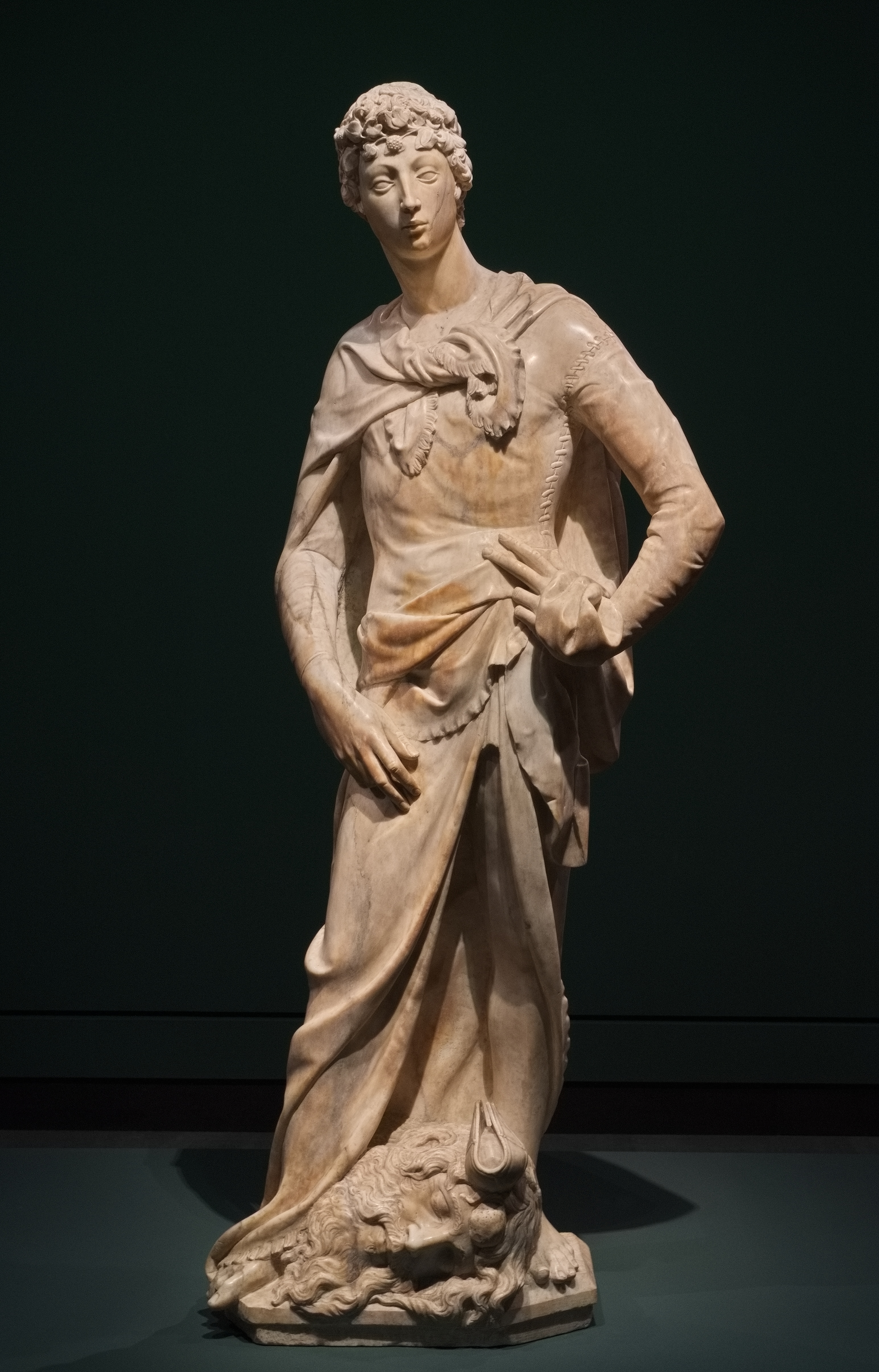
Marble David
First large-scale nude sculpture since antiquity.
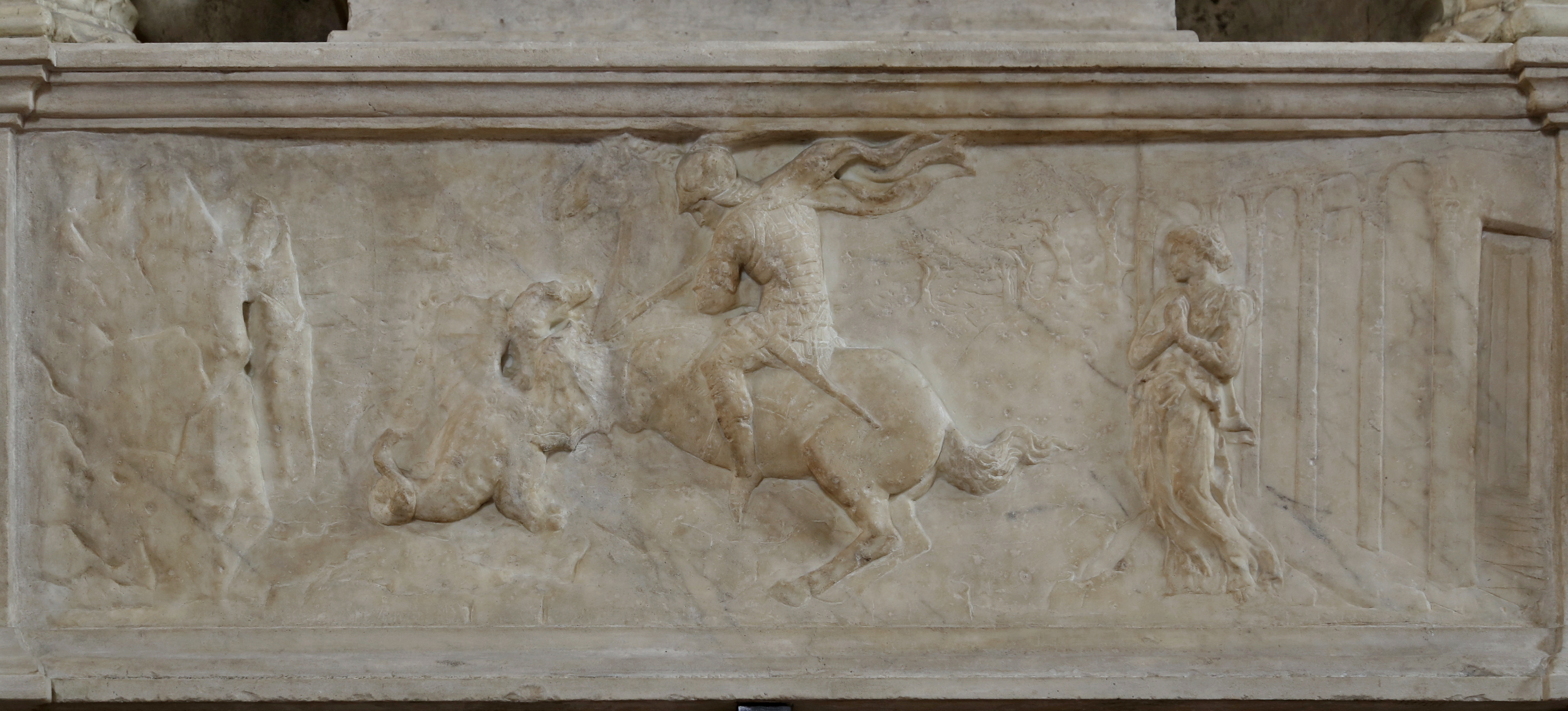
St. George and the Dragon
Predella relief originally below the St. George statue. Features a new approach that focuses on light and shadows, letting the figure blend into the background.
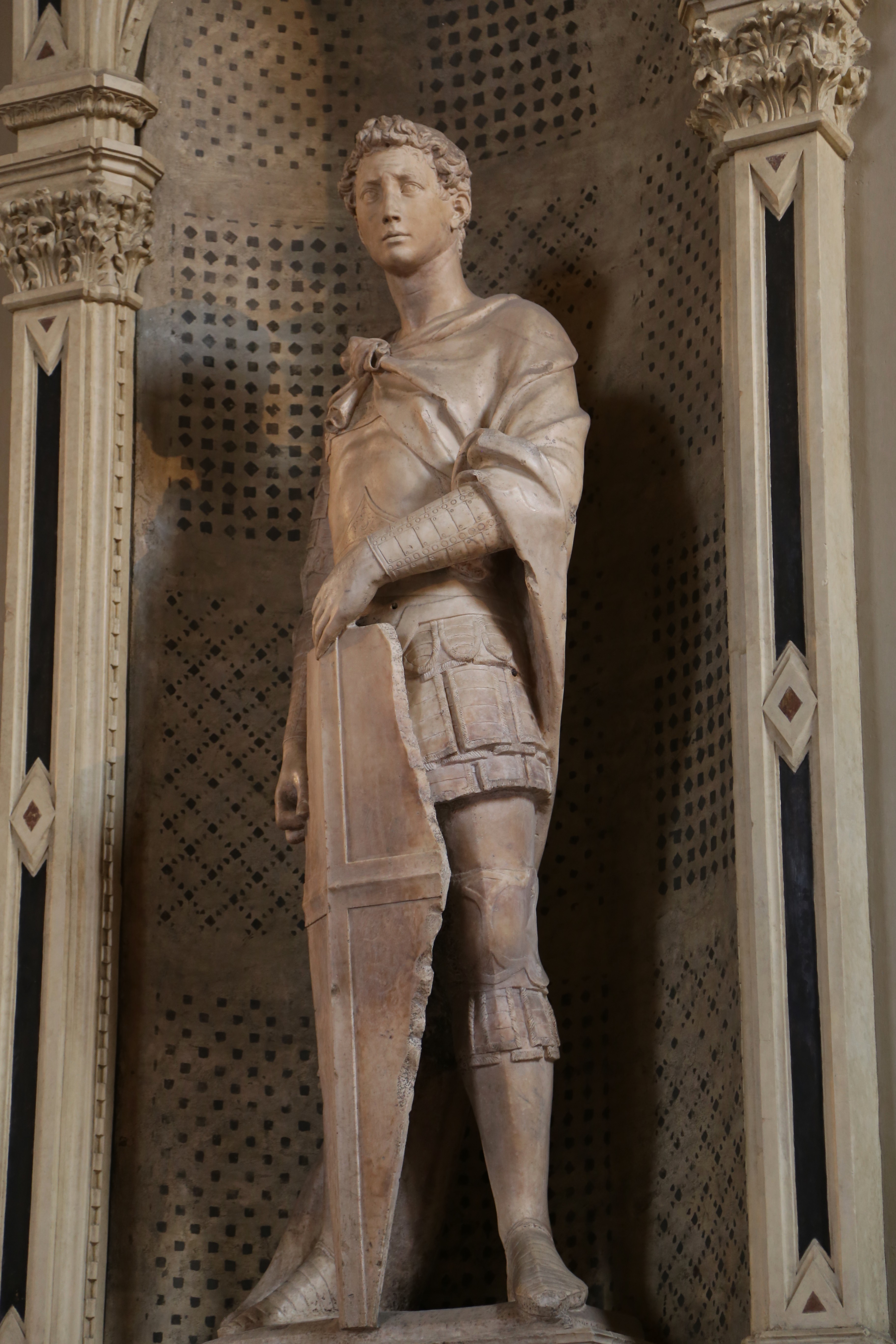
St. George
Originally part of the sculptural program at Orsanmichele, now in the Bargello.
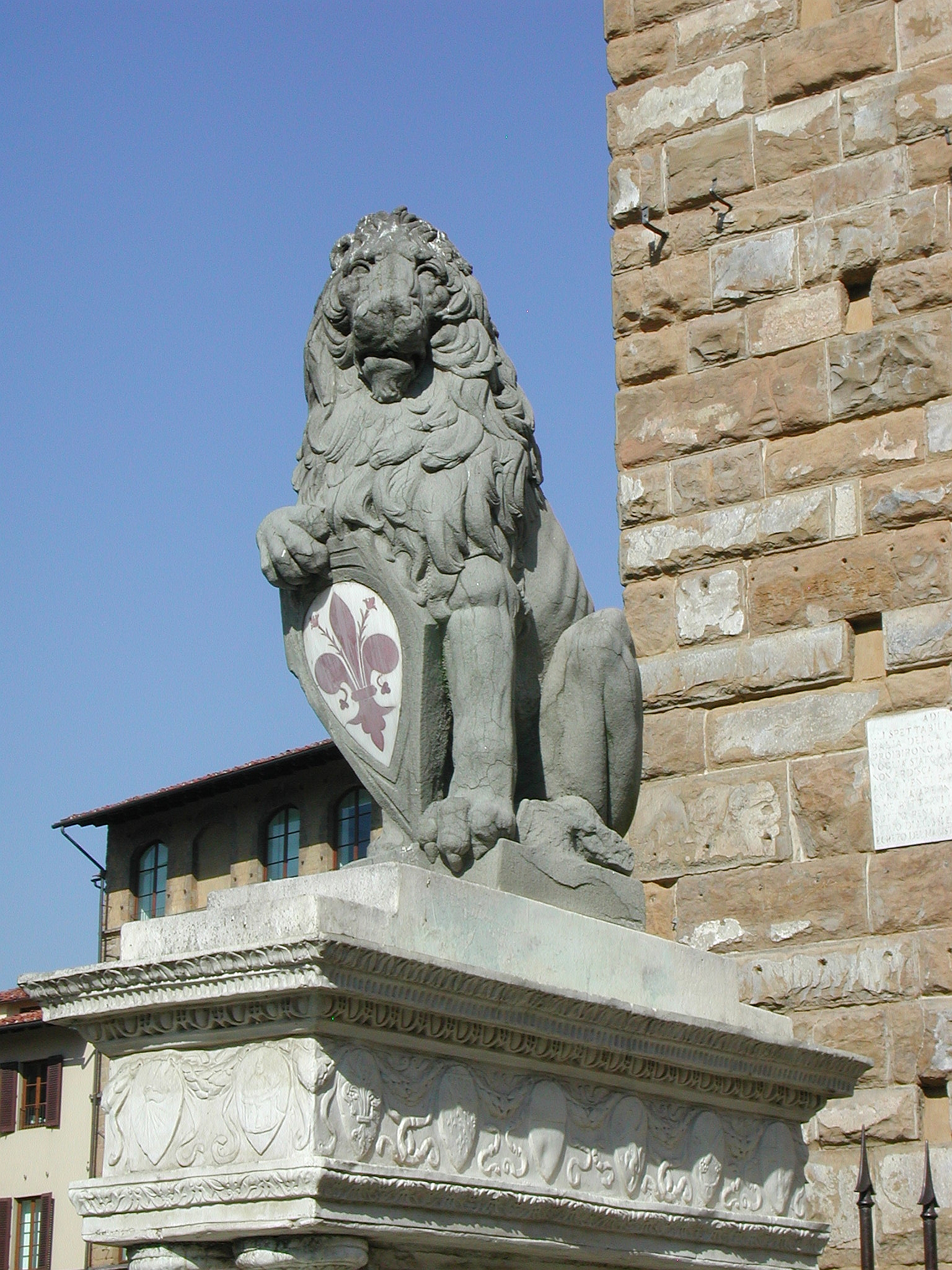
Marzocco Self-researched
The Marzocco is the heraldic lion that is a symbol of Florence. Donatello's version was apparently the first piece of public secular sculpture commissioned by the Republic of Florence, in the late 14th century. The lion originally stood at the heart of the city in the Piazza della Signoria at the end of the platform attached to the Palazzo Vecchio called the ringhiera, from which speakers traditionally harangued the crowd. This iconic representation of Florentine civic pride holds a shield bearing the lily emblem of Florence. The original is now in the Bargello, with a copy in the original location.
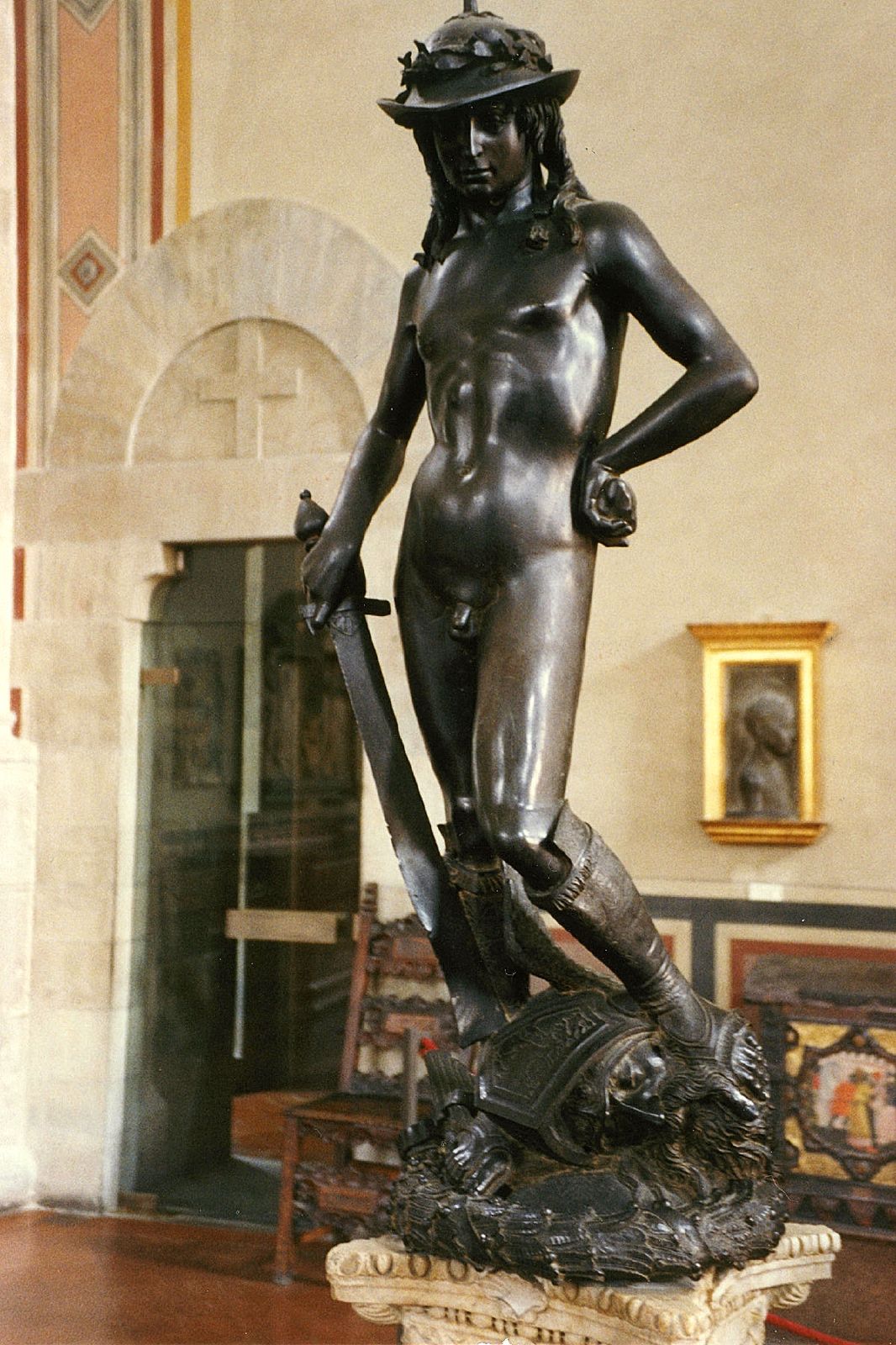
Bronze David
First large-scale nude sculpture since antiquity. The first unsupported standing work of bronze cast during the Renaissance, and the first freestanding nude male sculpture made since antiquity. The pose is derived from contrapposto, with the left knee coming forward against the cloth. David is depicted with an enigmatic smile, posed with his foot on Goliath's severed head.
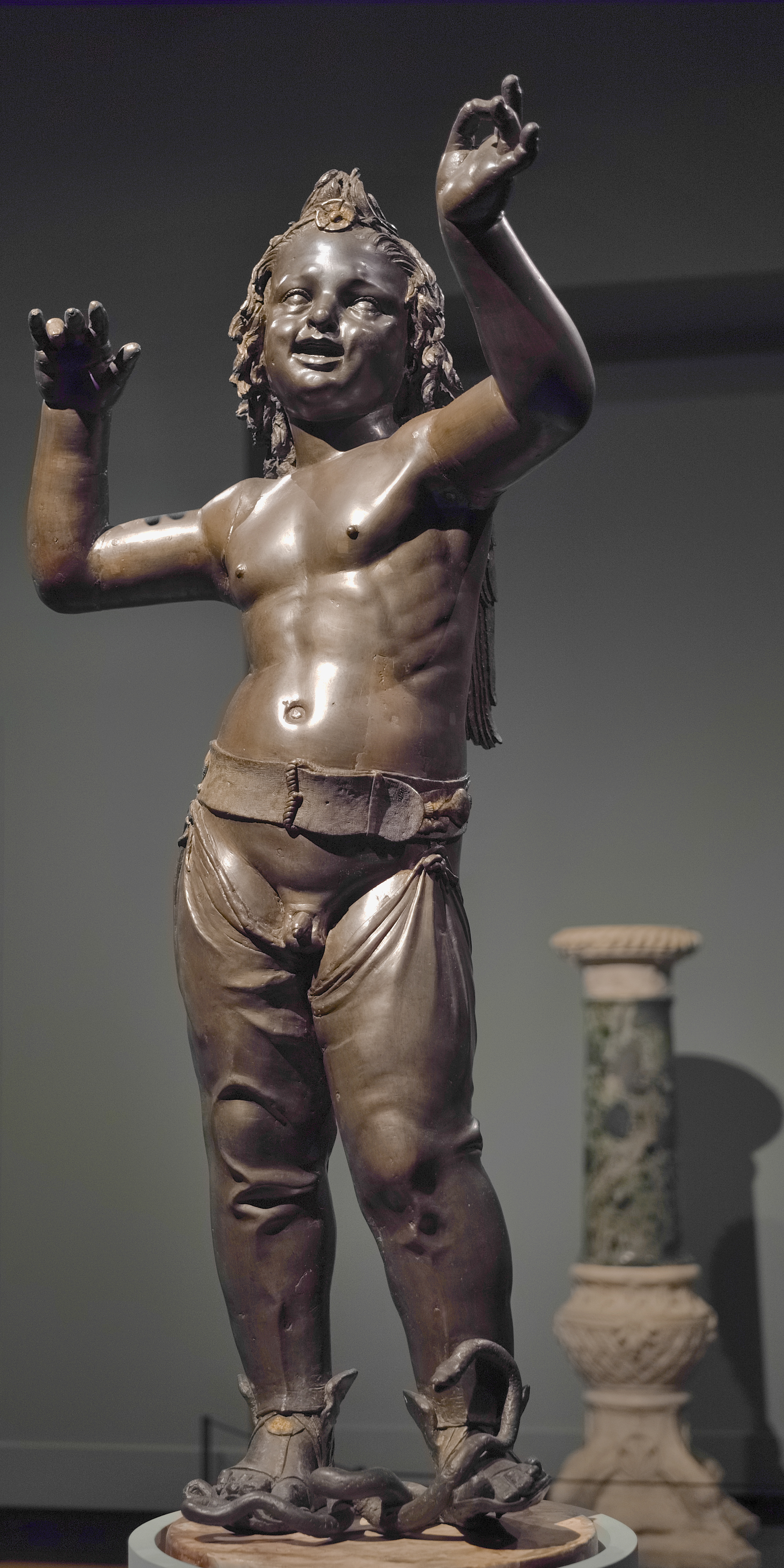
Atys-Amorino
Bronze sculpture combining attributes of Eros and Attis.
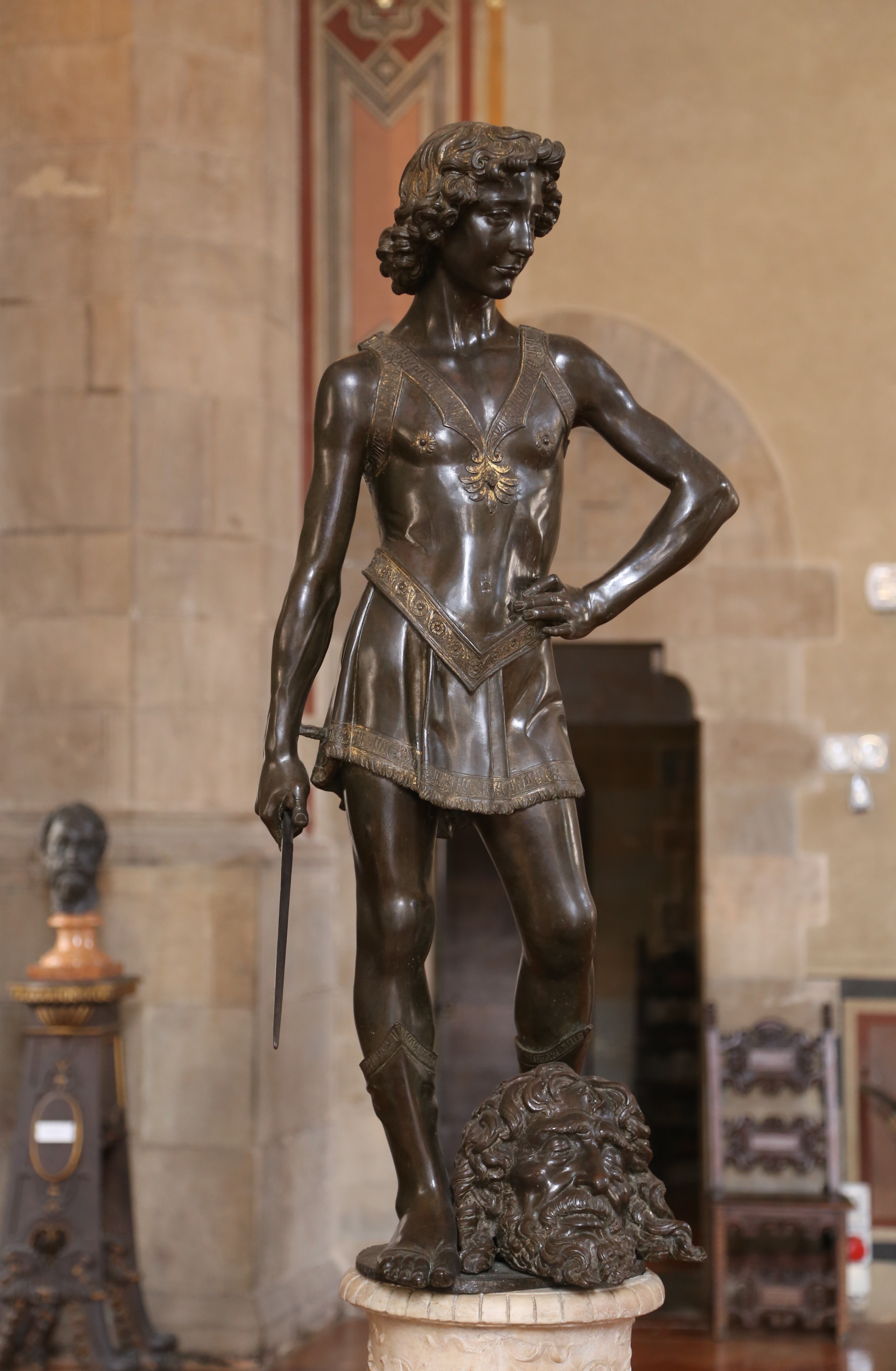
David
Bronze sculpture depicting David as a young man, with leather cloth and a smiling expression instead of the uncertain expression seen in earlier depictions.
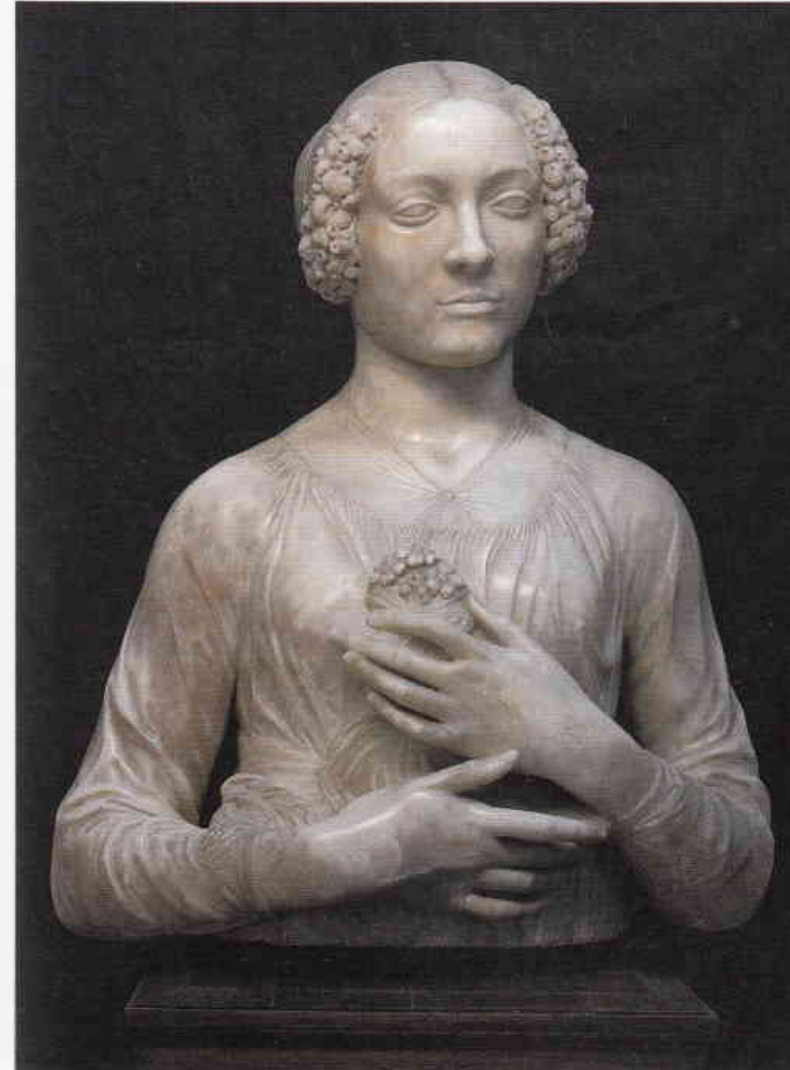
Portrait of a Lady with Flowers
First three-quarter-length sculpted portrait since antiquity. A landmark in Renaissance portraiture.
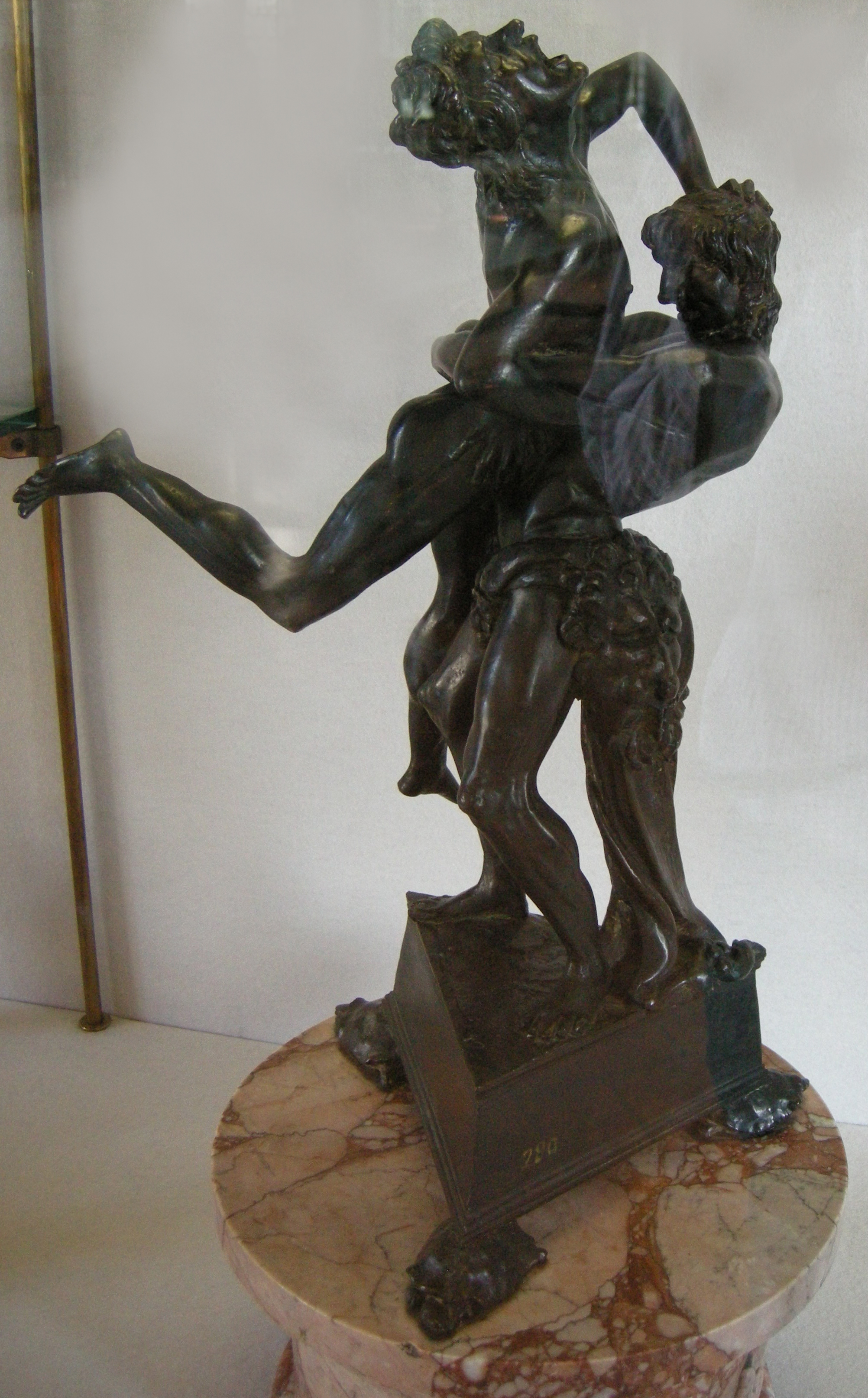
Hercules and Antaeus (Bronze)
Bronze sculpture depicting Hercules wrestling with the giant Antaeus. Shows Pollaiuolo's mastery of depicting dynamic action in three dimensions.
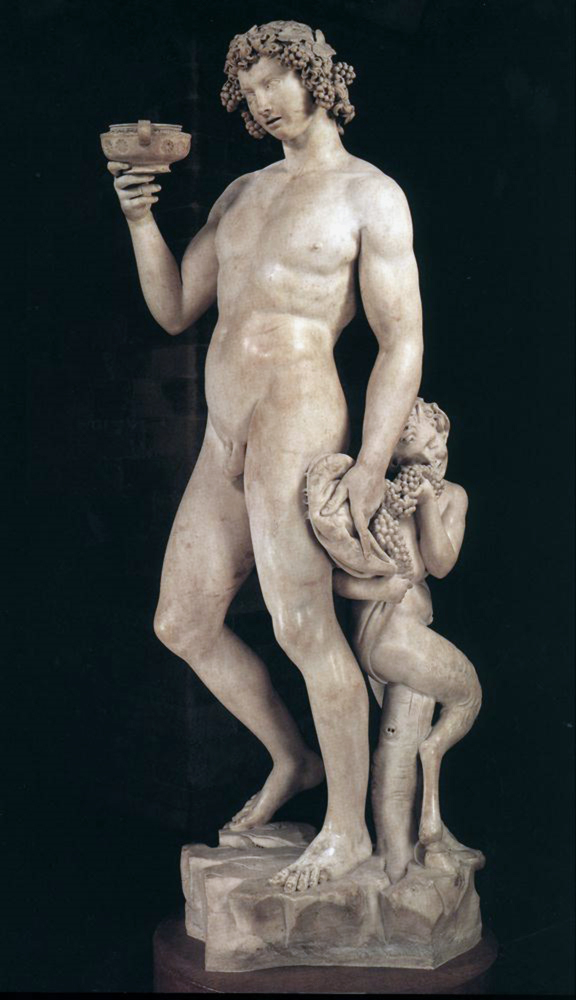
Bacchus
A marble sculpture of the Roman god of wine, depicted nude with vine leaves and grapes, his body swaying as if affected by alcohol. Michelangelo was paid 160 florins for this work. The sculpture demonstrates his ability to capture both classical ideals and naturalistic observation.
Brutus Self-researched
A marble bust of Marcus Junius Brutus, the only bust Michelangelo ever made. Commissioned after the assassination of Duke Alessandro de' Medici in 1537, it may represent a republican ideal—Brutus was celebrated in Florence as the slayer of the tyrant Julius Caesar. The bust shows Brutus turning sharply to his left, with an intense expression and furrowed brow. The work was left unfinished, like many of Michelangelo's late sculptures, adding to its psychological intensity.
