Lamentation (Pietà)
Summary
The Lamentation (also known as Pietà when focused on Mary alone with Christ's body) depicts the mourning over Christ's body after the Crucifixion and Deposition, but before his burial. While not directly described in scripture, this scene is derived from the burial accounts in the Gospels. The Virgin Mary typically holds or sits near the body of her dead son, accompanied by other mourners such as Mary Magdalene, John the Evangelist, Joseph of Arimathea, and Nicodemus. The scene emphasizes the human sorrow and grief following Christ's death.
Biblical Reference
Book(s): All four Gospels (derived from burial accounts)
Chapters/Verses: Matthew 27:57-61, Mark 15:42-47, Luke 23:50-56, John 19:38-42
Artworks Depicting This Story
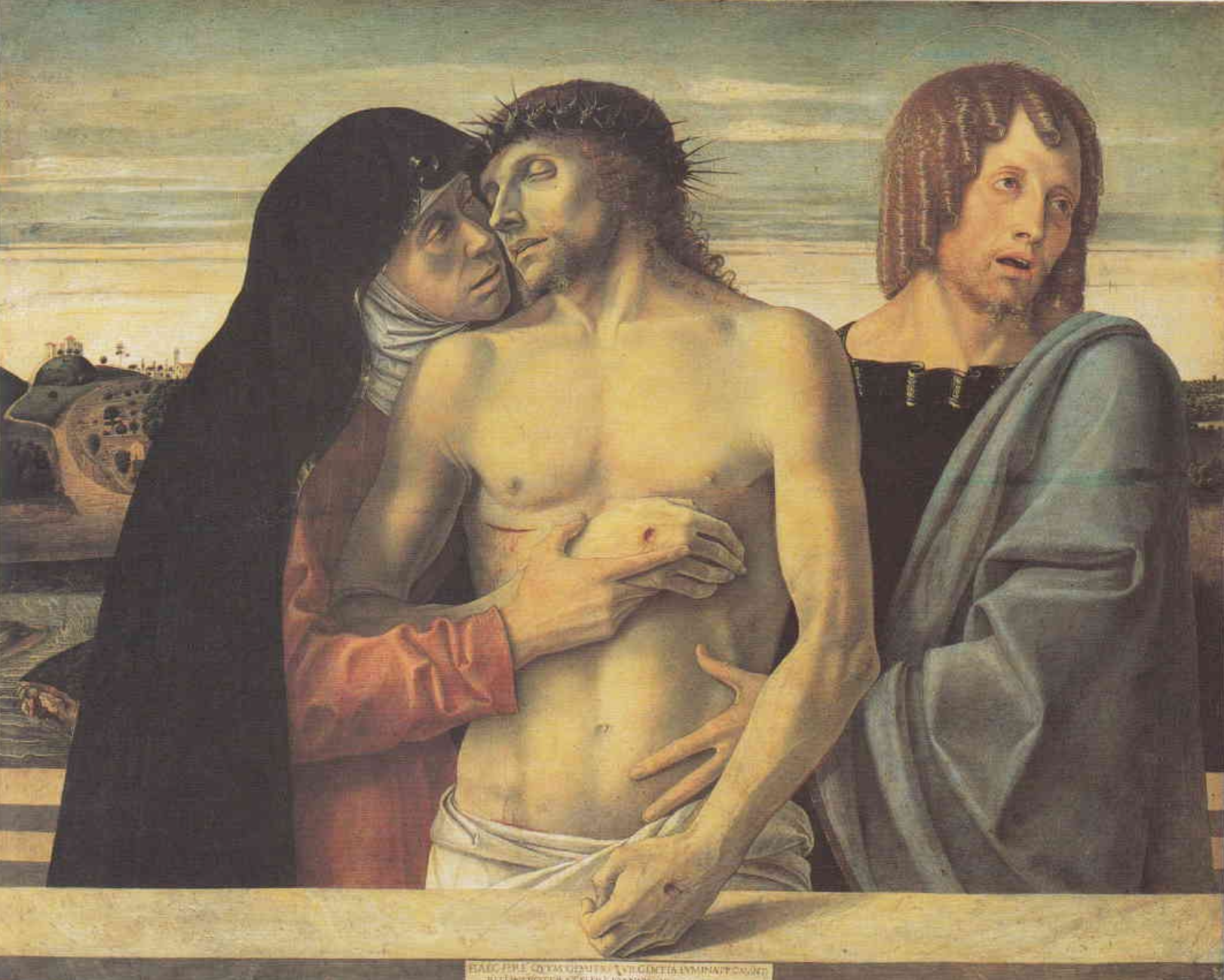
Pietà
An intimate depiction of the dead Christ supported by the Virgin Mary.
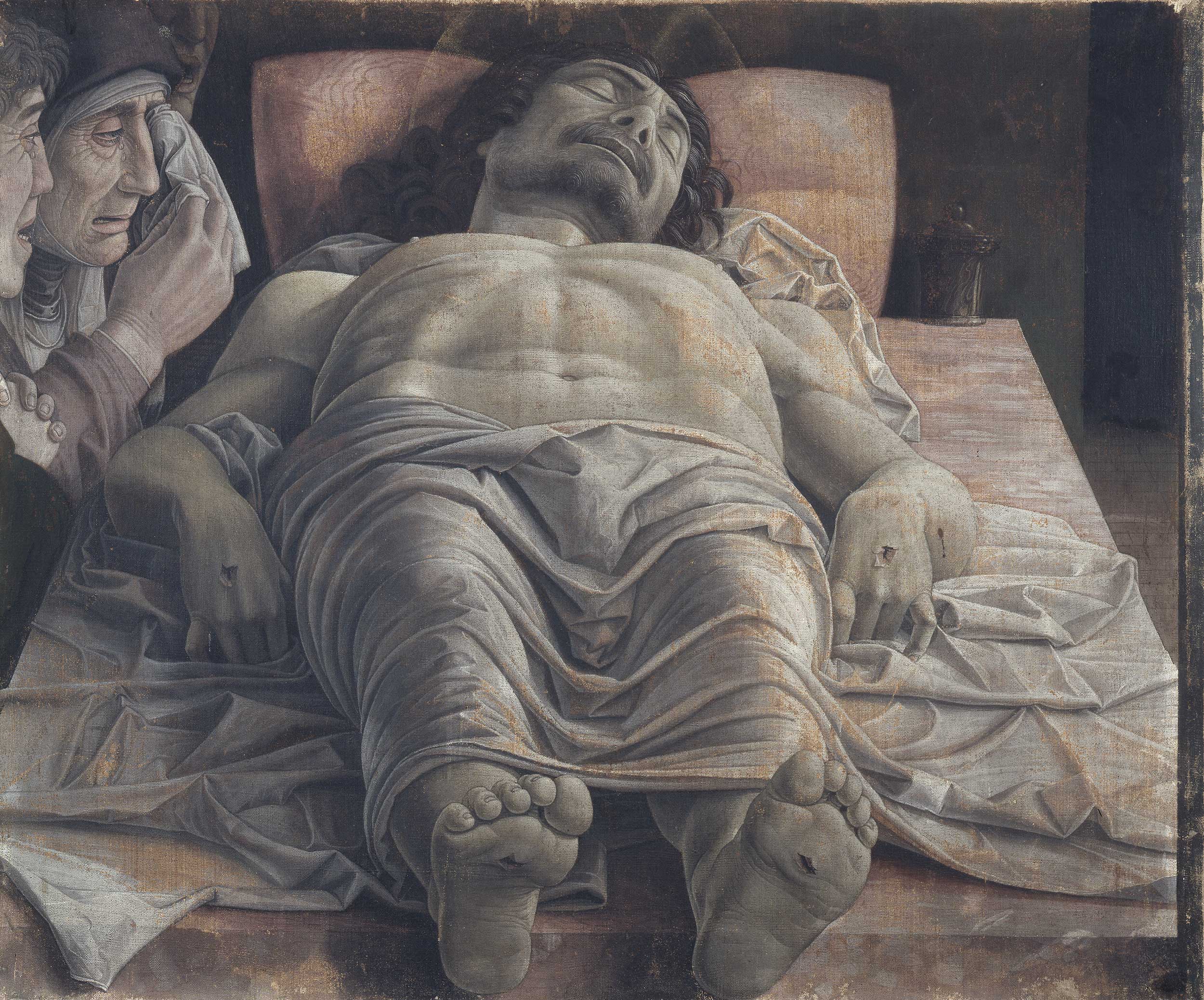
The Foreshortened Christ (Lamentation of Christ)
Famous for its dramatic use of foreshortening, showing Christ's body from the feet with the wounds in his feet prominently visible.
Lamentation over the Dead Christ Self-researched
A large and emotionally restrained depiction of the lamentation, showing the dead Christ mourned by the Virgin Mary, Saint John the Evangelist, Mary Magdalene, and other figures. Perugino's characteristic grace and soft, luminous coloring are evident, with a serene Umbrian landscape visible in the background. Displayed in the Sala di Apollo.

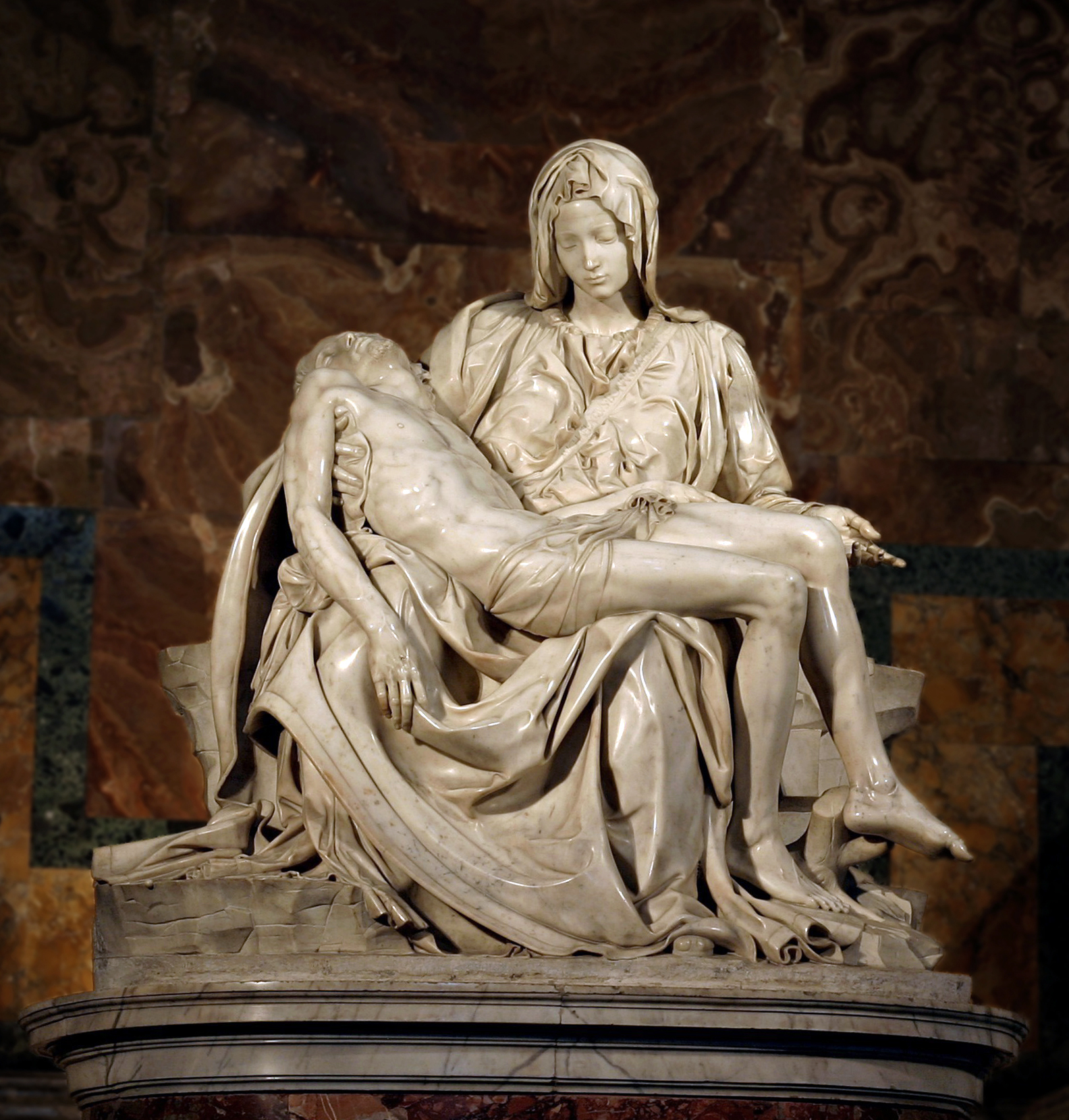
Pietà
Created when Michelangelo was only 23 years old. The sculpture was designed to be placed on or near the floor, so the viewer can see Christ's face better. It is the only work Michelangelo ever signed, reportedly after overhearing viewers attribute it to another sculptor.
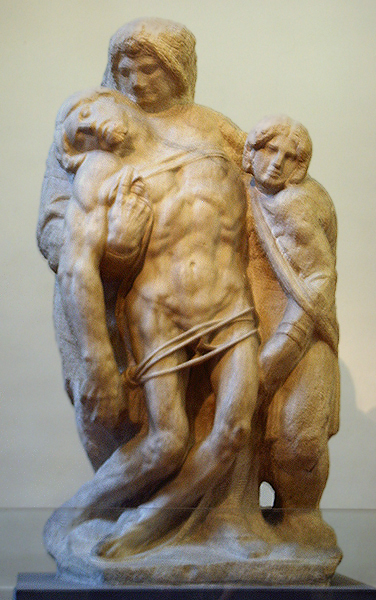
Palestrina Pietà Self-researched
A marble sculpture depicting the dead Christ supported by the Virgin Mary and another figure. Formerly attributed to Michelangelo, but now considered to have possibly been completed by someone else, such as Niccolò Menghini or Gian Lorenzo Bernini. The attribution remains controversial.
Pietà Self-researched
One of Titian's last paintings, left incomplete at his death in 1576 and finished by Palma Giovane. Titian intended it for his own grave. A profoundly moving late work demonstrating the artist's loose, expressive brushwork in his final years.
