Crucifixion
Summary
The Crucifixion depicts the death of Jesus Christ on the cross at Golgotha (also called Calvary). After being condemned by Pontius Pilate, Jesus was scourged, crowned with thorns, and forced to carry his cross to the place of execution. He was crucified between two criminals. During the crucifixion, darkness covered the land for three hours, and at the moment of his death, Jesus cried out "It is finished." The temple veil was torn in two, and an earthquake occurred. A Roman centurion declared "Truly this was the Son of God." This central event in Christian theology represents Christ's sacrifice for the redemption of humanity's sins.
Biblical Reference
Book(s): All four Gospels
Chapters/Verses: Matthew 27:32-56, Mark 15:21-41, Luke 23:26-49, John 19:17-37
Artworks Depicting This Story
Crucifix
The earliest known artwork by Giotto. Revolutionary in its naturalistic depiction of Christ's suffering body, departing from the rigid Byzantine tradition.
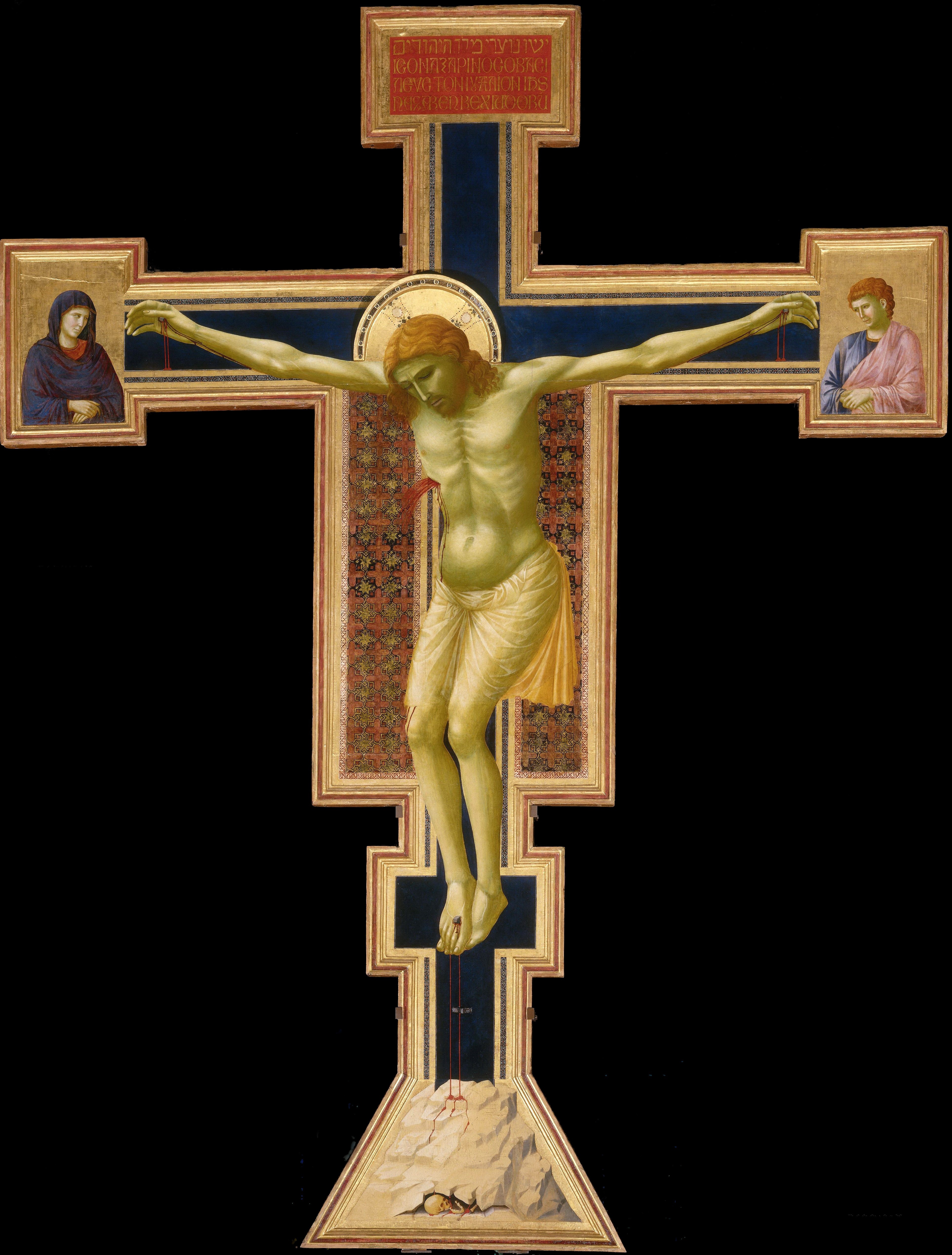
Brunelleschi Crucifix Self-researched
A polychrome painted wooden sculpture located in the Gondi Chapel at the church of Santa Maria Novella. This idealized depiction of the crucifixion of Jesus measures around 170 cm × 170 cm. This is the only surviving wooden sculpture by Brunelleschi; the only other known example, a wooden sculpture of Mary Magdalene at the church of Santo Spirito, was destroyed in a fire in 1471. Art historian Luciano Bellosi described Brunelleschi's crucifix as "probably the first Renaissance work in the history of art," representing a definitive turn away from the stylised postures of Gothic sculpture and a return to the naturalism of classical sculpture. According to Vasari, Brunelleschi carved this crucifix in response to Donatello's crucifix at Santa Croce, which Brunelleschi criticized as depicting "a peasant on the Cross."

Crucifixion Self-researched
A predella work with traditional composition from one of the founders of the Renaissance style of painting in Venice. Jacopo was the patriarch of the famous Bellini family of painters.
Crucifixion Self-researched
An early career work showing the influence of Andrea Mantegna, Giovanni's brother-in-law. This Crucifixion demonstrates Bellini's development before he achieved his mature style.
Bronze Pulpits Self-researched
Donatello's final works, these two bronze pulpits in the nave of San Lorenzo depict the Passion and Resurrection of Christ with remarkable emotional intensity. The reliefs show scenes including the Crucifixion, Lamentation, Entombment, and Resurrection. The pulpits were completed by Donatello's workshop after his death in 1466, and some scholars believe the finish shows hands other than the master's. The expressive, almost tortured style of these late works differs markedly from Donatello's earlier, more classical manner. Donatello is buried in San Lorenzo, near Cosimo de' Medici, his longtime patron.
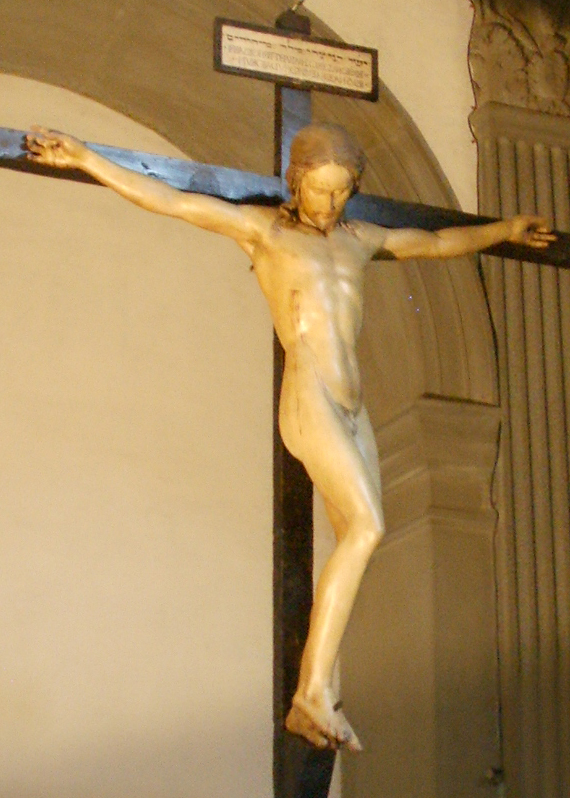
Crucifix
The only wood work we know for Michelangelo. Created for the church of Santo Spirito in Florence. The slender, delicate figure of Christ differs markedly from Michelangelo's later muscular representations.
Alexamenos graffito Self-researched
A piece of Roman graffiti originally found in a room near the Palatine Hill, now in the Palatine Museum. Often said to be the earliest depiction of Jesus, the image shows a young man worshiping a crucified, donkey-headed figure—believed to be a mocking representation of Christian worship. The Greek inscription reads "Alexamenos worships [his] god."
