Adoration of the Magi
Summary
The Adoration of the Magi describes the visit of the three wise men (Magi) from the East who followed a star to Bethlehem to pay homage to the infant Jesus. The Magi—traditionally named Caspar, Melchior, and Balthasar—brought gifts of gold, frankincense, and myrrh, symbolizing Christ's kingship, divinity, and future death. After being warned in a dream not to return to Herod, they departed for their own country by another route.
Biblical Reference
Book(s): Gospel of Matthew
Chapters/Verses: Matthew 2:1-12
Artworks Depicting This Story
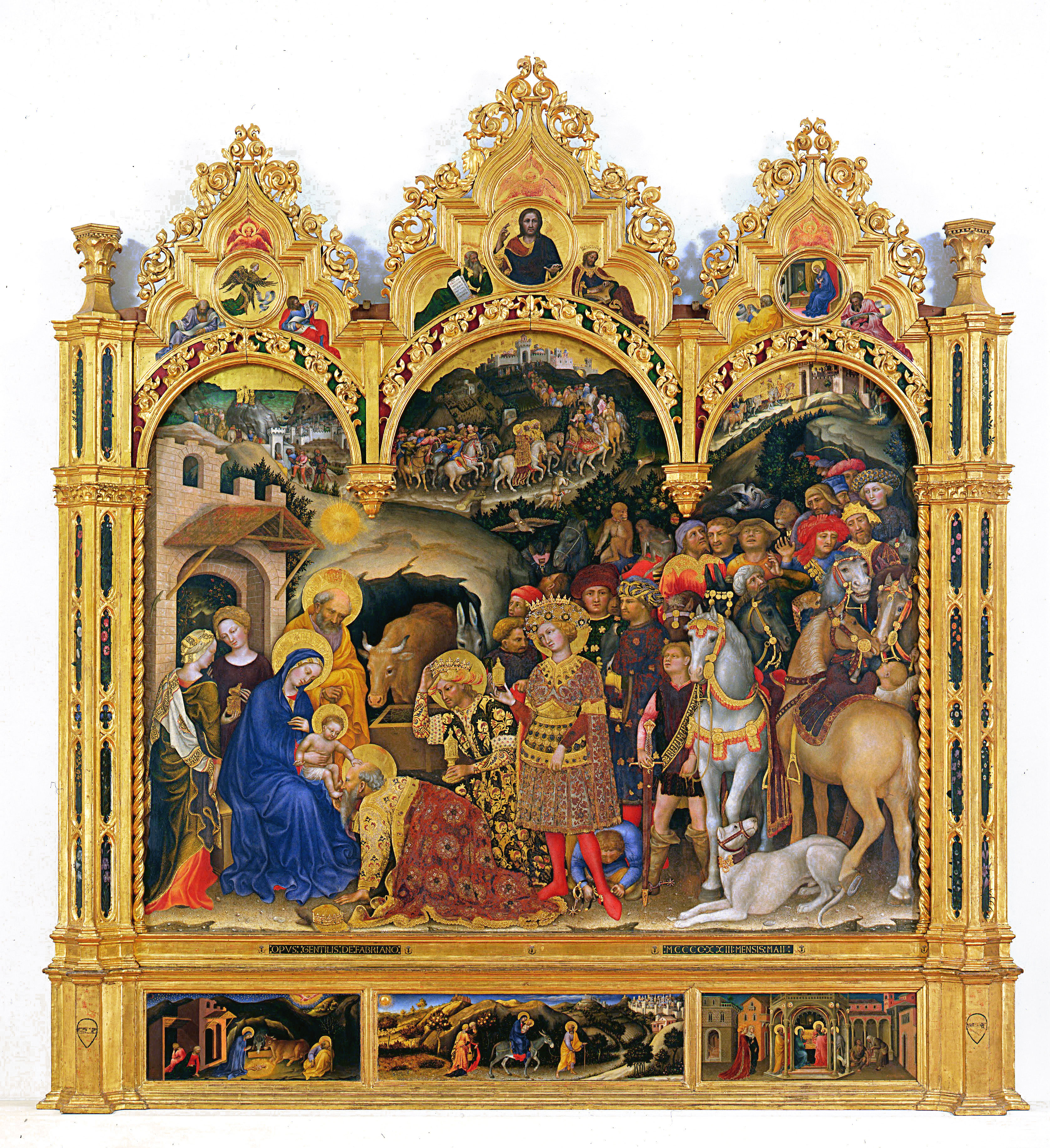
Adoration of the Magi
Masterpiece of the International Gothic style. Gentile da Fabriano was a master of naturalistic landscape and atmospheric effects. The lower left corner shows more natural light.
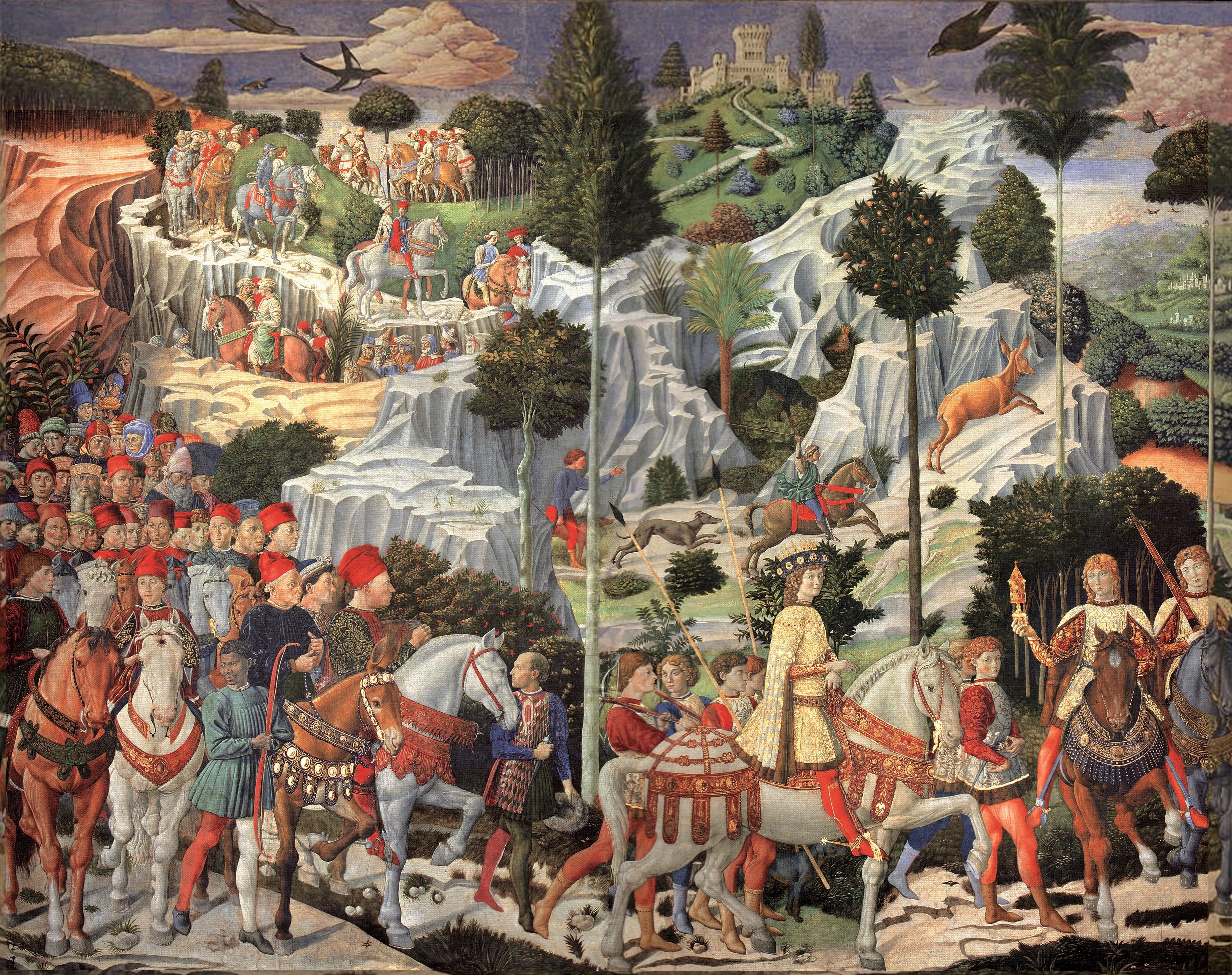
Procession of the Magi
Series of murals in the Magi Chapel depicting festive, vibrant processions with fine attention to detail. The Company of the Magi was a religious organization to which the Medici belonged. The procession of the three Magi unfolds with a mixture of exotic, oriental splendor and stately, bourgeois respectability. A glittering cavalcade of men and animals winds through a rocky landscape under an azure sky, with men dressed in all the luxury of Italian 15th-century fashions, in brilliant colors, damask, and gold brocade. They ride horses and camels with various creatures to amuse them—dogs, cheetahs, and monkeys. The religious theme was combined with a depiction of several members of the Medici family, their allies, and important figures who arrived in Florence for the Council of Florence (1438-1439). The fresco includes 32 realistic portraits, including Gozzoli himself, whose head is turned with his eye looking out toward the observer.
Magi Chapel Self-researched
A chapel in the Palazzo Medici Riccardi whose walls are almost entirely covered by a famous cycle of frescoes by Benozzo Gozzoli, painted around 1459 for the Medici family. The chapel was built by Michelozzo di Bartolomeo between 1446 and 1449 and dedicated to the Holy Trinity. It comprises an almost square main room and, one step higher, an equally nearly square chancel, with the two separated from each other by two Corinthian pillars. The frescoes feature the Angels in Adoration in the rectangular apse and the Journey of the Magi in the large hall. Each of the three large frescoes shows the procession of one of the Three Magi on their way to Bethlehem to see the Nativity of Jesus. Given the chapel's small size, entrance is limited to groups of up to 10 people at a time.

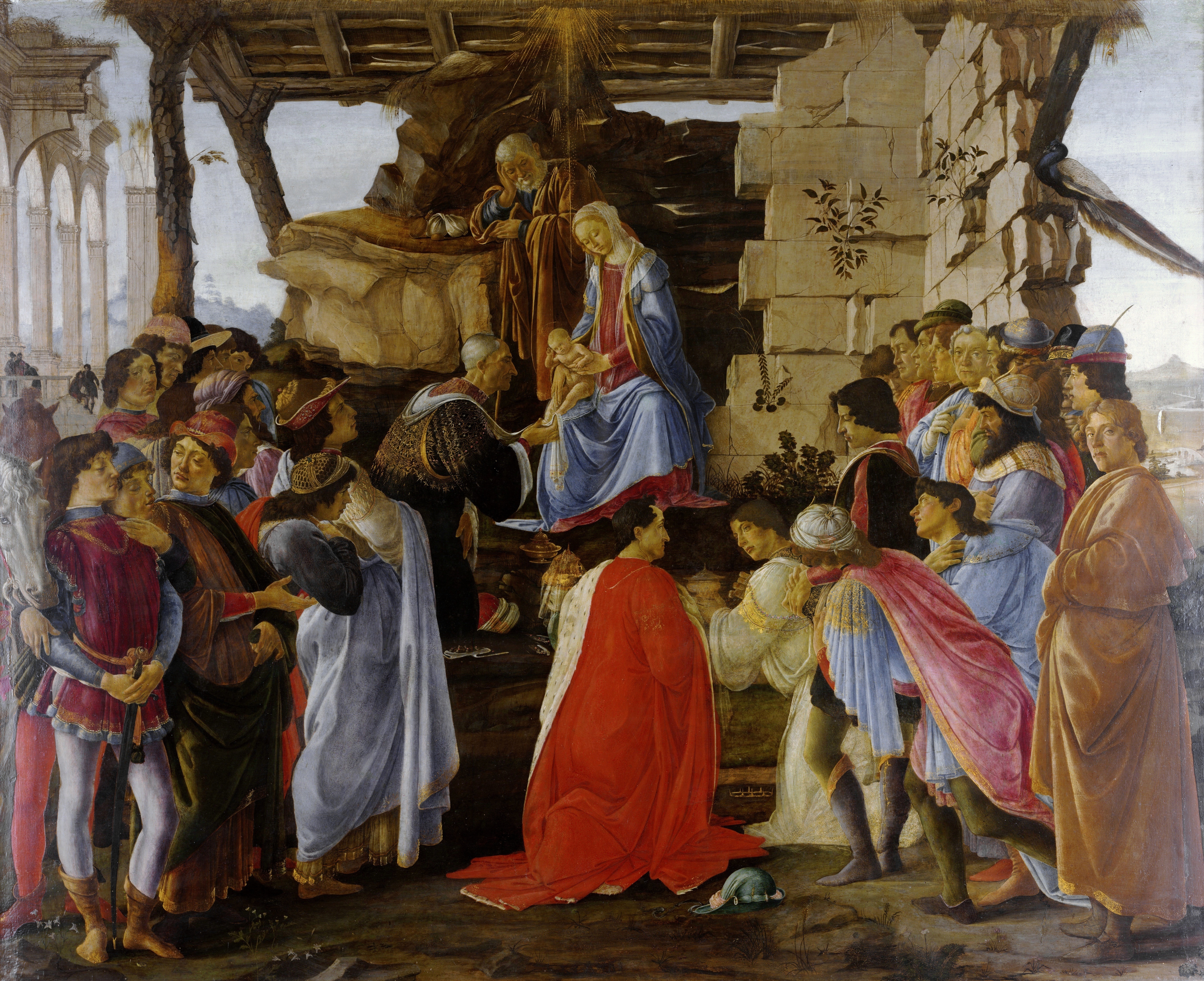
Adoration of the Magi
Notable for including portraits of the Medici family: - Cosimo was painted as the oldest magus, kneeling before the Christ - The other two magi are Giovanni and Cosimo's son, Piero the Gouty - The left most youth may be Lorenzo - The right, dark haired youth may be Giuliano, Lorenzo's brother - The figure with gold-colored cloak on the right is believed to be Botticelli's self-portrait
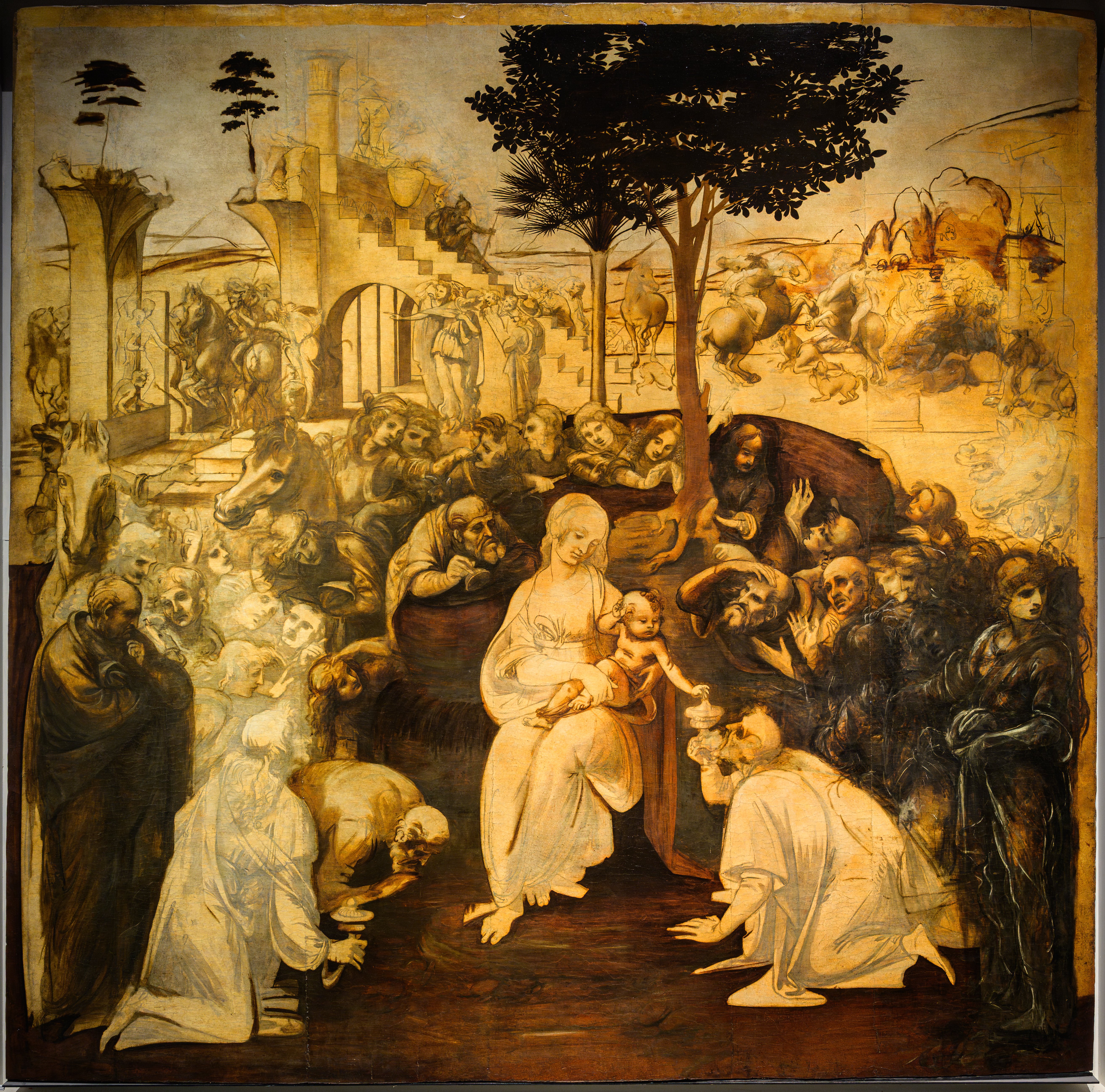
Adoration of the Magi
An unfinished painting showing Leonardo's innovative compositional approach: - Energetic horses, like rushing water - Madonna and the Child as the apex of a stable pyramid - Started with a dark wash that created the areas of shadow, then defined edges with brush
Adoration of the Magi Self-researched
Companion piece to the Adoration of the Shepherds in the Chapel of St. Joseph, depicting the three Magi presenting gifts of gold, frankincense, and myrrh to the infant Jesus.
Adoration of the Magi Mosaic Fragment Self-researched
An important early medieval mosaic fragment housed in the sacristy, originally from the Oratory of Pope John VII in Old St. Peter's Basilica. The full mosaic cycle measured 9 meters by 6 meters and depicted the Virgin Mary surrounded by seven scenes from her life. This surviving fragment shows the Adoration of the Magi with an angel between the Virgin and Child and the approaching Magi, merging the journey and adoration into a single scene. Donated to the church in 1639 by order of Pope Urban VIII.
The Adoration of the Magi Self-researched
A variation of his father Pieter Bruegel the Elder's work with miniaturist detail. Part of the museum's collection of Flemish works.