Santa Maria Maggiore Self-researched
Rome, Italy
Architectural style: Early Christian, Baroque
Artworks
Loggia Mosaics Self-researched
Mosaics decorating the upper loggia of the basilica's facade. The upper register shows Christ Blessing flanked by symbols of the four Evangelists; the lower register narrates the legend of the miraculous August snowfall that prompted the founding of the basilica by Pope Liberius. These 13th-century mosaics are now partially hidden behind the 18th-century facade by Ferdinando Fuga.

Nativity Sculptures Self-researched
A group of 13th-century marble sculptures depicting the Nativity scene, originally part of a larger sculptural ensemble for the Oratory of the Nativity (Presepe). The figures include the Virgin Mary, Joseph, the ox, the ass, and the Magi. They are among the earliest known freestanding Nativity sculptural groups and are now displayed in the underground museum chapel of the basilica.
Apse Mosaic: Coronation of the Virgin Self-researched
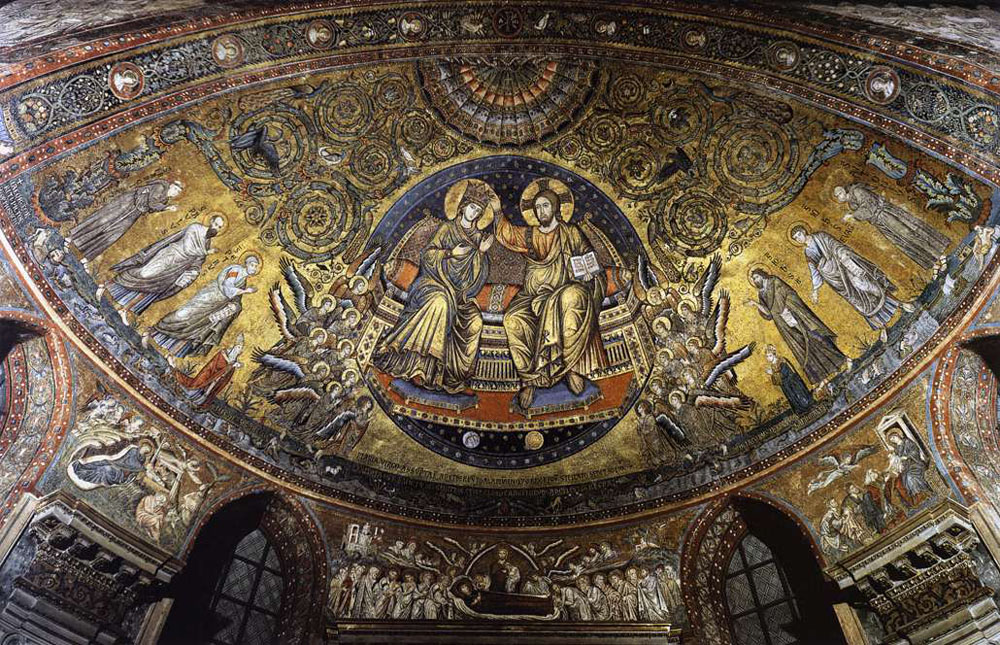
Commissioned by Pope Nicholas IV, this monumental apse mosaic depicts Christ crowning the Virgin Mary, both seated on a shared throne against a deep blue background filled with swirling acanthus scrolls. Below are five scenes from the Life of the Virgin: the Annunciation, Nativity, Adoration of the Magi, Presentation in the Temple, and the Dormition. It is the largest single mosaic image surviving from 13th-century Italy and one of the earliest monumental depictions of the Coronation of the Virgin.
Coffered Ceiling Self-researched
The magnificent coffered ceiling of the central nave, traditionally attributed to Giuliano da Sangallo, was commissioned by Pope Alexander VI Borgia. According to tradition, it was gilded with the first gold brought from the Americas by Christopher Columbus, presented to the Pope by Ferdinand and Isabella of Spain.
Sforza Chapel Self-researched
Designed by Michelangelo near the end of his life and completed posthumously by Tiberio Calcagni and Giacomo Della Porta. The chapel features an innovative elliptical plan with a three-part vault and curving side apses, representing one of Michelangelo's most forward-looking architectural experiments.
Sistine Chapel Frescoes (Santa Maria Maggiore) Self-researched
The Sistine Chapel of Santa Maria Maggiore (not to be confused with the Vatican Sistine Chapel) was commissioned by Pope Sixtus V and designed by Domenico Fontana. The interior frescoes were directed by Cesare Nebbia and Giovanni Guerra, depicting scenes from the life of the Virgin and Christ's childhood. The dome fresco shows the Assumption of the Virgin. The chapel also houses the tomb of Pope Sixtus V and an ancient relic believed to be pieces of the crib of the Nativity.
Pauline (Borghese) Chapel Frescoes Self-researched
The Pauline or Borghese Chapel was commissioned by Pope Paul V and designed by Flaminio Ponzio. The lavish interior features frescoes by multiple artists: Giuseppe Cesari painted the dome panels and lunette above the altar; Cigoli painted the Virgin and apostles in the dome; and Guido Reni painted the side arches including powerful depictions of St. Dominic and St. Francis. The chapel houses the Salus Populi Romani icon and the tombs of Popes Clement VIII and Paul V. [Pietro Bernini](../artists/PietroBernini.md) contributed dynamic sculptures framing the altar.
Vault Fresco Fragments (St. Michael Chapel) Self-researched
Fragments of vault frescoes in the Chapel of St. Michael, attributed to Piero della Francesca. These damaged remnants are among the few surviving traces of the artist's work in Rome, executed during the pontificate of Nicholas V or Pius II. Most of Piero's Roman frescoes were destroyed to make way for later decorations.
Triumphal Arch Mosaics Self-researched
Mosaics on the triumphal arch depicting scenes from the infancy of Christ, including the Annunciation, the Adoration of the Magi, the Massacre of the Innocents, and the Presentation in the Temple. Mary is depicted dressed as a Roman empress, reflecting the Council of Ephesus (431) declaration of Mary as Theotokos (God-bearer). Among the oldest monumental representations of the Virgin Mary in Christian art.
Salus Populi Romani Self-researched
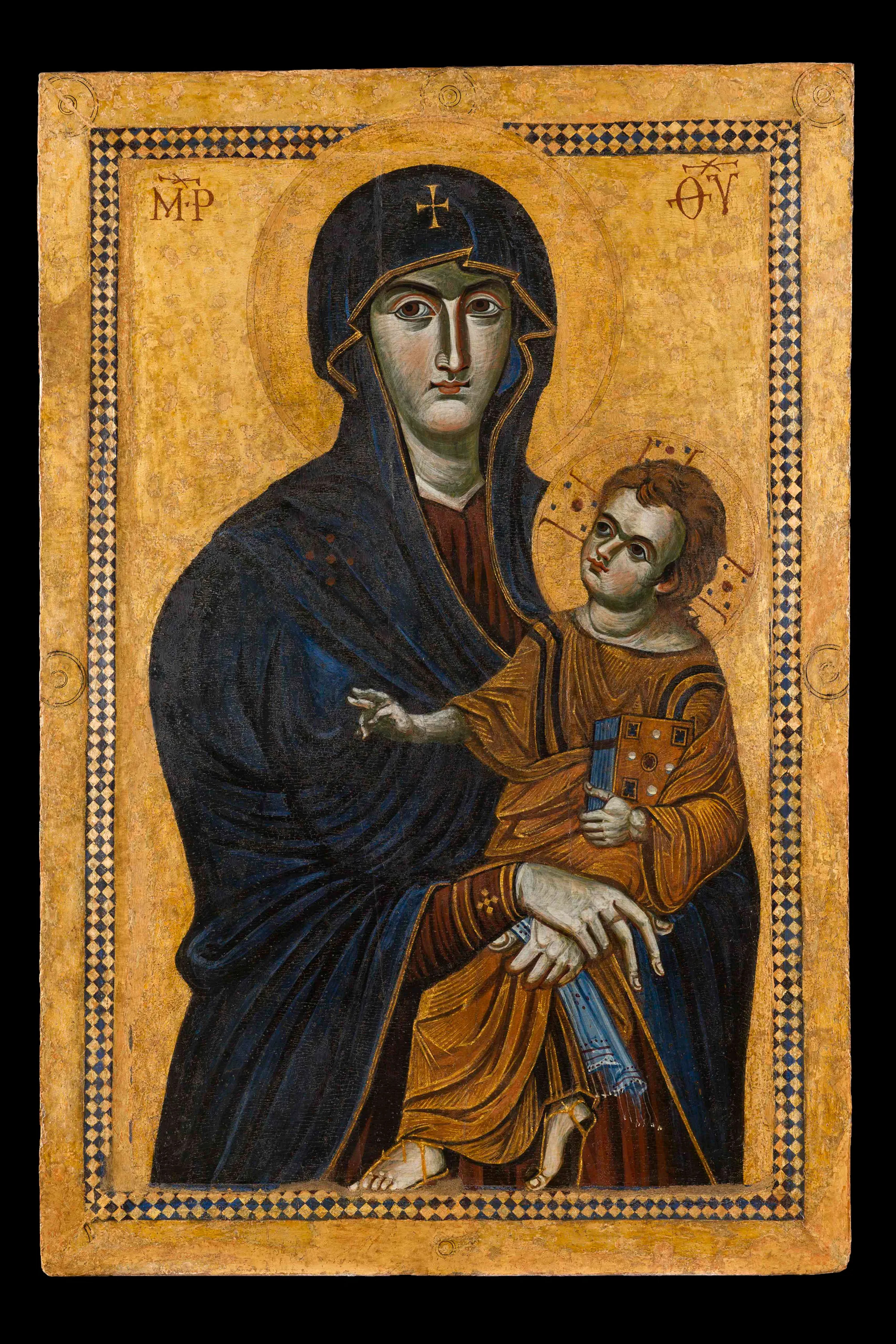
A venerated Byzantine icon of the Madonna and Child kept in the Borghese (Pauline) Chapel. The image shows the Virgin holding the Christ Child, who holds a Gospel book. Tradition attributes it to Saint Luke the Evangelist. It is one of the most revered Marian icons in Rome and has been a particular devotion of Pope Francis. The icon was restored in 2018.
Nave Mosaics Self-researched
A cycle of Old Testament narrative mosaics lining the nave, depicting scenes from the lives of Abraham, Isaac, Jacob, Moses, and Joshua. Only 27 of the original 42 panels survive. They are the most important Early Christian narrative mosaic series extant, executed in a late Roman illusionistic style with rich gold backgrounds.