Last Supper
Summary
The Last Supper depicts Jesus's final meal with his twelve disciples before his crucifixion, during which he instituted the Eucharist. Jesus told his disciples that one of them would betray him, and identified Judas as the betrayer. He then took bread, blessed it, broke it, and gave it to them saying "This is my body." He also took a cup of wine saying "This is my blood of the covenant, which is poured out for many for the forgiveness of sins." This event is commemorated in the Christian sacrament of Communion.
Biblical Reference
Book(s): Gospel of Matthew, Gospel of Mark, Gospel of Luke, Gospel of John
Chapters/Verses: Matthew 26:17-30, Mark 14:12-26, Luke 22:7-38, John 13:1-17:26
Artworks Depicting This Story
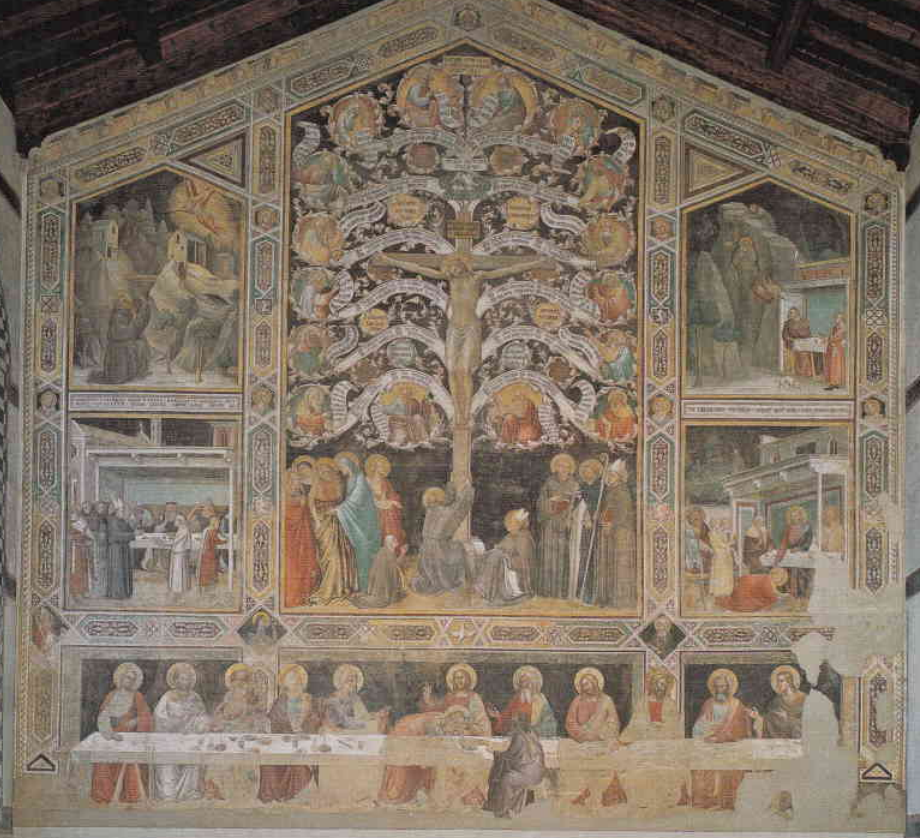
Last Supper with the Tree of Life
Frescoes in the Refectory of Santa Croce. Notable for placing Judas on "our" side of the table, a convention that continued until Leonardo's Last Supper.
Last Supper
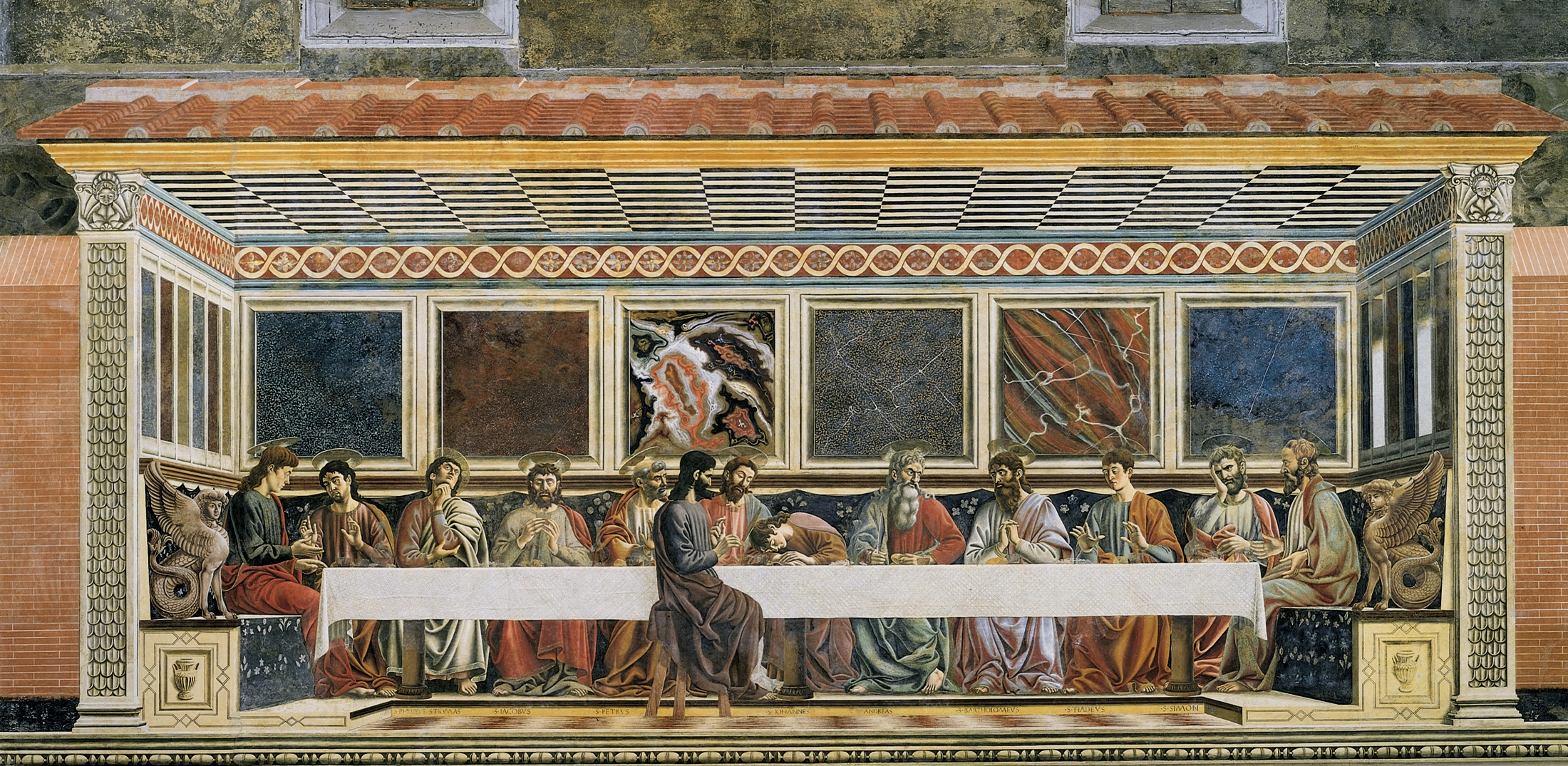
Considered the first "Last Supper" of the Renaissance in Florence, located in the refectory of the former Benedictine convent of Sant'Apollonia. Judas is depicted sitting separately on the near side of the table, unlike all the other apostles. The fresco is notable for its perspective illusion, as if the scene was happening in a small room and the viewer was observing from outside. The highly detailed marble walls hearken back to Roman "First Style" wall paintings. Saint John's posture of innocent slumber neatly contrasts with Judas's tense, upright pose. The fresco was hidden behind plaster for over a century because the convent was cloistered. Vasari did not know of its existence. It may have influenced Leonardo da Vinci's later version, painted about 50 years later.
The Last Supper
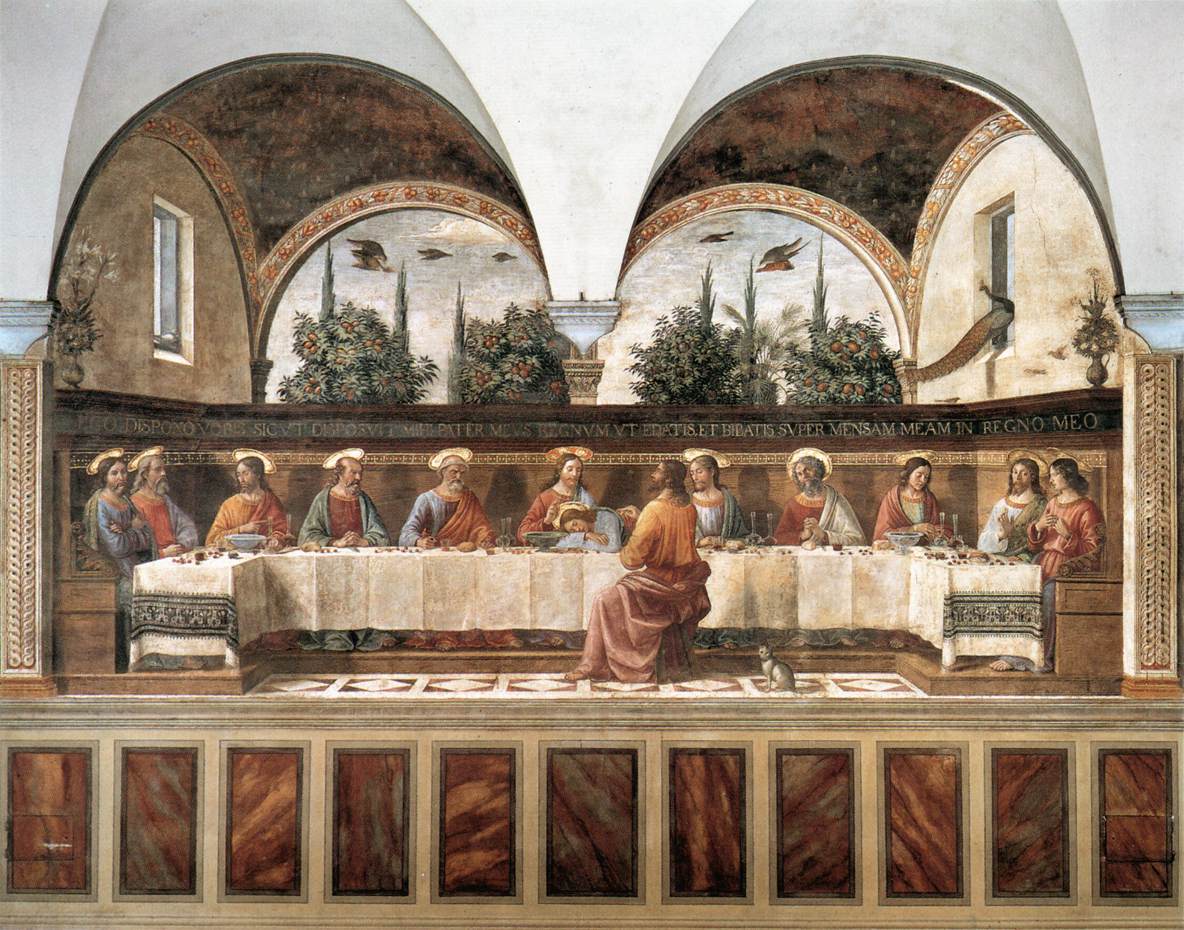
Fresco by Ghirlandaio at San Marco, Florence.
The Last Supper
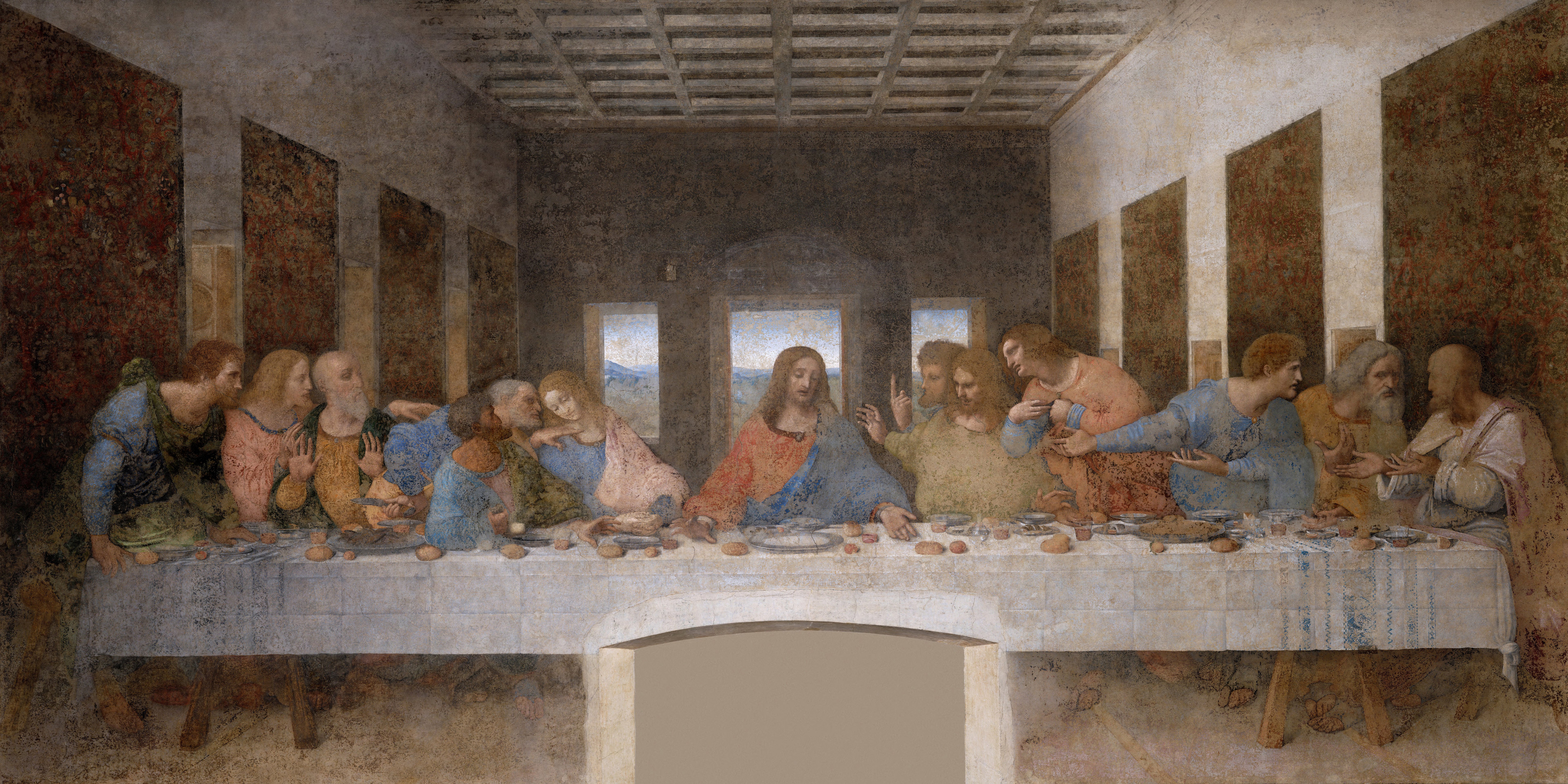
Leonardo's masterpiece depicting the moment Jesus announces that one of his disciples will betray him.
Last Supper Self-researched
An early work by El Greco from his Venetian period, before he developed the more elongated and dramatic style for which he became famous. The painting shows the influence of Venetian masters during his formative years.

The Feast in the House of Levi Self-researched
One of the largest canvases of the 16th century (555 x 1,309 cm). Originally painted as a Last Supper for a Dominican friary, Veronese's irreverent interpretation led to an investigation by the Inquisition. Rather than make changes, he simply renamed the painting. A masterpiece of Venetian colorism.
