Judith and Holofernes
Summary
The story of Judith and Holofernes comes from the deuterocanonical Book of Judith. When the Assyrian general Holofernes besieged the Jewish city of Bethulia, the beautiful widow Judith devised a plan to save her people. She entered the Assyrian camp, gaining Holofernes' trust with her beauty and wisdom. When Holofernes became drunk at a banquet, Judith seized his own sword and beheaded him. She returned to Bethulia with his head, and the leaderless Assyrian army fled in confusion. The story represents the triumph of virtue over tyranny and of the weak over the powerful through faith in God.
Biblical Reference
Book(s): Book of Judith (Deuterocanonical/Apocryphal)
Chapters/Verses: Judith 8-16
Artworks Depicting This Story
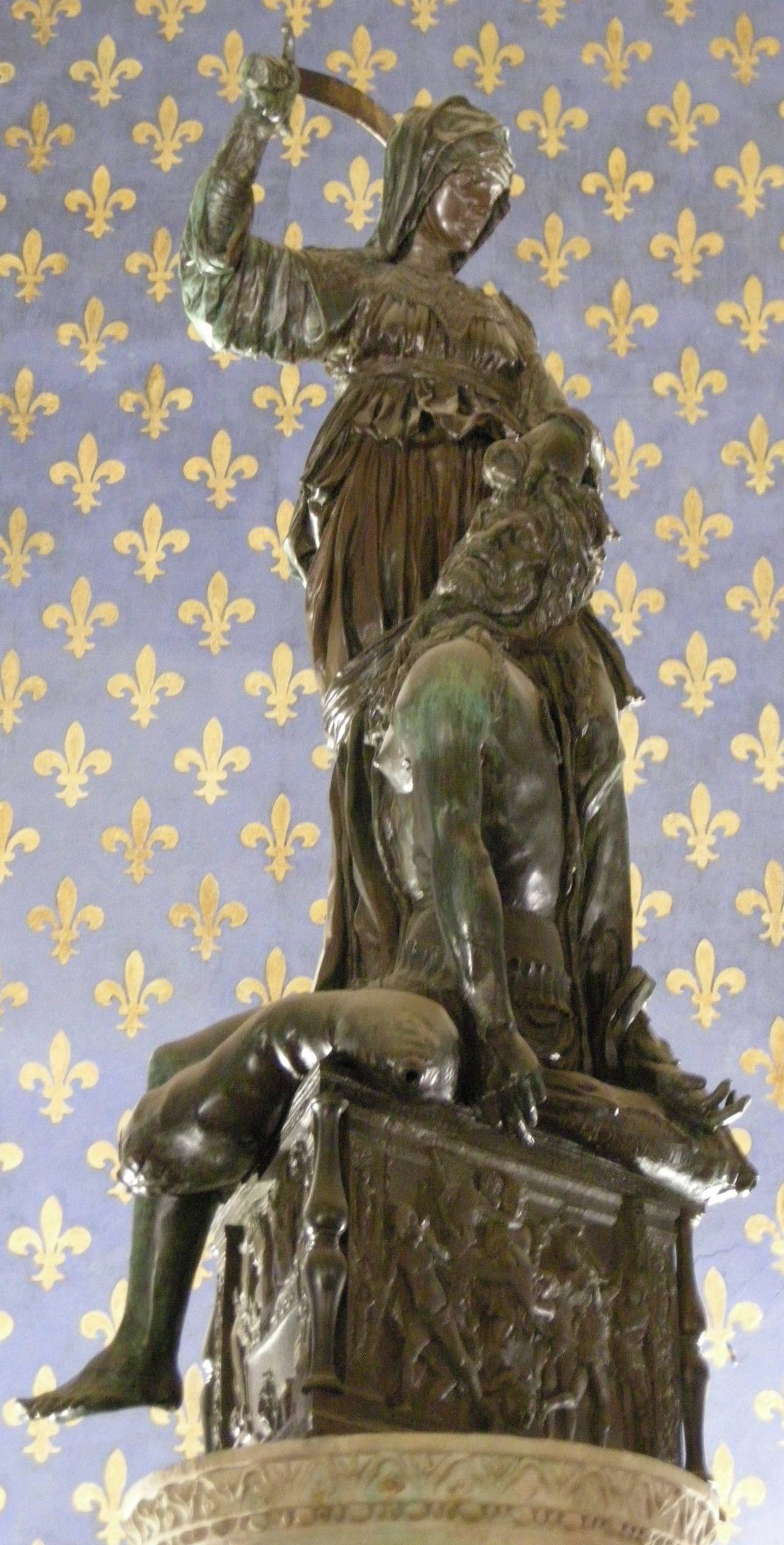
Judith and Holofernes Self-researched
Bronze sculpture by Donatello depicting the biblical heroine Judith beheading the Assyrian general Holofernes. Created toward the end of Donatello's career, it is located in the Sala dei Gigli (Hall of Lilies). A copy stands in one of the sculpture's original positions in the Piazza della Signoria.
Judith with the Head of Holofernes Self-researched
One of the most celebrated paintings of the Florentine Seicento, depicting Judith holding the severed head of Holofernes while her maidservant waits with a bag. Allori reportedly used his own face as the model for Holofernes, his mistress for Judith, and her mother for the maidservant, lending the painting an intensely personal subtext. Multiple versions exist, with this being the finest.