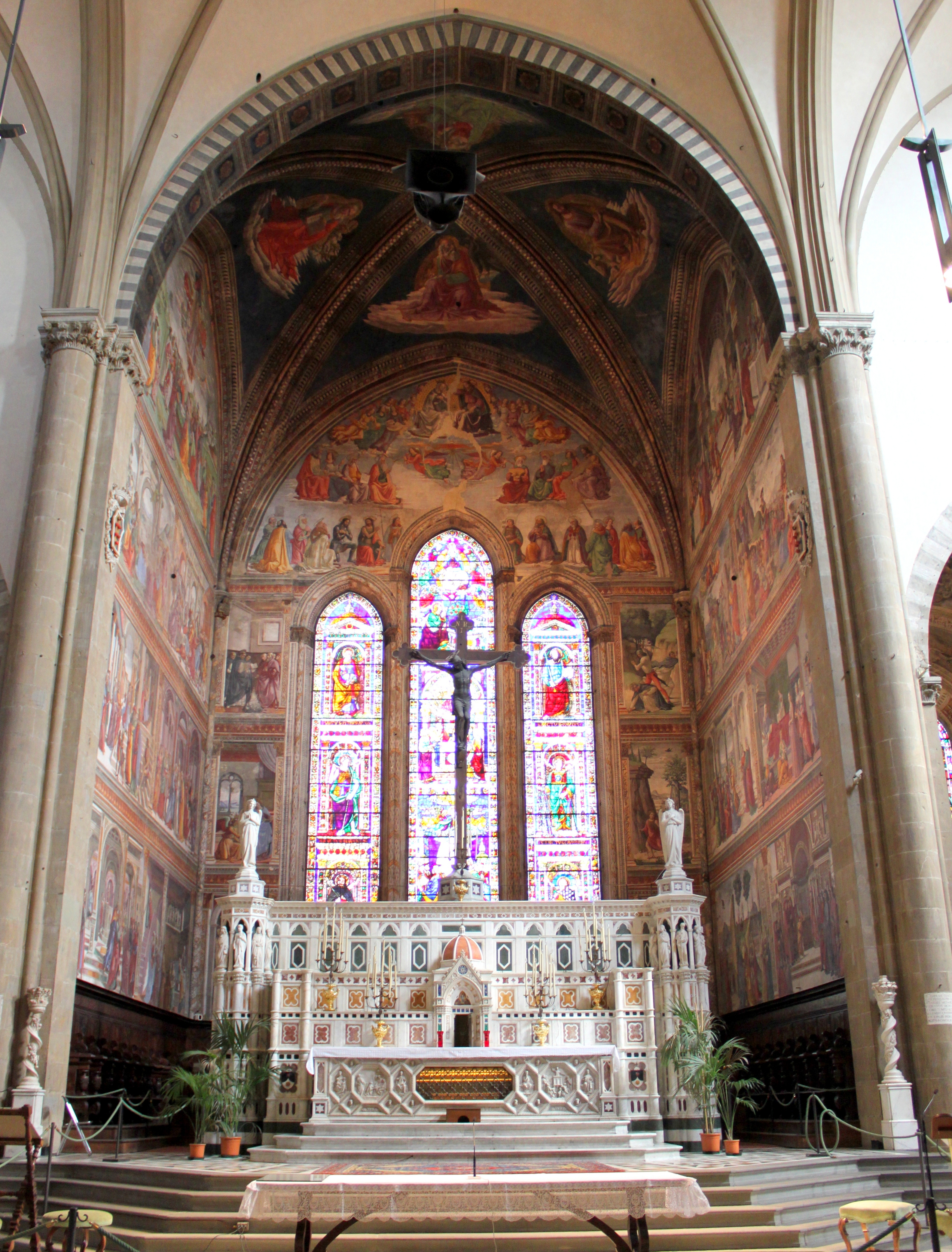
Santa Maria Novella
Florence, Italy
Architectural style: Gothic, Renaissance façade
Artworks
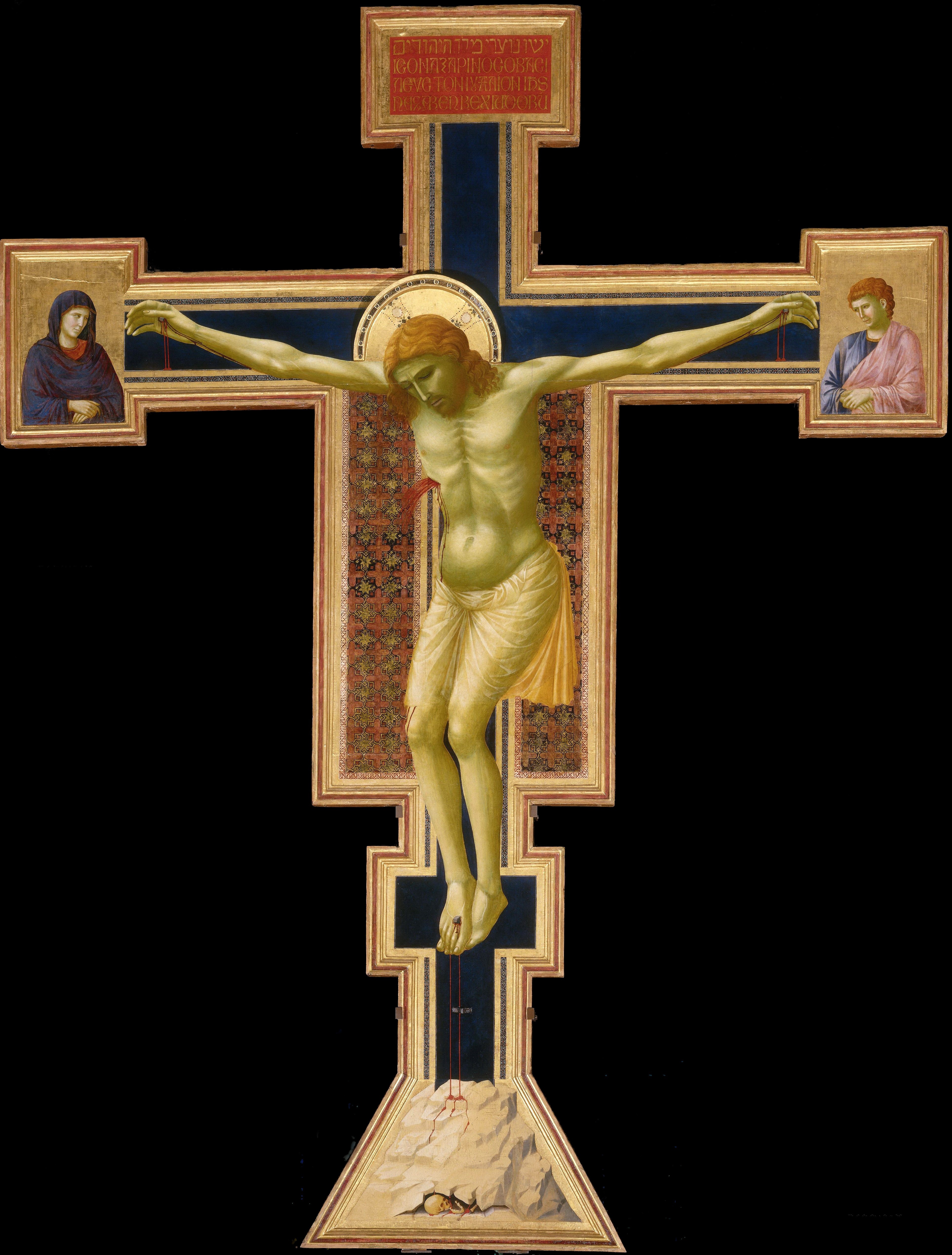
Crucifix
The earliest known artwork by Giotto. Revolutionary in its naturalistic depiction of Christ's suffering body, departing from the rigid Byzantine tradition.
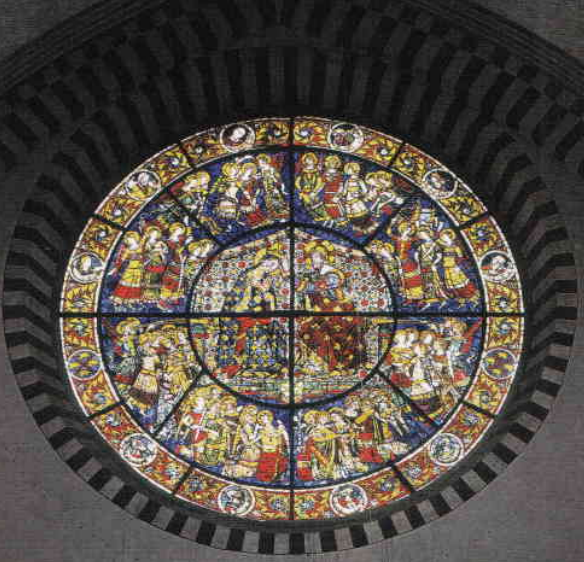
Rose Window
Stained glass rose window imported from France.
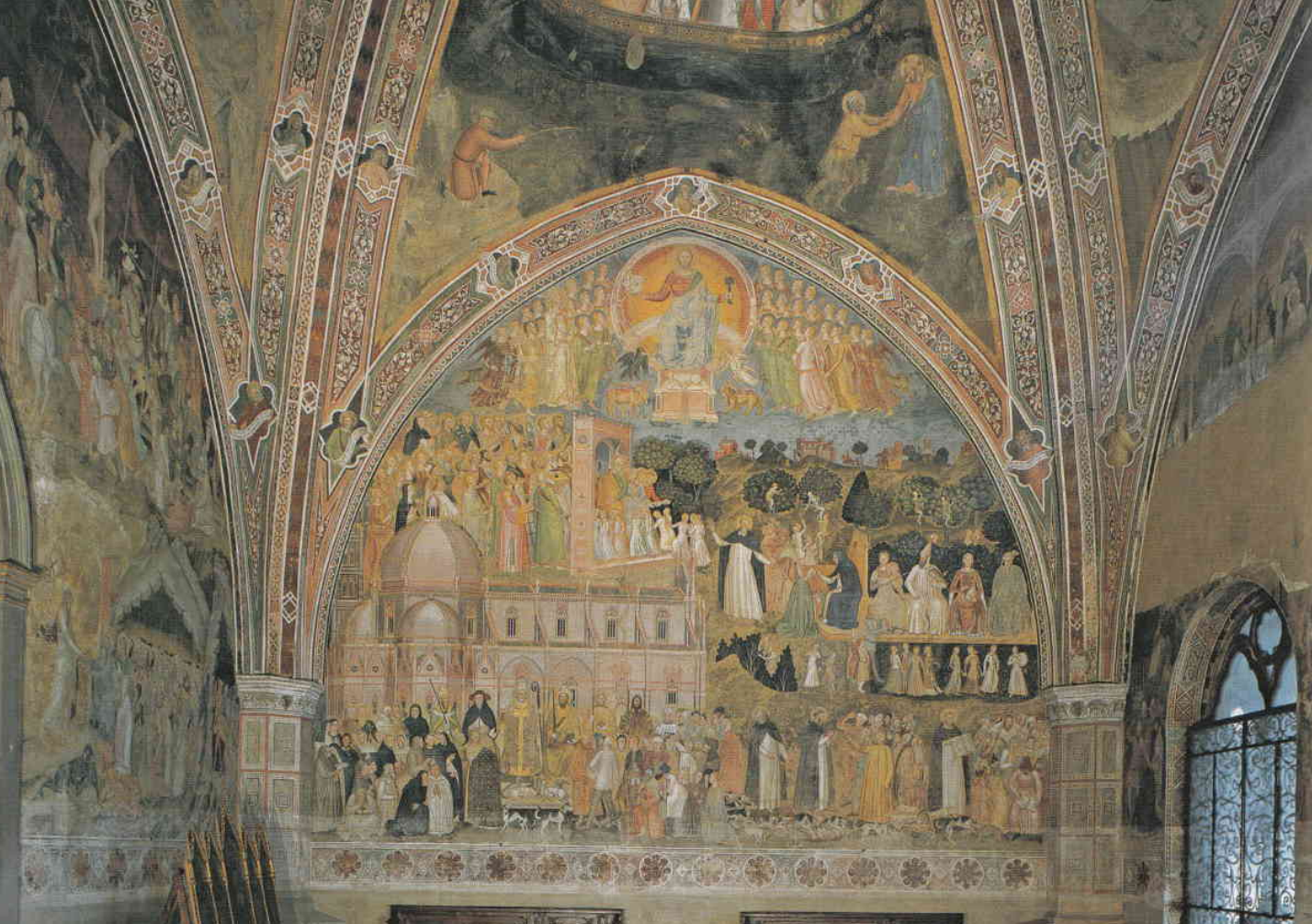
Chapter House Fresco
Fresco in the Chapter House (Spanish Chapel) at Santa Maria Novella, depicting the "Triumph of the Church."
Brunelleschi Crucifix Self-researched
A polychrome painted wooden sculpture located in the Gondi Chapel at the church of Santa Maria Novella. This idealized depiction of the crucifixion of Jesus measures around 170 cm × 170 cm. This is the only surviving wooden sculpture by Brunelleschi; the only other known example, a wooden sculpture of Mary Magdalene at the church of Santo Spirito, was destroyed in a fire in 1471. Art historian Luciano Bellosi described Brunelleschi's crucifix as "probably the first Renaissance work in the history of art," representing a definitive turn away from the stylised postures of Gothic sculpture and a return to the naturalism of classical sculpture. According to Vasari, Brunelleschi carved this crucifix in response to Donatello's crucifix at Santa Croce, which Brunelleschi criticized as depicting "a peasant on the Cross."

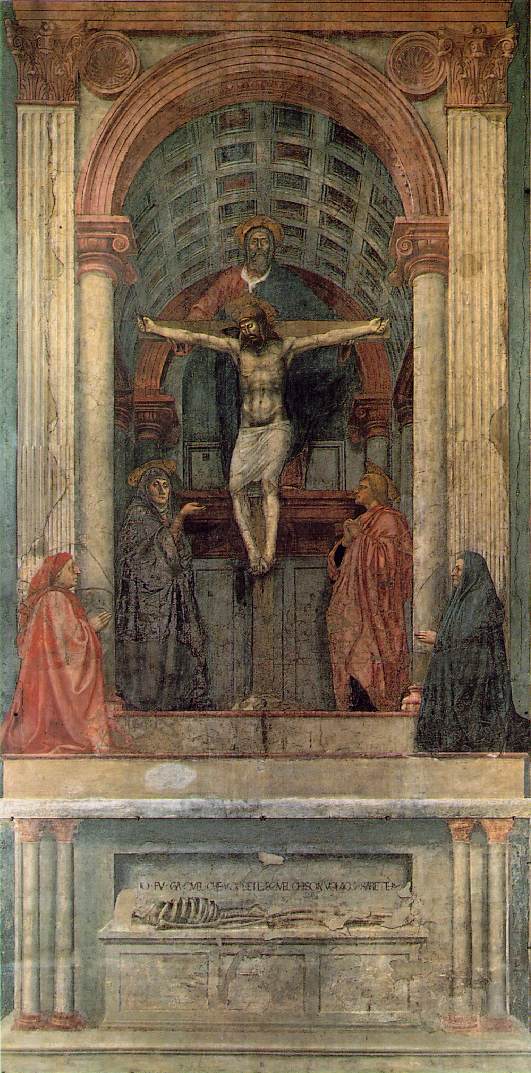
Trinity
A revolutionary work demonstrating Brunelleschi's principles of linear perspective. One of the first monumental Renaissance paintings to utilize linear perspective. The donors are shown kneeling on either side of the holy scene.
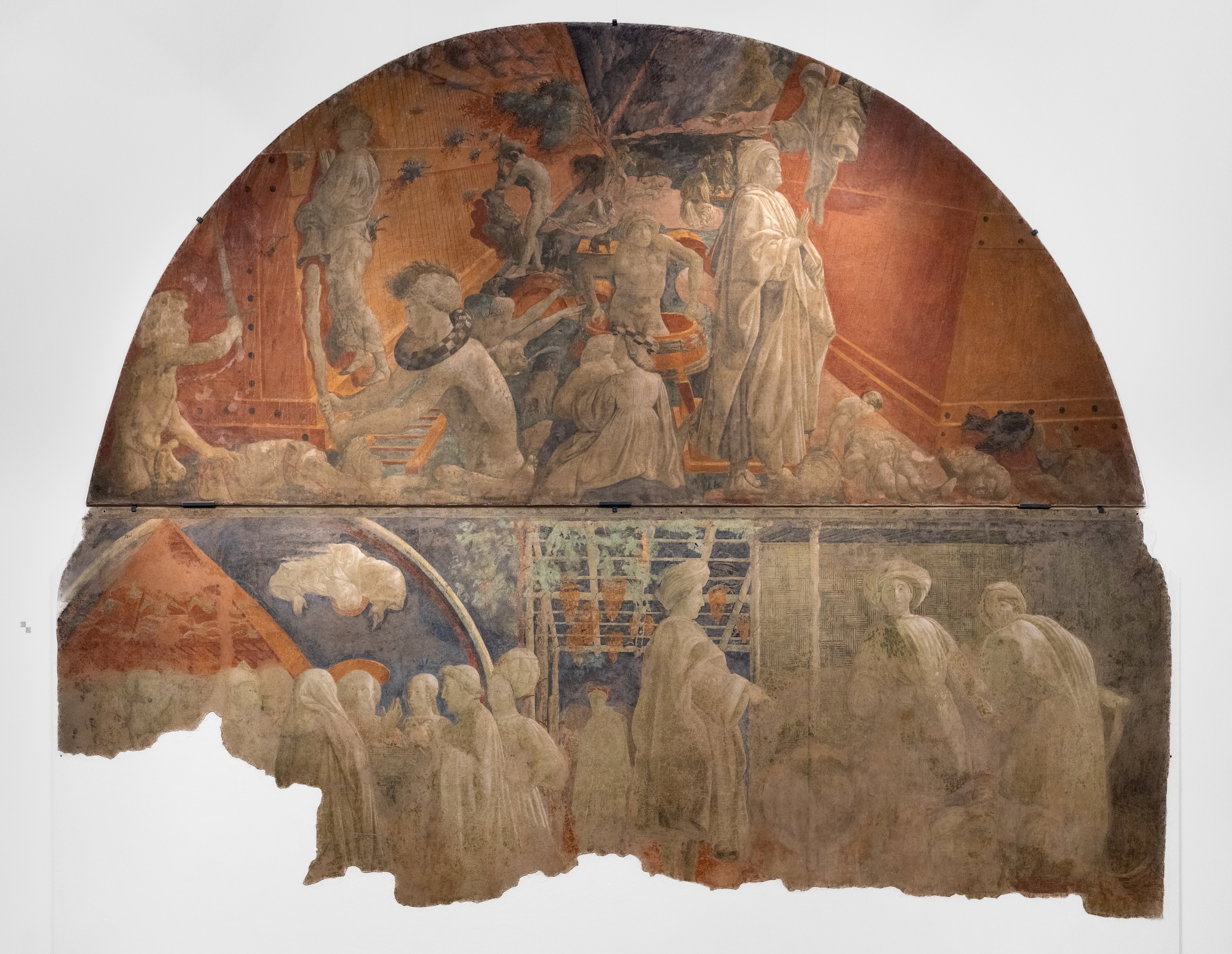
Story of Noah
Fresco depicting scenes from the Story of Noah in the Chiostro Verde (Green Cloister), demonstrating Uccello's fascination with perspective.
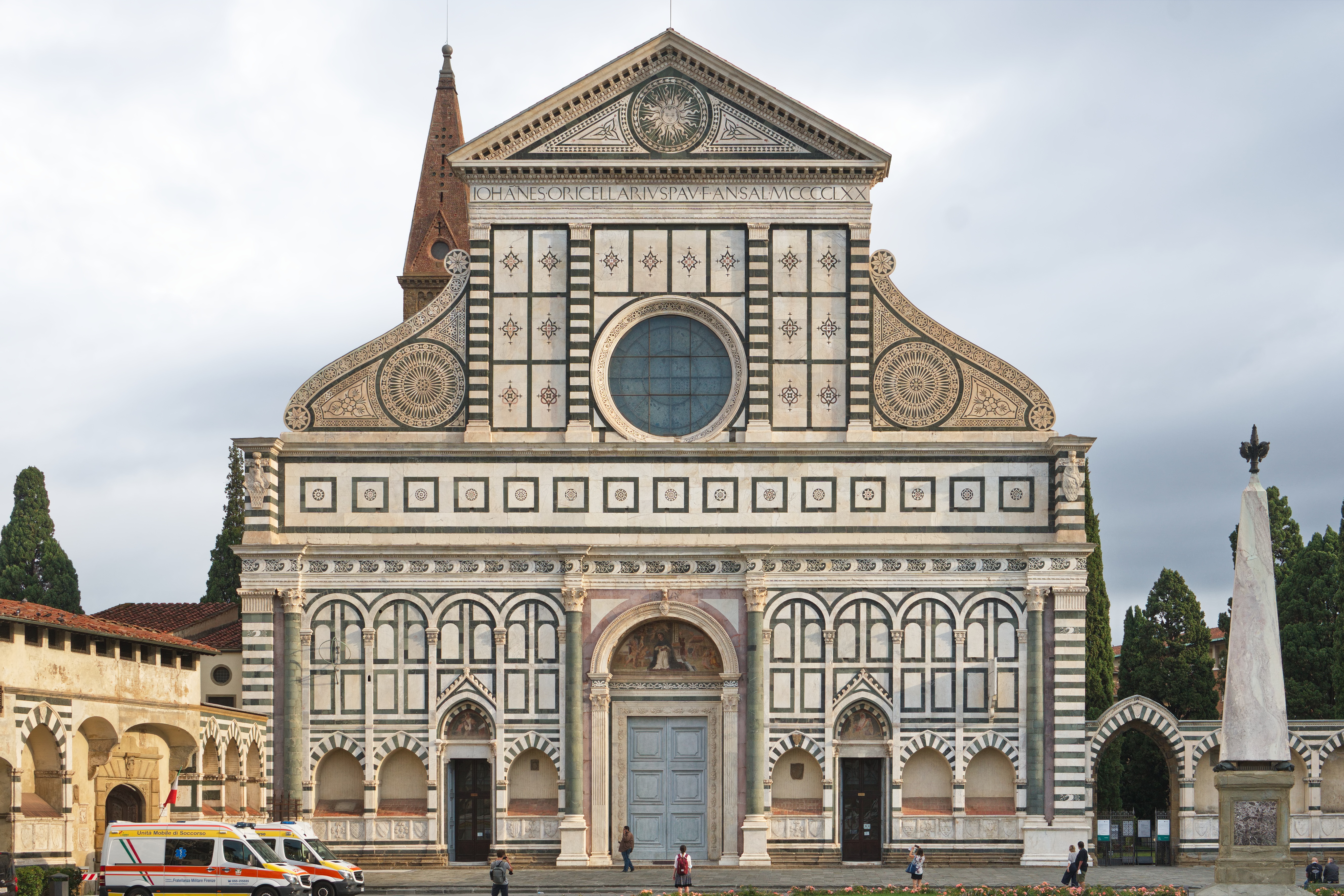
Santa Maria Novella Facade
The facade of Santa Maria Novella, designed by Alberti. The only green and white marble structure in Florence.
Tornabuoni Chapel Frescoes
Series of frescoes and stained glass in the Tornabuoni Chapel. This was a work of Ghirlandaio's whole shop, including a 13-year-old apprentice named Michelangelo.