Cosmati Self-researched
Active: 12th–13th century, Rome Source: self-research
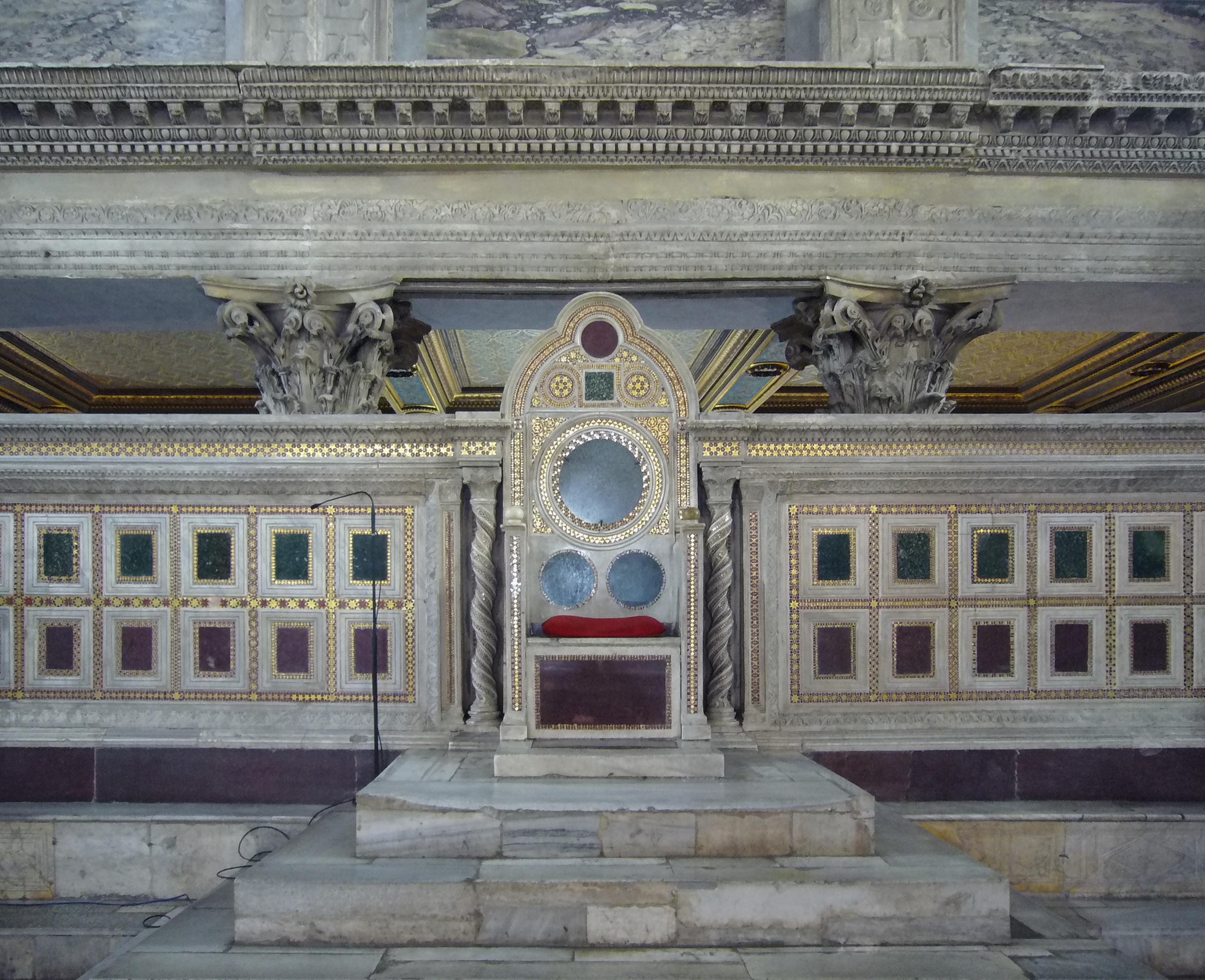
A Roman family of seven members across four generations who were skilled architects, sculptors, and workers in decorative geometric mosaic. They specialized in a technique of opus sectile formed of elaborate inlays of small triangles and rectangles of colored stones and glass mosaics set into stone matrices. Their name is commemorated in the genre of "Cosmatesque" work. Initial inspiration for the technique was Byzantine, transmitted through Ravenna and Sicily, while some of the minutely-figured tiling patterns are Islamic in origin. Their work adorns many Roman churches including Santa Maria in Cosmedin, where the pavement, schola cantorum, pulpit, paschal candlestick, altar canopy, and episcopal throne all bear their distinctive style.
Artworks
Schola Cantorum Self-researched
An enclosed choir area in the nave with intricately carved marble panels featuring Cosmatesque geometric inlay. Part of a larger ensemble of 13th-century marble liturgical furnishings including the pulpit, paschal candlestick, and episcopal throne (bishop's chair with three steps and lion-carved armrests).
Cosmatesque Pavement Self-researched
The nave floor is a masterpiece of Cosmatesque opus sectile work, featuring elaborate geometric patterns of inlaid colored marble. Dominated by an enormous porphyry roundel with intricate patterning using purple-crimson porphyry, dark green serpentine, and yellow giallo antico marble set in white marble matrices.